
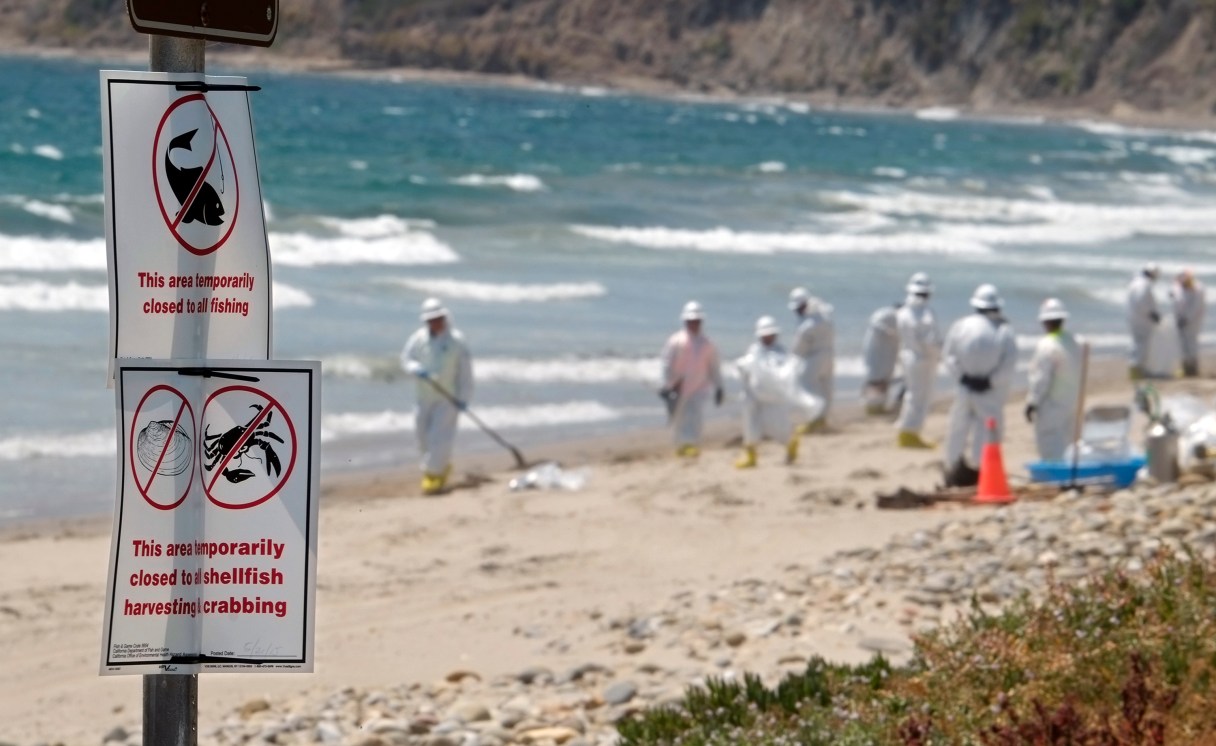
LOS ANGELES (AP) – A pipeline rupture that spilled an estimated 101,000 gallons of crude oil near Santa Barbara last month occurred along a badly corroded section that had worn away to a fraction of an inch in thickness, federal regulators disclosed Wednesday.
The preliminary findings released by the federal Pipeline and Hazardous Materials Safety Administration point to a possible cause of the May 19 spill that blackened popular beaches and created a 9-mile slick in the Pacific Ocean.
The agency said investigators found corrosion at the break site had degraded the pipe wall thickness to 1/16 of an inch, and that there was a 6-inch opening near the bottom of the pipe. Additionally, the report noted that the area that failed was close to three repairs made because of corrosion found in 2012 inspections.
The findings indicate 82 percent of the metal pipe wall had worn away.
“There is pipe that can survive 80 percent wall loss,” said Richard Kuprewicz, president of Accufacts Inc., which investigates pipeline incidents. “When you’re over 80 percent, there isn’t room for error at that level.”