
Friday, November 13, 2026Nov 13

IS reduces water supply to government areas in Iraq’s Anbar

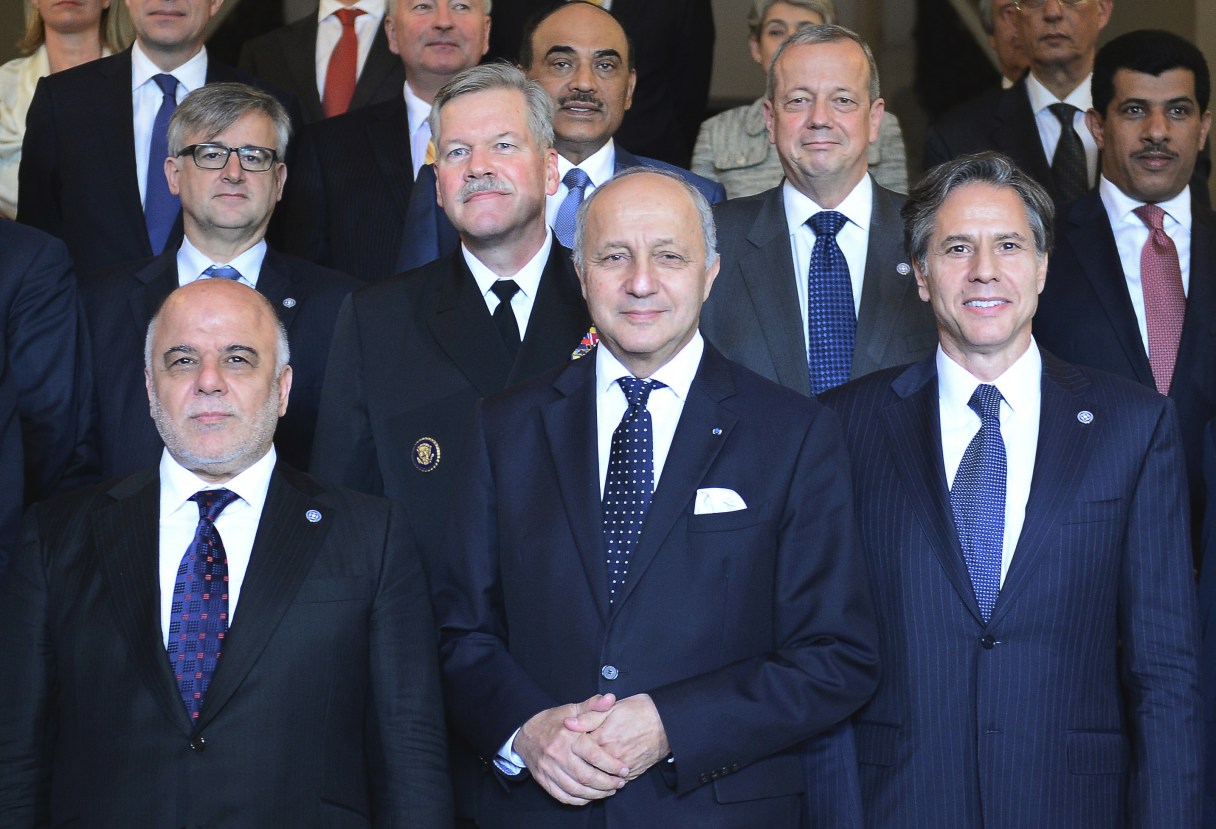
First row from left : Iraqi Prime Minister Haider al-Abadi, French Foreign Affairs Minister Laurent Fabius and US Deputy Secretary of State Antony J. Blinken pose for a group photo with Foreign Affairs ministers and members of the anti-Islamic State coalition after a meeting in Paris, France, to discuss strategy in fighting the jihadist militant group, who have made key battlefield advances in recent weeks in Iraq and Syria, Tuesday, June 2, 2015. Iraq’s prime minister and international allies are gathering in Paris to re-examine their strategy against Islamic State extremists, after the group’s recent gains. The coalition, which includes the United States and France but not Russia, Iran or Syria, is meeting Tuesday after extremists conquered both the Iraqi city of Ramadi and the historic Syrian city of Palmyra. (Stephane de Sakutin/Pool Photo via AP)
First row from left : Iraqi Prime Minister Haider al-Abadi, French Foreign Affairs Minister Laurent Fabius and US Deputy Secretary of State Antony J. Blinken pose for a group photo with Foreign Affairs ministers and members of the anti-Islamic State coalition after a meeting in Paris, France, to discuss strategy in fighting the jihadist militant group, who have made key battlefield advances in recent weeks in Iraq and Syria, Tuesday, June 2, 2015. Iraq’s prime minister and international allies are gathering in Paris to re-examine their strategy against Islamic State extremists, after the group’s recent gains. The coalition, which includes the United States and France but not Russia, Iran or Syria, is meeting Tuesday after extremists conquered both the Iraqi city of Ramadi and the historic Syrian city of Palmyra. (Stephane de Sakutin/Pool Photo via AP) First row from left : Iraqi Prime Minister Haider al-Abadi, French Foreign Affairs Minister Laurent Fabius and US Deputy Secretary of State Antony J. Blinken pose for a group photo with Foreign Affairs ministers and members of the anti-Islamic State coalition after a meeting in Paris, France, to discuss strategy in fighting the jihadist militant group, who have made key battlefield advances in recent weeks in Iraq and Syria, Tuesday, June 2, 2015. Iraq’s prime minister and international allies are gathering in Paris to re-examine their strategy against Islamic State extremists, after the group’s recent gains. The coalition, which includes the United States and France but not Russia, Iran or Syria, is meeting Tuesday after extremists conquered both the Iraqi city of Ramadi and the historic Syrian city of Palmyra. (Stephane de Sakutin/Pool Photo via AP)

BAGHDAD (AP) – Islamic State militants have reduced the amount of water flowing to government-held areas in Iraq’s western Anbar province, an official said Thursday, the latest in the vicious war as Iraqi forces struggle to claw back ground held by the extremists in the Sunni heartland.

It’s not the first time that water has been used as a weapon of war in Mideast conflicts and in Iraq in particular. Earlier this year, the Islamic State group reduced the flow through another lock outside the militant-held town of Fallujah, also in Anbar province. But the extremists soon reopened it after criticism from residents.

The IS captured Ramadi, the provincial capital of Anbar, last month, marking its most significant victory since a U.S.-led coalition began an air campaign against the extremists last August. Earlier last year, the Islamic State had blitzed across much of western and northern Iraq, capturing key Anbar cities and also Mosul, Iraq’s second-largest city that lies to the north of Baghdad.

Also Thursday, U.N. officials urgently called for $497 million in donations to provide shelter, food, water and other life-saving services for the next six months to Iraqis displaced or affected by the fighting between government forces and the Islamic State group.

The reduced flow of water through the militant-held dam on the Euphrates River will threaten irrigation systems and water treatment plants in nearby areas controlled by troops and tribes opposed to the extremist group, provincial council member Taha Abdul-Ghani told The Associated Press.