

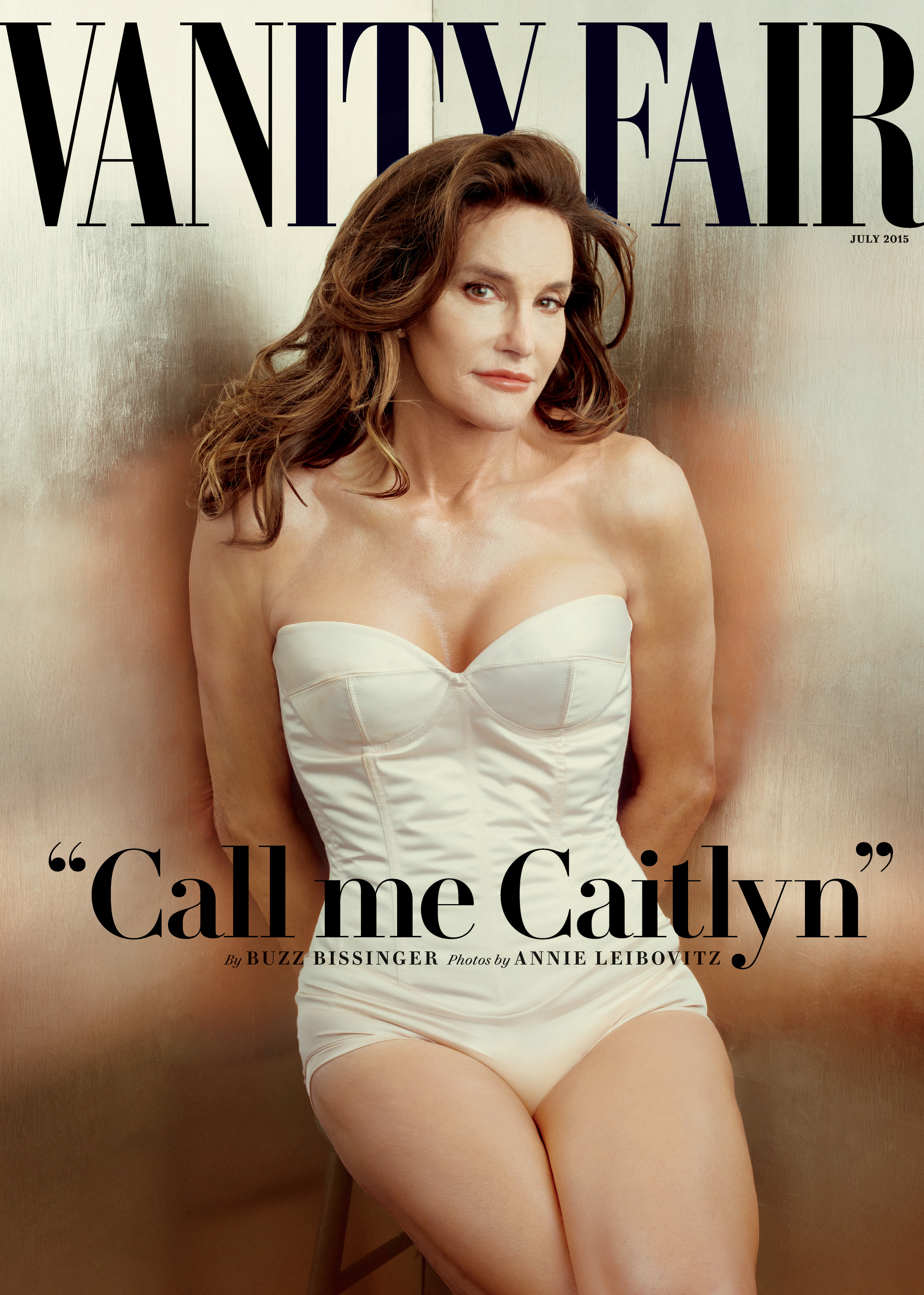
 This file photo taken by Annie Leibovitz exclusively for Vanity Fair shows the cover of the magazine’s July 2015 issue featuring Bruce Jenner debuting as a transgender woman named Caitlyn Jenner. Jenner made her public debut on the cover of Vanity Fair, but legal requirements await her before she can officially leave Bruce Jenner behind. (Annie Leibovitz/Vanity Fair via AP, File)
For many Chattanoogans, understanding our gay, lesbian and transgender neighbors is difficult, emotional and confusing.
Today’s column is not meant as a provocation or criticism, but rather as an attempt to soften that confusion through understanding.
Especially with the coming U.S. Supreme Court ruling on gay marriage.
Especially with Caitlyn Jenner’s cover on Vanity Fair.
“Her interview with Diane Sawyer rang true. It resonated. It sounded very similar to stories I’ve heard from transgender kids. These are kids who knew from the time they were 3,” said Dr. Joani Jack.
 David Cook
Jack has become one of my favorite Chattanoogans, able to talk eloquently about sexuality through the lens of science and faith. She’s a pediatrician at Erlanger hospital. She’s also a member of a well-known evangelical church, where she once was a deacon.
Last month, she gave a presentation — called “Kids in the Crosshairs: Caring for Sexual and Gender Nonconforming Youth” and found online with this column — to other local pediatricians about caring for gay and transgender kids. What follows is a blend of that talk with her online posts and conversations with me.
Her motive? To help others understand sexuality that’s different from the norm. In her words:
“Our sexuality is a lot more than our outer body parts. Our sexuality is made up of other things, like our chromosomes, which direct the formation of our ovaries and testes, as well as the sexuality of our brain, which then forms neurotransmitters and hormones that impact each other while also forming our outside body parts.
“Most times, these things match together: outside parts, inside parts, brain sexuality and chromosomes. Those four things combined together establish — likely before birth — our sexual orientation (who we are attracted to) and our gender identity (whether we think we are a girl or boy).
“Here’s the rub. Our sexual organs and parts form in the first trimester of fetal development. Brain sexuality isn’t differentiated until the second or third trimester. Hormone surges can and do occur throughout the pregnancy, making it possible for a fetus to develop sexual body parts that don’t match up with the sexuality of the brain. For example, a baby can be born with a female brain but male outside parts. Or with a male gender identity but female attractions and mannerisms.
“Historically, we have defined people’s gender only by their outside body parts. But now we know about brain science, the influence of chromosomes and hormones. Now we know that people can honest-to-God be born with parts and brains and genders and attractions that don’t match up in conventional ways.
“If I woke up tomorrow and someone told me I had to figure out how to be attracted to women in order to be ‘normal’ — well, I couldn’t do that. And what if men woke up tomorrow with breasts, but no penis? Or what if straight guys had to figure out how to be attracted to other men — not women — in order to be considered normal? That would be really difficult. And lonely. And scary. We might hide from the world, or act out, or do crazy things to try to draw attention away from that part of us. Or we might get depressed, or start drinking or doing drugs. Or kill ourselves.
“We know that men who are paralyzed, women who have mastectomies, or people who suffer a mutilating injury are still the same man or woman that they were before the injuries — even if their sex parts are absent or dysfunctional. Why? Because the sexuality of our brain and the chemicals it produces and the hormones raging through our bodies are more important — more definitive — than the outside body parts.
“And as a Christian, I am not threatened by this. God absolutely created us male and female, but what that means is a heck of a lot more complicated than defining us by our body parts below the waist. What makes us male and female is infinitely, gloriously, divinely, beautifully complicated.
“It’s the reason that after 24 years of marriage, my husband and I often communicate like we are the same person, and other times like we come from different planets. We aren’t ‘normal’ — not by a long shot. I love pro football, took a charge from him on the blacktop basketball court on our first date, cry at least twice a week and think out loud. He loves to cook, is a librarian, thinks about things for, like, two months before he speaks them out loud, and loves his alone time.
“Sexuality is complicated. Human beings are complicated. That’s because we were created by a God that is way bigger than we can ever begin to imagine.
“So I think it’s up to us how we respond to things we don’t understand. We can respond with anger and fear and ridicule, or we can respond with compassion and respect and a genuine desire to learn and understand. Our choice of response reveals our character and faith, and history will judge how well we did.”
Contact David Cook at dcook@timesfreepress.com or 423-757-6329. Follow him on Facebook at DavidCookTFP.