
Tuesday, November 3, 2026Nov 3

This story is free to read.

South Korea says its deadly MERS outbreak may have peaked

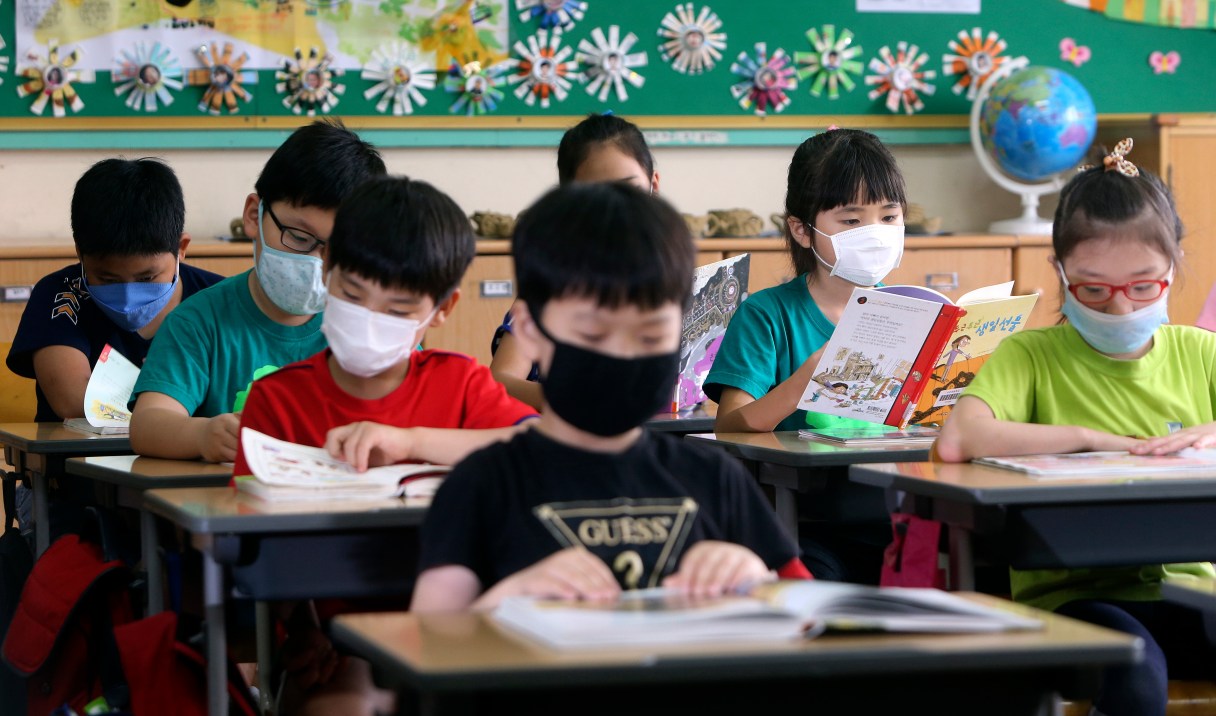
South Korean elementary school students wear masks as a precaution against the MERS, Middle East Respiratory Syndrome, virus as they attend a lesson at an elementary school in Busan, South Korea, Tuesday, June 9, 2015. South Korea is determined to end this week the outbreak of Middle East Respiratory Syndrome, saying upcoming several days will be a critical moment on whether to overcome the medical crisis. (Cha Geun-ho/Yonhap via AP) KOREA OUT
South Korean elementary school students wear masks as a precaution against the MERS, Middle East Respiratory Syndrome, virus as they attend a lesson at an elementary school in Busan, South Korea, Tuesday, June 9, 2015. South Korea is determined to end this week the outbreak of Middle East Respiratory Syndrome, saying upcoming several days will be a critical moment on whether to overcome the medical crisis. (Cha Geun-ho/Yonhap via AP) KOREA OUT South Korean elementary school students wear masks as a precaution against the MERS, Middle East Respiratory Syndrome, virus as they attend a lesson at an elementary school in Busan, South Korea, Tuesday, June 9, 2015. South Korea is determined to end this week the outbreak of Middle East Respiratory Syndrome, saying upcoming several days will be a critical moment on whether to overcome the medical crisis. (Cha Geun-ho/Yonhap via AP) KOREA OUT

SEOUL, South Korea (AP) – South Korea believes the country’s MERS virus outbreak may have peaked.

Experts said Tuesday that the next several days would be critical to determining whether the government’s belated efforts have successfully stymied a disease that has killed seven and infected nearly 100 in the country.

The biggest outbreak of Middle East Respiratory Syndrome outside the region where it was first seen in 2012 was introduced to South Korea last month by a 68-year-old man who had traveled to Saudi Arabia and other nearby countries.

There has been widespread fear in South Korea of the poorly understood disease, which has no vaccine and as much as a 40 percent mortality rate.

Nearly 3,000 people have been placed in isolation and 2,200 schools have been closed in South Korea.