
More Info
NUMBERSTennesseeNumber of people at risk of losing tax credits — 155,753Average tax credit per enrollee — $218Percent increase in average premium if tax credit is not available — 222 percentGeorgiaNumber of people at risk of losing tax credits — 412,385Average tax credit per enrollee — $274Percent increase in average premium if tax credit is not available — 381 percentAlabamaNumber of people at risk of losing tax credits — 132,253Average tax credit per enrollee — $270Percent increase in average premium if tax credit is not available — 321 percentSource: Kaiser Family Foundation
For most people who bought health insurance plans on the new federal exchange, the subsidies have been the best part of the Affordable Care Act.
The tax credits are what make insurance affordable for most people, lowering premiums as pricey as $425 a month down to $23, in one example.
But while more than 155,000 Tennesseans, 412,000 Georgians and 132,000 Alabamans have purchased health plans with the help of tax credits, most remain unaware of the pending Supreme Court decision that could endanger those subsidies – and the entire workability of the Affordable Care Act, surveys from the Kaiser Family Foundation show.
“The average consumer we talk to has no idea about King versus Burwell,” said Bobby Huffaker, CEO of the Chattanooga-based broker American Exchange.
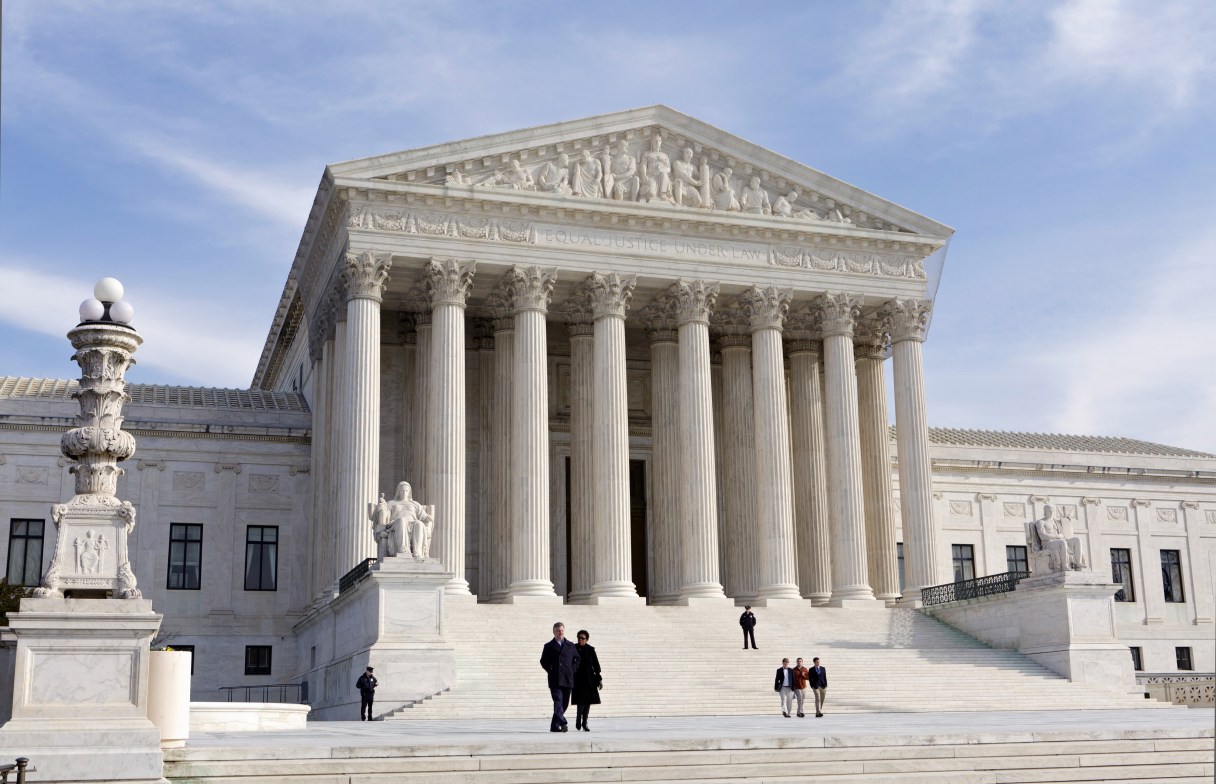
In the coming weeks, the Supreme Court is expected to rule on King v. Burwell – a case that questions whether the health law originally intended such subsidies to be available for all states, or only for those that set up their own exchanges.
Thirty-four states, including Tennessee, Georgia and Alabama, opted not to set up such exchanges, relying on the federally run marketplace instead. A ruling against the federal government could make subsidies unavailable in those states, undermining the entire economic structure for the health law, experts have said.
But while most consumers remain unaware of the pending decision, Tennessee health industry experts are riveted on the matter, with insurers and hospitals mulling an array of contingency plans in case the subsidies are done away with.
“Such a decision could have a myriad of implications,” said Kevin Walters, spokesman for the Tennessee Department of Commerce and Insurance.
While Tennessee officials have not revealed any specific contingency plan for the state, Walters said officials have been in conversations with insurers about the potential impact – including how the court’s decision could affect their rates.
“From what we have gathered, most of those carriers have started contingency planning for 2016,” Walters said.
Though insurers already submitted their proposed premium rates for the coming year, the state has until mid-August to approve them, so companies could rework them “if there is a new reality in 2016,” Walters said.
BlueCross BlueShield of Tennessee, which has dominated the exchange market, has declined to discuss specific backup plans, with spokeswoman Mary Danielson saying the company “can’t speculate on the King v. Burwell decision.”
Hospitals are also watching the decision closely.
“Everyone is hoping [the court] goes with the government, but if they don’t there are several options we are looking at,” Tennessee Hospital Association President Craig Becker said. “But there’s no slam-dunk answer no matter what we do.”
Some of those ideas include working through Kentucky’s state-based exchange – an option Becker says is unlikely – and a potential arrangement in which the state would rent or contract the exchange service from the federal government.
While Becker said that is the most workable option, it would have to be approved at both the state and federal levels – a prospect, Becker acknowledged, that could be an uphill battle.
Tennessee lawmakers already voiced their disdain for the Affordable Care Act and their distrust of the federal government in their decision earlier this year to vote down Gov. Bill Haslam’s plan to expand Medicaid.
State Sen. Brian Kelsey, R-Germantown, had even proposed a bill this past session that would bar Tennessee from creating its own exchange in the event that the Supreme Court decision did away with the exchanges.
The bill did not gain traction after Republican Senate Speaker Ron Ramsey called it “more a political statement than it is good government.”
Erlanger Health System – the only hospital included in BlueCross’ most popular insurance network on the exchange – referenced the pending decision in its initial budget presentation last month, with the chief financial officer saying that an adverse ruling could negatively impact the hospital.
In the first nine months of last year, the hospital saw 3,600 patients on the network, Tabor said.
American Exchange, meanwhile, “would have to scale down significantly” in such a case, Huffaker said; 87 percent of the company’s business is from people who get subsidies.
But Huffaker is confident that is not going to happen.
“I really see the government winning this case,” he said.
President Barack Obama has expressed the same optimism, saying Monday that the decision “should be an easy case,” and “Frankly, it probably shouldn’t have even been taken up.”
Contact staff writer Kate Belz at kbelz@timesfreepress.com or 423-757-6673.