
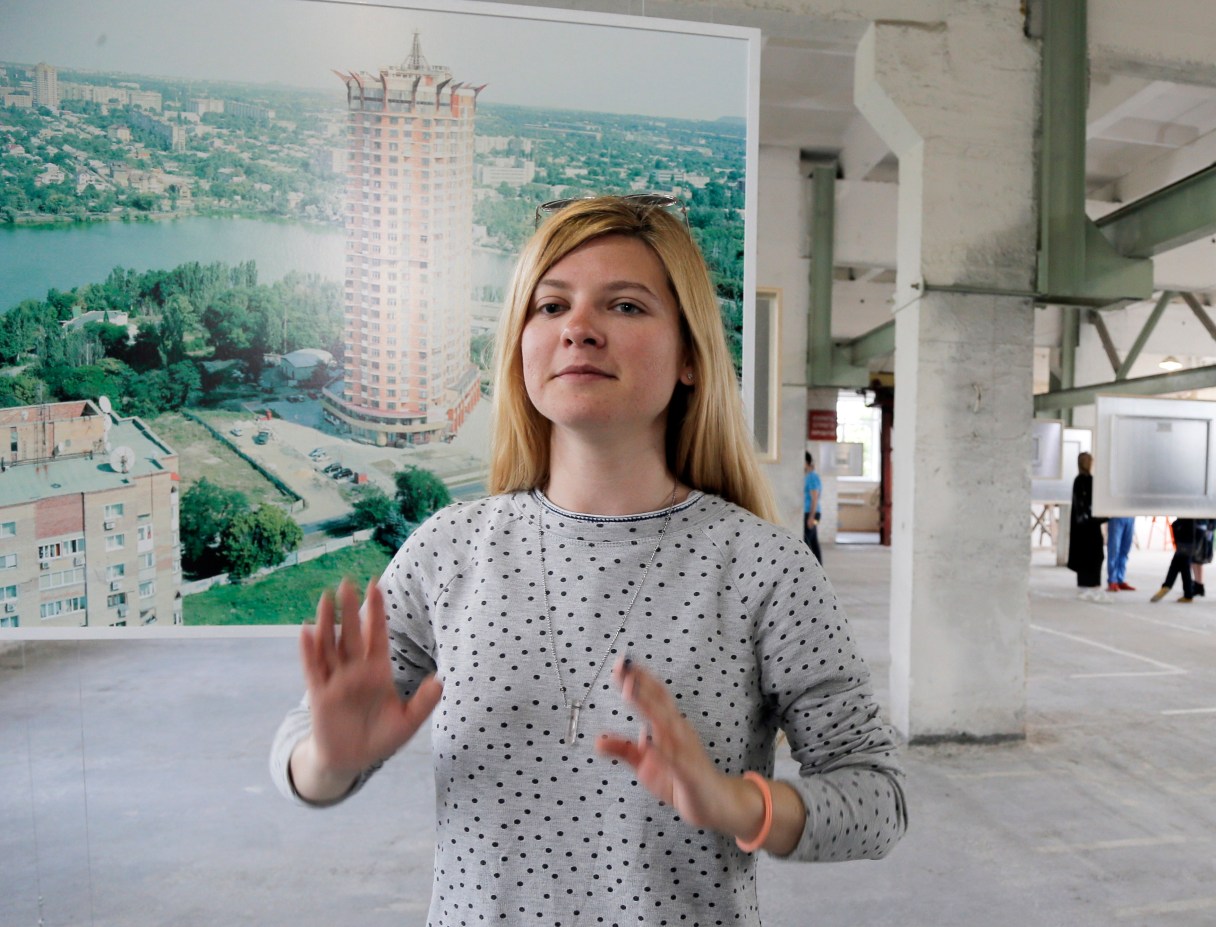
KIEV, Ukraine (AP) – Alesya Bolot worked for a contemporary arts foundation that converted an abandoned factory into a mecca for young and bright people with daring ideas. Vibrant and cosmopolitan, the 27-year-old would not look out of place in a gallery in New York.
She was at the forefront of the avant-garde arts scene in the eastern Ukrainian city of Donetsk when a pro-Russian insurgency took over and upended her life. When a rebel-controlled local television station portrayed creative people like her as the enemy, she decided it was time to flee.
“Everything we did ran counter to their ideology,” she says, “the fact that we worked with foreign artists, the fact that we advocated for a plurality of opinions.”
Bolot arrived in the capital Kiev a year ago with only a backpack, not planning a long-term stay. But she decided to remain after she was told she was on the wanted list of the self-styled Donetsk People’s Republic, for alleged subversive activity. More than 2.2 million people have fled their homes in eastern Ukraine since the war between government forces and Russia-backed separatists began in April last year, according to the United Nations, some to neighboring Russia, but about 1.3 million to Ukrainian regions under government control.
Educated, middle-class people like Bolot, whose arts center was turned into a rebel training camp and prison, represent a big chunk of those who opt for Ukraine-controlled areas, especially the capital – a serious brain drain for Ukraine’s east. There are so many of them in Kiev, the displaced say, that it often feels like their city has moved with them.