
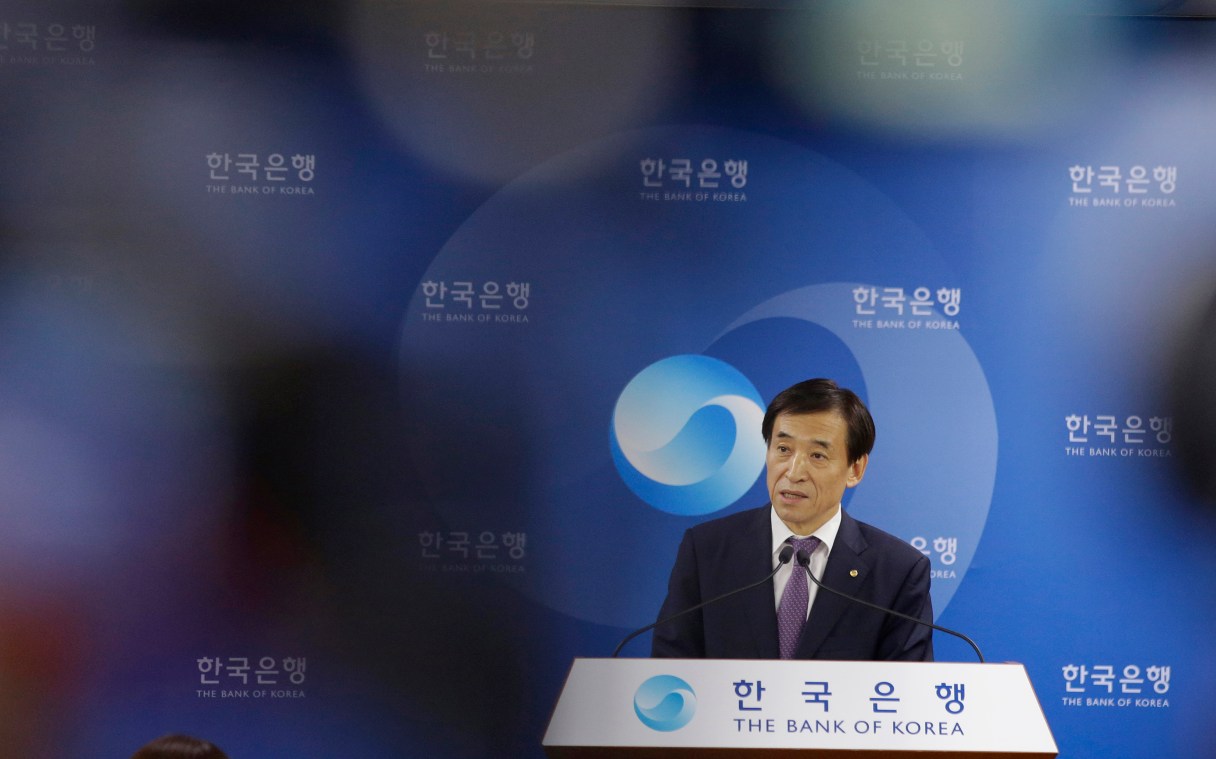
SEOUL, South Korea (AP) – South Korea’s central bank lowered its key interest rate to a historic low on Thursday, responding to a slump in exports and the prospect that the outbreak of the deadly MERS virus could slow the economy.
Bank of Korea policymakers cut the policy rate by a quarter of a percentage point to 1.5 percent, the second rate cut this year. In March, the bank lowered the key rate and downgraded its growth forecast for Asia’s fourth-largest economy as exports continued to slump.
Consumption was on track to recover but began showing signs of contraction after the outbreak of MERS last month, while the decline in exports widened, the central bank said in a statement.
Exports and imports continued to drop over a year earlier after the March rate cut due to sluggish global demand and a weak Japanese yen. The cheaper yen hurt Korean exporters, especially automakers that compete with Japanese rivals in the global market.
Analysts initially expected the central bank to leave the policy rate unchanged but that view changed this month as the MERS outbreak caused panic in South Korea. Middle East respiratory syndrome has killed nine and infected more than a hundred since the first case was diagnosed in May. Thousands are quarantined after possible contact with the virus.
The MERS virus could hurt businesses and dent consumptions as travelers cancel trips and people stay home out of worries of contagion. Thousands of schools closed while concerts and travel plans were cancelled. Industries that count Chinese tourists as key clients, such as airlines and cosmetics, are likely to be worst hit.