
Sunday, November 15, 2026Nov 15

UK marks 800 years of Magna Carta amid new human rights feud

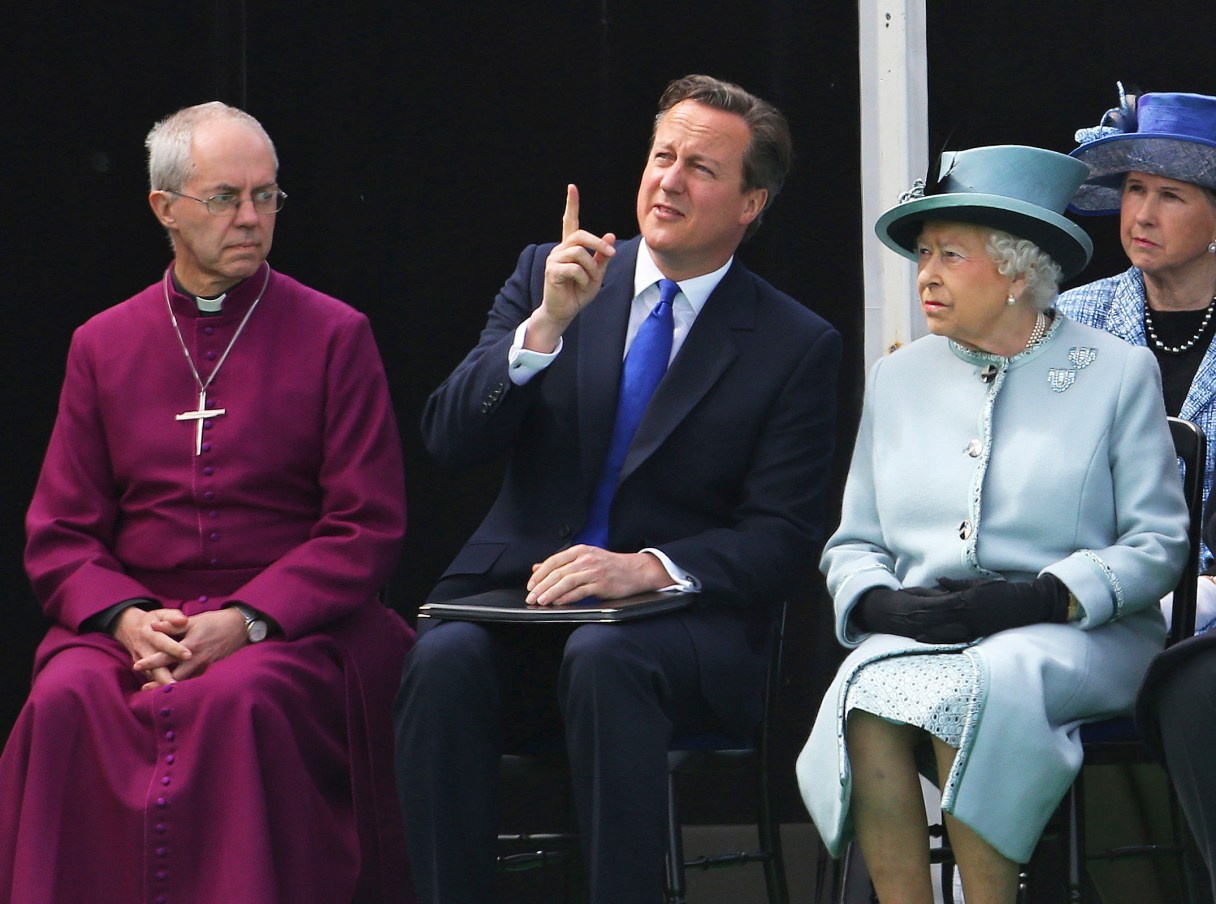
Seated near the Magna Carta memorial at Runnymede, England, are from left, The Archbishop of Canterbury Justin Welby, Prime Minister David Cameron, and Queen Elizabeth II, ahead of a commemoration ceremony Monday June 15, 2015, to celebrate the 800th anniversary of the groundbreaking accord called Magna Carta. In 1215, Britain's King John met disgruntled barons at Runnymede and agreed to a list of basic rights and laws which have formed the basic tenets of modern civil liberties which exist today, and was an inspiration for the U.S. Constitution among many other worldwide influences. (Steve Parsons / Pool photo via AP)

LONDON (AP) – Queen Elizabeth II led commemorations Monday to mark the 800th anniversary of the Magna Carta – but the human rights the document helped enshrine are at the center of a modern political feud.

British Prime Minister David Cameron and U.S. Attorney General Loretta Lynch joined the queen and other royals for a ceremony at Runnymede, a riverside meadow west of London where, on June 15, 1215, despotic King John met disgruntled barons and agreed to a list of basic rights.

The Magna Carta – Latin for Great Charter – is considered the founding document of English law and civil liberties and was an inspiration for the U.S. Constitution.

It established the principle that the king was subject to the law, rather than above it, and stipulated that “no free man shall be seized or imprisoned … except by the lawful judgment of his equals or by the law of the land.”

The original charter was short-lived. King John almost immediately went back on his word and asked the pope to annul it, plunging England into civil war. It was re-issued after the king’s death.