
Sunday, November 15, 2026Nov 15

Justices rule for small Arizona church in sign law dispute

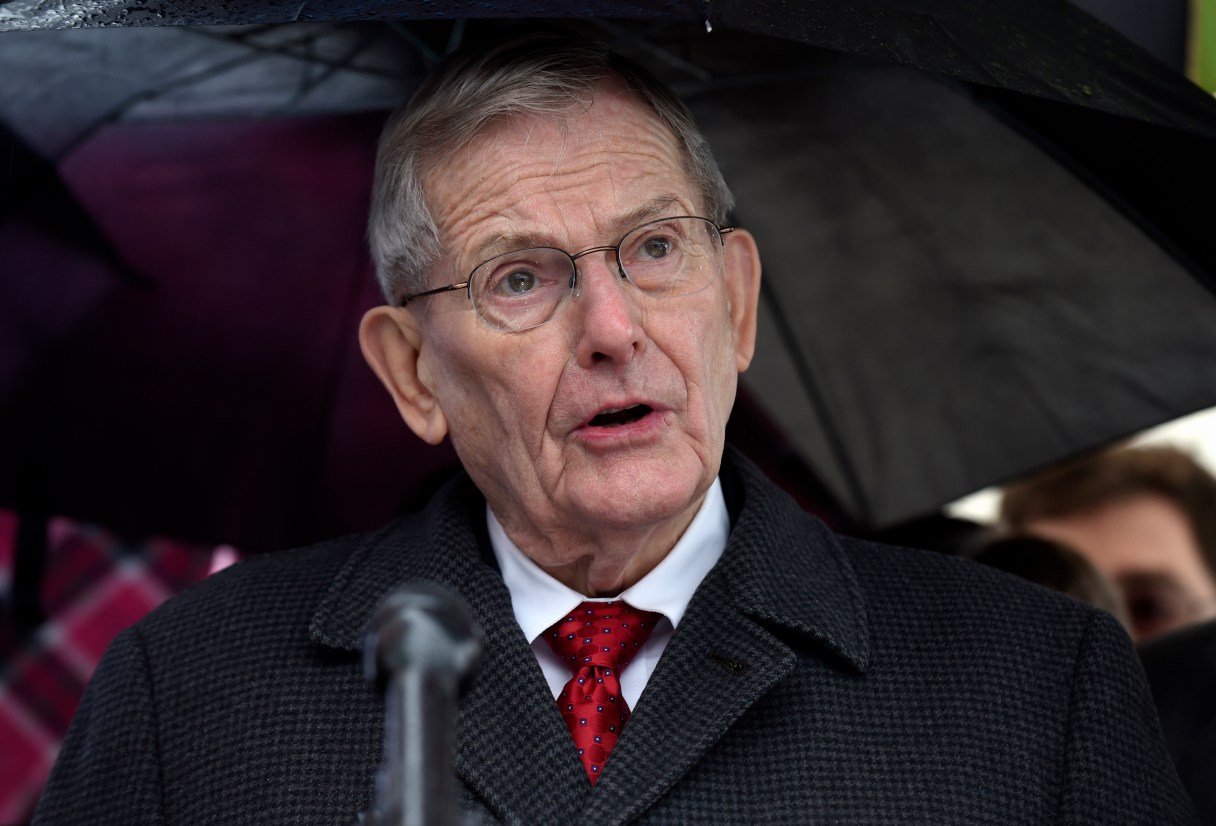
FILE - In this Jan. 12, 2-15 file photo, Good News Community Church Pastor Clyde Reed talks to reporters outside the Supreme Court in Washington. The Supreme Court ruled Thursday for an Arizona church in a dispute over a town's sign law in a decision that three justices said could threaten municipal sign regulations across the country. The church is led by Reed and serves roughly 30 adults and up to 10 children, but lacks a building of its own. The church and Reed sued Gilbert for treating religious groups more severely than others in violation of the First Amendment’s guarantee of religious freedoms. (AP Photo/Susan Walsh, File)

WASHINGTON (AP) – The Supreme Court ruled Thursday for an Arizona church in a dispute over a town’s sign law in a decision that three justices said could threaten municipal sign regulations across the country.

The court unanimously agreed to strike down a law in Gilbert, Arizona, that set tougher rules for signs that direct people to Sunday church services than for signs for political candidates and real estate agents.

But the justices divided over why the law violated the rights of the Good News Community Church.

The church complained that the law forced the church to put up smaller signs than those for political candidates, real estate agents and others. The church’s signs also could be in place for short periods of time.

Lower federal courts upheld the town’s sign ordinance, saying the distinction it drew between different kinds of temporary signs was not based on what a sign said.