
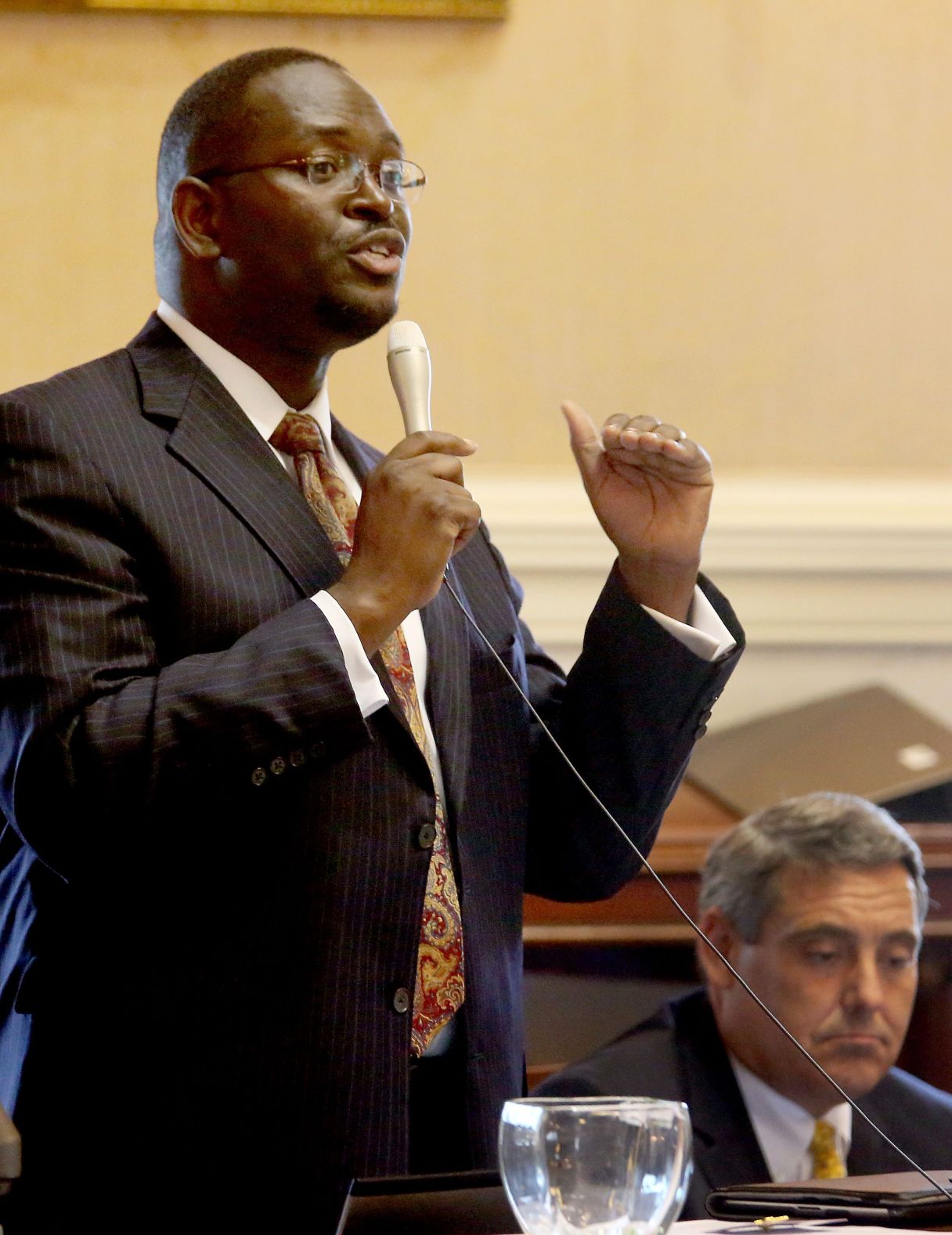
COLUMBIA, S.C. (AP) – When Clementa Pinckney stepped to the well of the South Carolina Senate chamber in April, fellow legislators expected him to lobby for funding of police body cameras. But the charcoal-suited Pinckney, speaking in the rich, deliberate tone that was his calling card, set aside almost any mention of politics or policing, in favor of a biblical story.
He told fellow lawmakers that, like the Apostle Thomas who at first questioned Jesus’ resurrection, they might have harbored doubts about whether a white North Charleston police officer had, in fact, shot a black man in the back. But after watching a video of the shooting, “we all were like Thomas and said ‘I believe.'”
On Thursday, legislators replayed a video of that speech at a Statehouse tribute to Pinckney, 41, who was killed with eight others by a gunman inside the historic black Charleston church he led as pastor. It offered testament to a career – quite long for a man so young – and a persona defined by interwoven faith and activism, stretching from boyhood in Ridgeland, a mostly African-American town in the state’s Lowcountry, to the pulpit of one of its most notable congregations.
“In Ridgeland, there was nothing else to do but go to church,” said the retired Rev. Thomas E. McClary, who was Pinckney’s sixth grade teacher and a mentor to a man who began preaching at 13.
“Clem was a well-spoken young man. He never raised his voice. He emulated, I guess we would say, the pastors that he came in contact with,” McClary said. “He said he had a calling to help people.”