
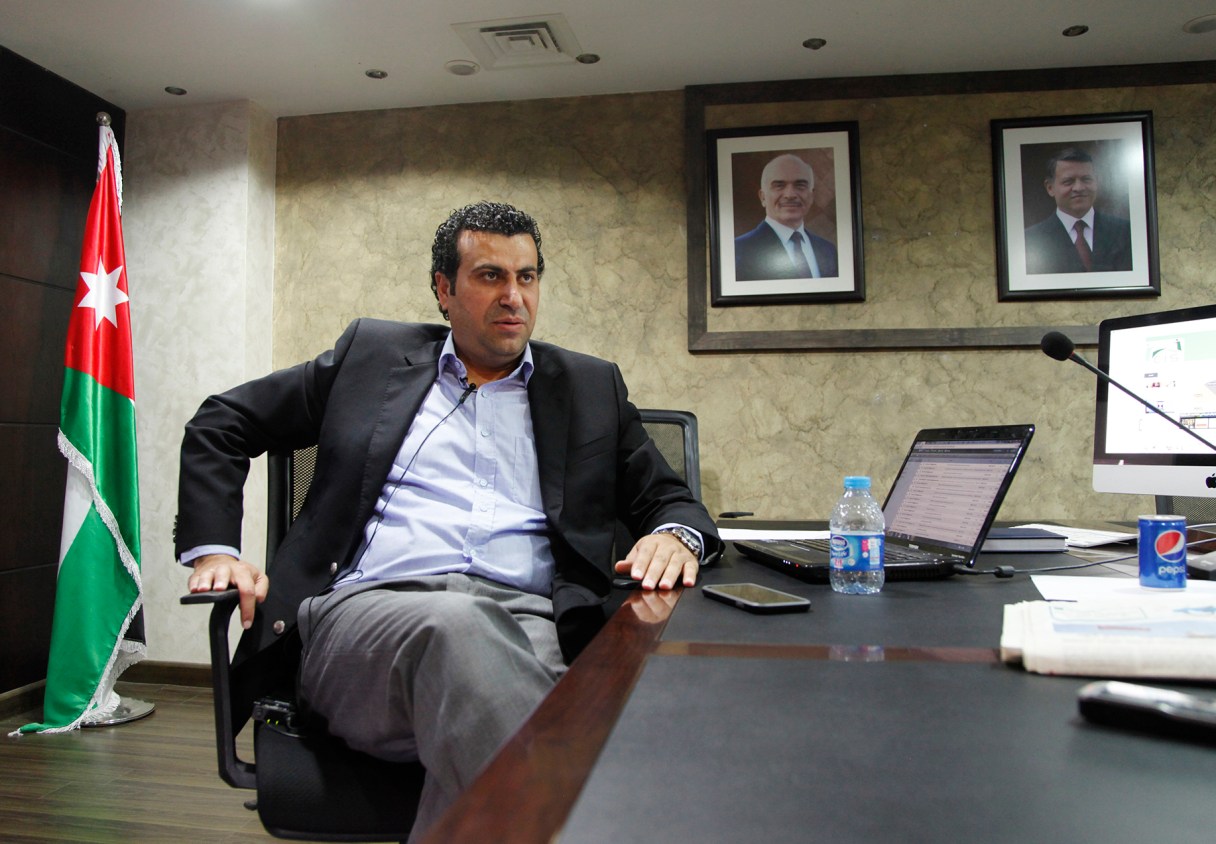
AMMAN, Jordan (AP) – A new Jordanian think tank that focuses on Israel is tucked away on the seventh floor of a glass-fronted Amman office building, without a sign announcing the presence of the Center for Israel Studies.
It’s the sort of discretion still customary in Jordan when it comes to anything concerning Israel. Broad segments of Jordanian society, where a majority have Palestinian roots, oppose “normalization” with Israel even 21 years after the two countries signed a peace deal.
Yet ties have grown stronger between the governments since the regional rise of Islamic militancy unleashed by the 2011 Arab Spring uprisings. Israel and Jordan have signed deals on natural gas and water desalination in recent months and Israeli officials say security cooperation is closer than ever.
Israel needs Jordan as a security buffer on its eastern flank, and is putting a premium on helping to ensure the stability of the pro-Western kingdom, which faces potential threats from Islamic State militants who control large areas in neighboring Syria and Iraq.
Jordan, chronically short on water and energy, needs Israel as a supplier to diversify imports and prevent further shocks to its fragile economy. Israel, meanwhile, is considering hiring workers from Jordan’s troubled tourism sector in its Red Sea port of Eilat.