
Monday, November 16, 2026Nov 16

Rwandans protest outside UK mission over detained general

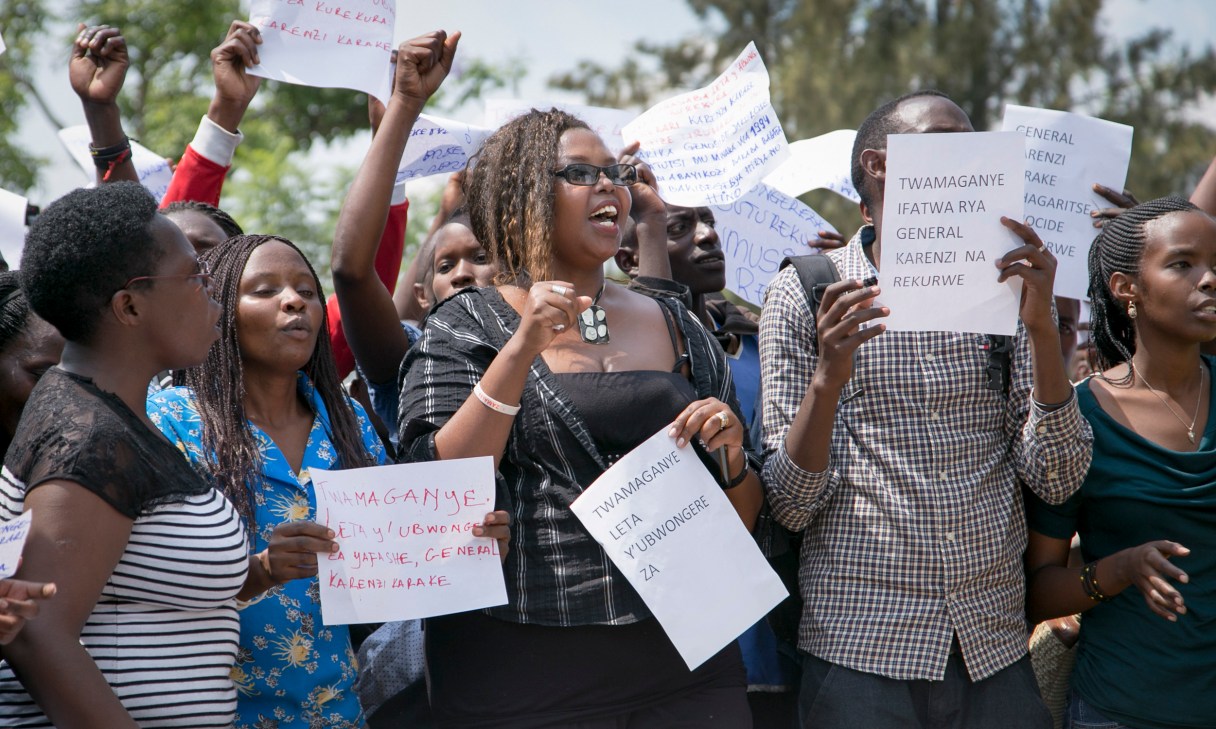
Protesters calling for the release of Lt. Gen. Karenzi Karake, who serves as Rwanda's spy chief, demonstrate outside the British High Commission in Kigali, Rwanda Wednesday, June 24, 2015. Hundreds of people demonstrated outside the British High Commission in Rwanda saying they will not return home until Karake, who was detained in the UK, is set free. Placards in front row in Kinyarwanda from left to right read "We protest the government of United Kingdom which arrested General Karenzi Karake", "We protest the government of United Kingdom" and "We protest the arrest of General Karenzi; free him." (AP Photo/Denyse Uwera)

KIGALI, Rwanda (AP) – Hundreds of people demonstrated outside the British diplomatic mission in Rwanda on Wednesday, saying they will not return home until a general detained in the UK is set free.

The detention in London of Lt. Gen. Emmanuel Karenzi Karake, who serves as Rwanda’s spy chief, has prompted an angry response from Rwanda’s government, which says the charges against Karake are politically motivated.

Karake, a close ally of Rwandan President Paul Kagame, was one of 40 members of the Rwandan military indicted in 2008 on charges of terrorism and genocide by Spanish National Court Judge Fernando Andreu.

Gen. Karake allegedly oversaw the mass killings of Hutus in revenge for their genocide against Rwanda’s Tutsi people and was also behind the killing of eight Spanish humanitarian workers.

Spanish magistrates have used the principle of universal jurisdiction several times to go after current or former government leaders or terrorism suspects, but extraditions and convictions have been rare.