
CLEVELAND, Tenn. – The Bradley County Sheriff’s Office on Wednesday proposed creating a team of four animal control officers to address concerns about aggressive and stray animals.
Bradley County residents living outside of Cleveland have not had animal control since March 2014, marking the end of the county’s longstanding agreement with Cleveland Animal Control to provide those services. Since that time, animal pickup services have been limited to requests made by county law enforcement and emergency responders.
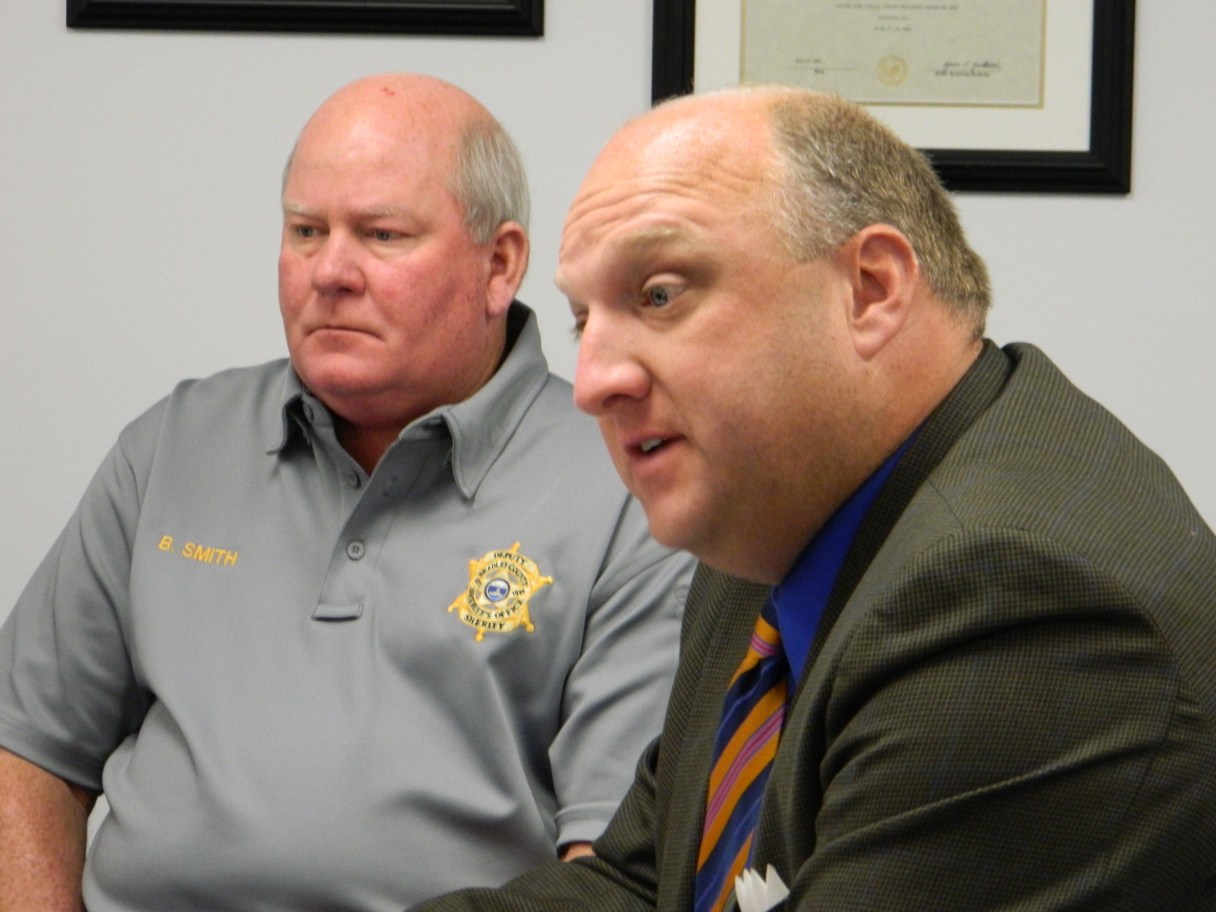
On Wednesday, Sheriff Eric Watson discussed what he described as “a very conservative” animal control plan with members of the Bradley County Commission.
If accepted, it will be the first time the county will be served 24/7 by animal control officers “with arrest and law enforcement powers” who “will patrol our roads and neighborhoods,” Watson said.
The startup cost for the animal control team is estimated at $363,026, with about $150,000 of that amount going toward vehicles, radios, cages and other equipment, he said.
Annual recurring costs are projected to be $209,330, with $179,380 paying for salaries and benefits for four officers. Overtime costs were not included in the proposal, but Watson said deputies average about $4,000 per year.
The proposal follows a series of highly publicized dog attacks that resulted in injuries to the victims and arrests for the animals’ owners.
“The only way that we will solve the problem with stray animals and to make our community safer is to collect and deal with stray animals and to get the community’s cooperation on spay and neutering programs,” Watson said.
The sheriff’s office now receives an average of seven to 11 calls daily about aggressive animals, Watson said, pointing out those figures do not include “the multiple calls” received about stray cats, dogs and livestock.
The plan, which calls for dropping off animal pickups at the shelter operated by the Society for the Prevention of Cruelty to Animals of Bradley County, raised some questions about the private shelter’s ability to handle an increase in its animal population.
“Since we can’t euthanize, we’d have no option but to be in breach of contract and close it down,” SPCA board President Ed Elkins said.
The county’s $80,000 annual agreement with SPCA requires it to be an open-intake facility for county residents, but it says nothing about requiring the SPCA to accept animals from other agencies, nor does it require the shelter to operate as a no-kill facility.
Last fall, a reconstituted SPCA board enacted a policy to establish a capacity for the shelter and to allow for euthanasia if necessary.
Although the organization was established in August 2013 with a no-kill mission, all of its original founding members have resigned, including Betti Gravelle, executive director for Dixie Day Spay, and Beth Foster, an organizer with Cleveland for a No-Kill City.
Paul Leach is based in Cleveland. Email him at paul.leach.press@gmail.com.