
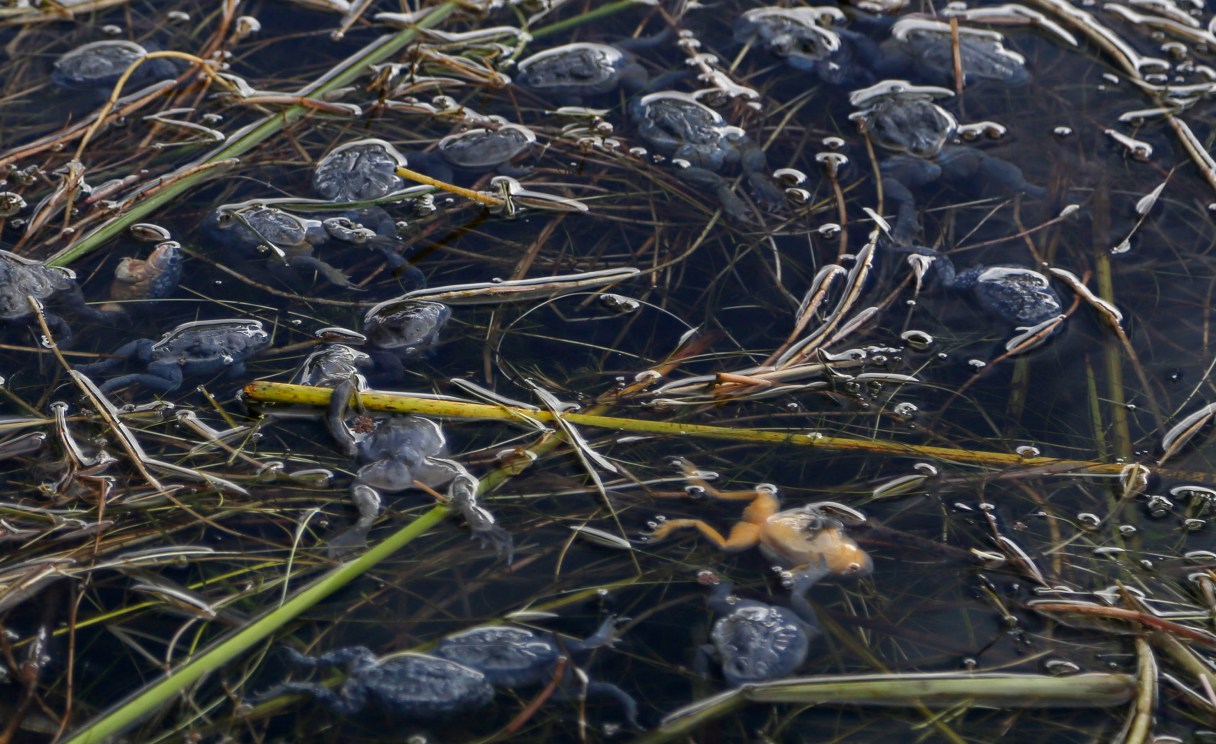
BAHIA DE COHANA, Bolivia (AP) – Gulls swept down to feast on hundreds of dead and dying giant frogs floating in the rancid waters along a southeastern shore of Lake Titicaca, where the algae-choked shallows reek of rotten eggs.
The die-off was the most striking sign yet of the deteriorating state of South America’s largest body of fresh water.
Local fishermen have a harder time finding anything to catch, while farmers who work the land along the shores complain that tainted water is stunting crops.
As human and industrial waste from nearby cities increasingly contaminate the famed lake that straddles the border between Bolivian and Peru, the native Aymara people who rely on it for food and income say action must be taken before their livelihoods, like the frogs, die off.
“We used to live off of fishing,” said Juan Quispe, a local villager. “But now we have nothing to sustain us.” The fish have moved farther and farther from shore.