
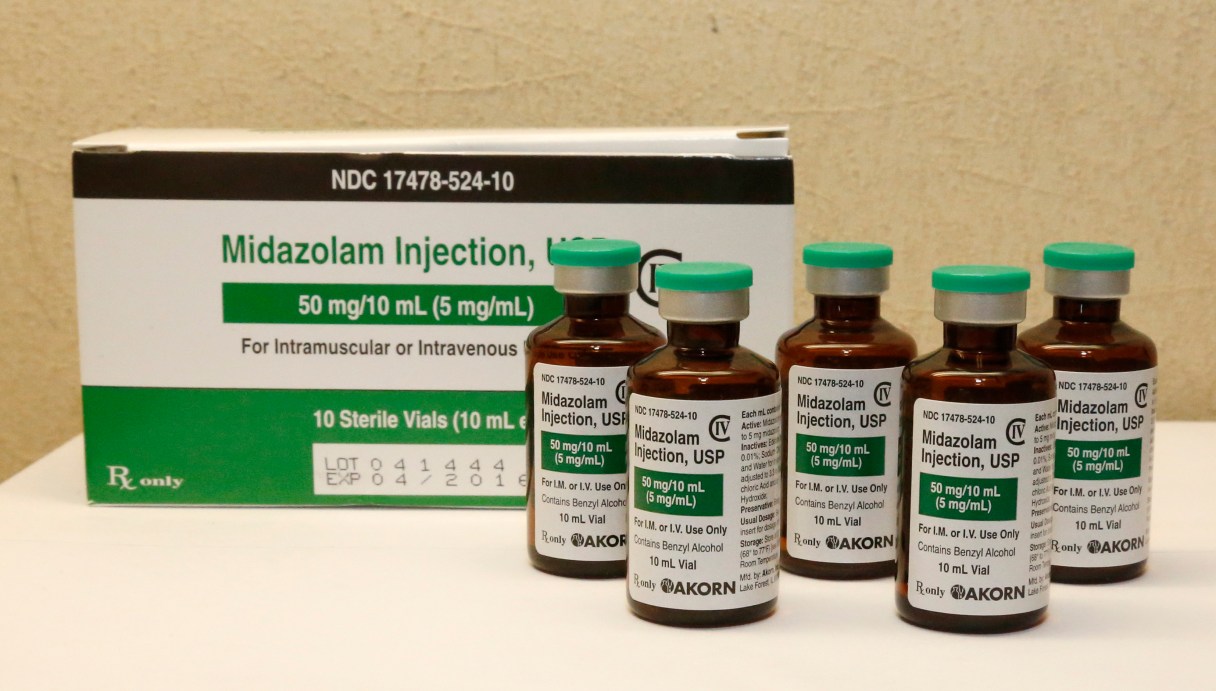
OKLAHOMA CITY (AP) – Oklahoma’s attorney general requested execution dates for three death row inmates Monday, just hours after the U.S. Supreme Court upheld the use of one of the drugs the state uses in its lethal injection protocol.
Attorney General Scott Pruitt sent notice to the Oklahoma Court of Criminal Appeals that Richard Eugene Glossip, John Marion Grant and Benjamin Robert Cole have exhausted their appeals and may be executed as early as Aug. 5.
“The families in these three cases have waited a combined 48 years for justice,” Pruitt said in a statement. “Now that the legal issues have been settled, the state can proceed with ensuring that justice is served for the victims of these horrible and tragic crimes.”
All three inmates were plaintiffs in the case challenging the use of midazolam as the first in a three-drug lethal injection formula, but the Supreme Court justices voted 5-4 that using the drug does not violate the U.S. Constitution’s prohibition against cruel and unusual punishment.
The drug was used for the first time in Oklahoma for the execution of Clayton Lockett last year. Lockett writhed on the gurney, moaned and clenched his teeth for several minutes before prison officials tried to halt the process; he died after 43 minutes. After that, Oklahoma increased by five times the amount of midazolam it uses and executed Charles Warner in January. He complained of a burning sensation but showed no other obvious signs of physical distress.