
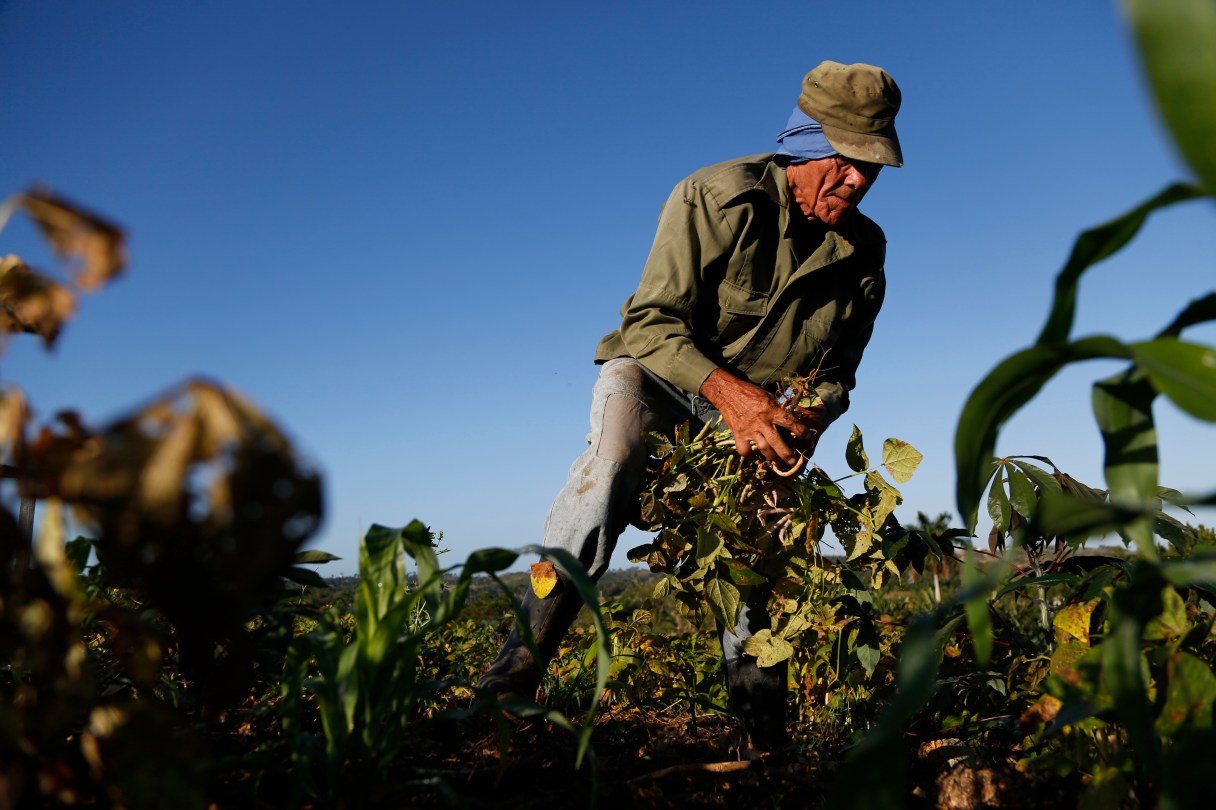
GUIRA DE MELENA, Cuba (AP) – The rust-red fields stretched for miles in the Cuban sun, garlic shoots and beetroot leaves waving gently in the spring breeze.
Pink piglets nosed for scraps under the admiring gaze of former President Ronald Reagan’s first secretary of agriculture and about a dozen other U.S. farmers and trade officials who may represent Cuba’s best hope for ending the half-century-old trade embargo it blames for most of its economic troubles.
On Wednesday, their delegation of about 90 representatives of U.S. agriculture will wrap up three days of meetings with Cuban officials and farmers as part of a lobbying campaign for the elimination of the embargo.
“It’s a matter of time,” former Agriculture Secretary John Block, who is an Illinois hog farmer and Washington lawyer, said as he toured the 247-member cooperative farm outside Havana. “It’ll be lifted and we’ll have normal relations. We should have done it a long time ago.”
President Barack Obama’s loosening of the embargo unleashed a flurry of moves from U.S. companies trying to stake out positions in an untapped market. Significant trade growth appears likely to come fastest in agriculture, the sector of the Cuban economy that has the deepest ties to the United States and has been undergoing market-oriented reforms longer than any other on the island.