
Monday, November 16, 2026Nov 16

Boko Haram refugees risk lives to cross lake to Chad camps

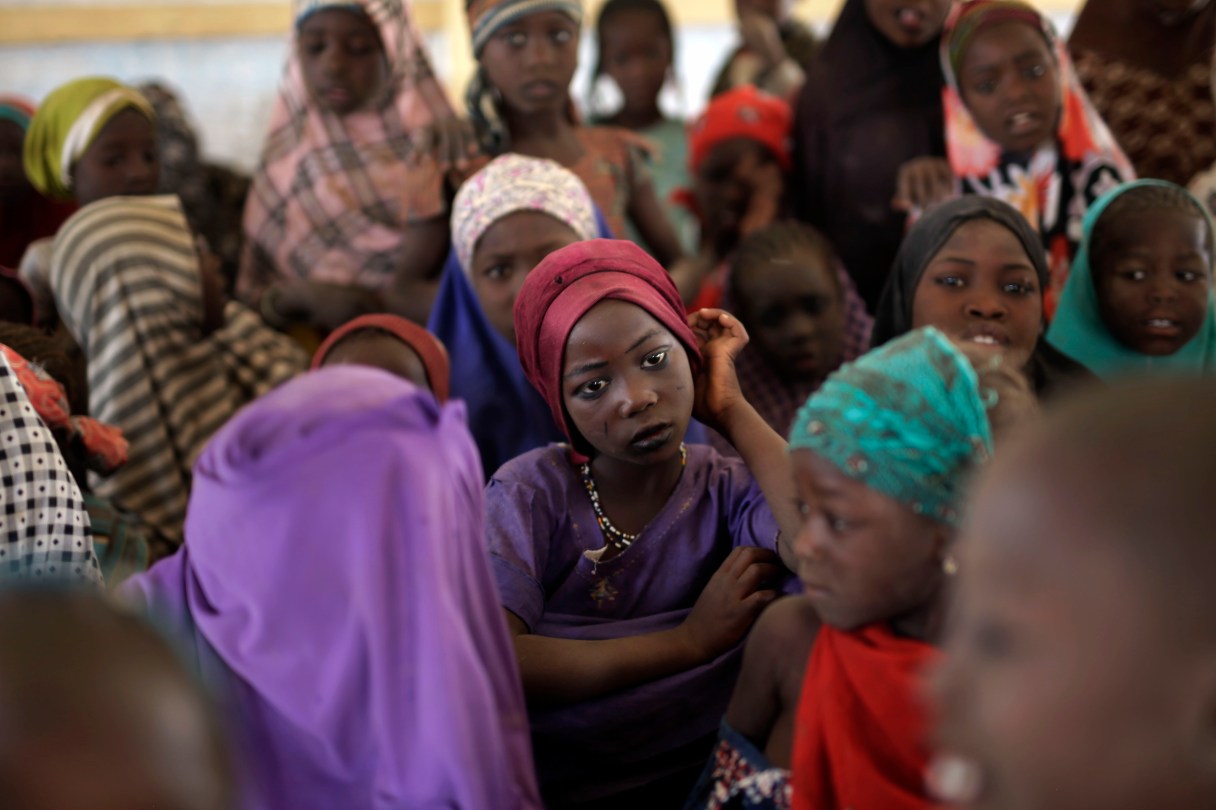
Nigerian girls who fled Boko Haram  to Chad gather in a school set up by UNICEF at the Baga Solo refugee camp in Chad, Wednesday March 4, 2015. The camp, jointly run by the Chadian government and UNHCR, opened mid-January 2015 and hosts over 6000 refugees. Officials say that several thousand had arrived in Chad by the end of 2015 as Boko Haram intensified its attacks in the area. After the Baga massacre, another 15,000 came bringing the total now to about 18,000,   Chadian authorities believe there are more than 2,000 others still trapped on islands, awaiting transport to the safety of a refugee camp though there are more arriving each day in one of the poorest countries on Earth(AP Photo / Jerome Delay)
Nigerian girls who fled Boko Haram to Chad gather in a school set up by UNICEF at the Baga Solo refugee camp in Chad, Wednesday March 4, 2015. The camp, jointly run by the Chadian government and UNHCR, opened mid-January 2015 and hosts over 6000 refugees. Officials say that several thousand had arrived in Chad by the end of 2015 as Boko Haram intensified its attacks in the area. After the Baga massacre, another 15,000 came bringing the total now to about 18,000, Chadian authorities believe there are more than 2,000 others still trapped on islands, awaiting transport to the safety of a refugee camp though there are more arriving each day in one of the poorest countries on Earth(AP Photo / Jerome Delay)

BAGA SOLO, Chad (AP) – Kellou Abakar knew she was in trouble as the contractions started not long after an Islamic extremist group attacked her town in Nigeria. Her husband was nowhere to be found, and so she pulled her 4-year-old son onto her back and grabbed her two little girls by the hand.

The 30-year-old pregnant woman ran as fast as she could to escape the Jan. 3 attack on her hometown of Baga. It was one of the worst massacres ever carried out by Boko Haram during its five-year insurgency.

The jihadist group seeking to establish an Islamic caliphate is believed to have killed hundreds that January day, and Abakar still doesn’t know whether her husband is among the dead more than two months later. Three of her other children disappeared in the chaos that ensued as the militants opened fire indiscriminately and threw people into the burning homes that had been set ablaze.

The family made its way four hours on foot, and by the time she got to the shores of Lake Chad to board a boat to safety in neighboring Chad, she was too far along in her labor to get in. She gave birth in Nigeria. As soon as Aboubakar was born, she and the children got into a boat.

“If I had stayed there they would have killed me too,” she said softly inside a tent at a refugee camp now home to more than 6,000 Nigerians who have fled Boko Haram’s violence.