
Saturday, November 14, 2026Nov 14

‘Duang!’ Chinese poke fun at Jackie Chan with nonsense word

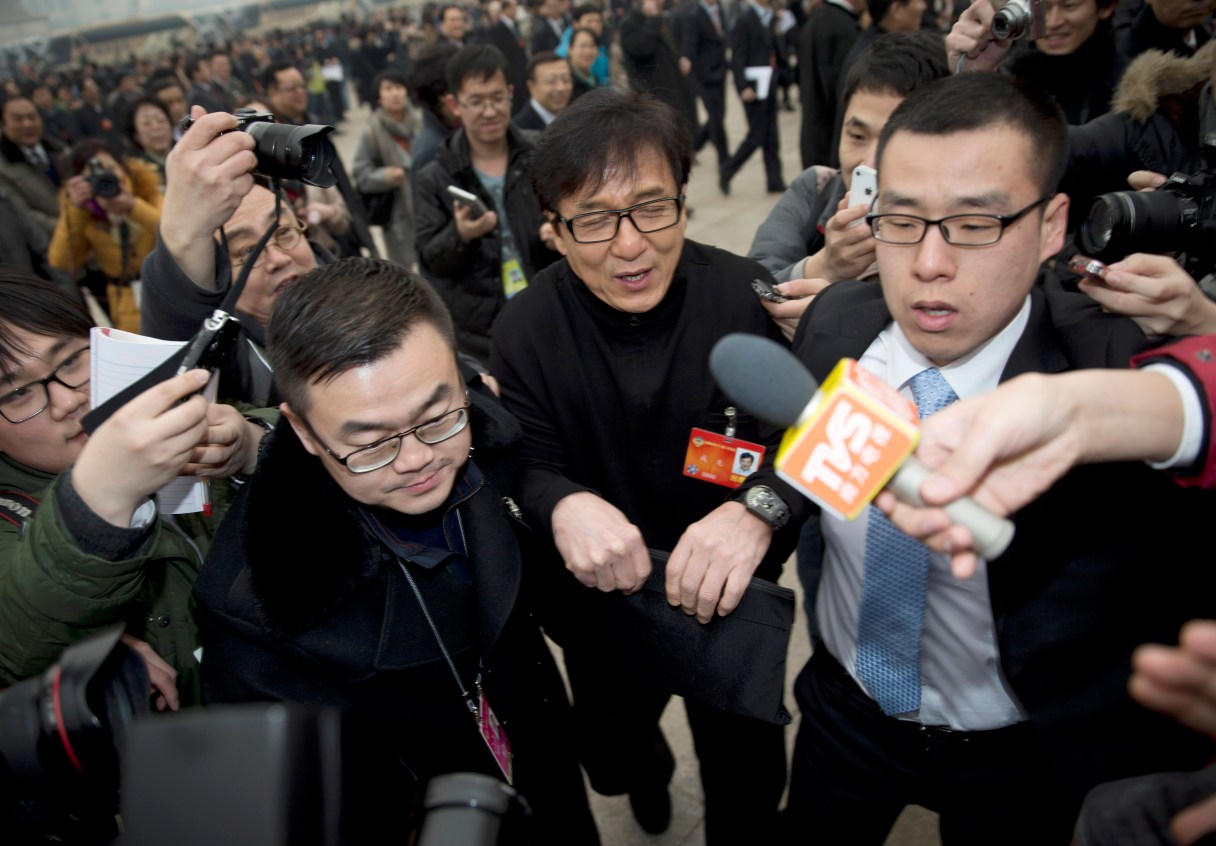
FILE - In this March 3, 2014 file photo, Hong Kong movie star Jackie Chan, center, is escorted by officials as he is surrounded by journalists upon arrival at the Great Hall of the People to attend the opening session of the Chinese People's Political Consultative Conference (CPPCC) in Beijing. Jackie Chan might still be popular in China, but nowadays the pro-Beijing actor is as well-known as fodder for jokes as he is for his gritty martial arts and slapstick humor on screen. His latest contribution to the country’s mass culture and entertainment: “duang.” It’s not a word, but a sound he made in an old TV commercial meaning something like “ta-da!” A new mash-up video of the old ad has made “duang” a trending topic on China’s social media. (AP Photo/Andy Wong, File)

BEIJING (AP) – “Duang!” That’s movie star Jackie Chan’s latest contribution to Chinese mass culture and entertainment.

It’s not a word, but a sound he made in an old TV commercial meaning something like “ta-da!” A new mash-up video of the old ad has made “duang” a trending topic on China’s social media.

The sound began circulating days before the rubberstamp legislature was called into session. Chan is now a quasi-politician appointed to a legislative advisory panel, and some observers see “duang” as a way for the public to question the credibility of delegates and express dissatisfaction with the political system.

Though the tone of the phrase is more derisive than fun, Chan has been a good sport. He told reporters this week that he thinks the trend is “quite funny.”