
Monday, November 16, 2026Nov 16

Ukraine blockade of rebel territory fosters resentment

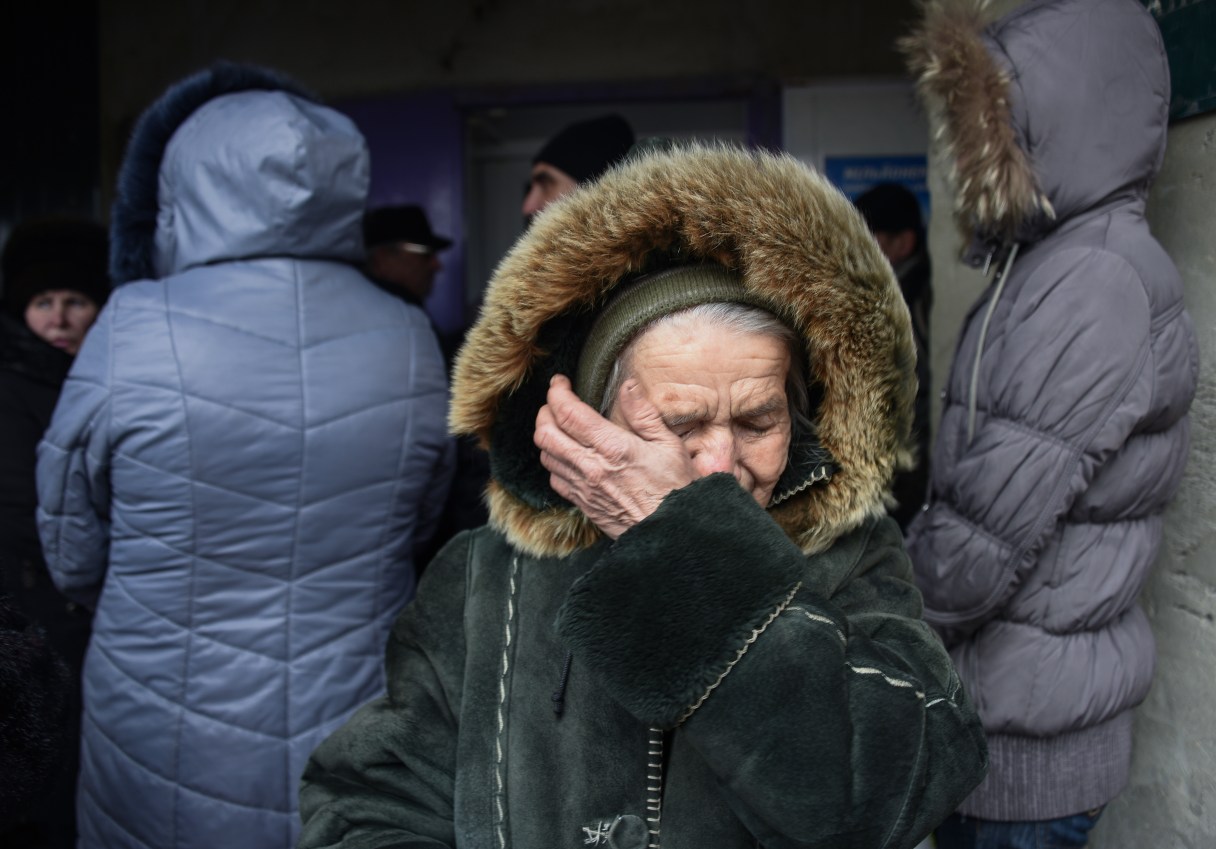
In this picture taken on March 3, 2015, Vera Pavliy, 76 year-old, dressed in a worn-out sheepskin coat, cries outside a bank in the town of Kurakhove, Ukraine, just a few miles away from the area controlled by Russia-backed rebels. The 76-year-old was stuck behind the battle lines with no money and no way to get home. The war that brought death and destruction to the region has largely abated, but the misery remains. In fact an effective government blockade on separatist-held areas is only getting worse. The goal is ostensibly to choke the rebel economy and force the separatist front to yield, but for now Kiev’s actions are fostering only resentment.  (AP Photo/Mstyslav Chernov)
In this picture taken on March 3, 2015, Vera Pavliy, 76 year-old, dressed in a worn-out sheepskin coat, cries outside a bank in the town of Kurakhove, Ukraine, just a few miles away from the area controlled by Russia-backed rebels. The 76-year-old was stuck behind the battle lines with no money and no way to get home. The war that brought death and destruction to the region has largely abated, but the misery remains. In fact an effective government blockade on separatist-held areas is only getting worse. The goal is ostensibly to choke the rebel economy and force the separatist front to yield, but for now Kiev’s actions are fostering only resentment. (AP Photo/Mstyslav Chernov)

KURAKHOVE, Ukraine (AP) – Tears welled up Vera Pavliy’s eyes as she stood outside the bank, looking as if she had just gotten lost. The 76-year-old was stuck behind the battle lines in the east Ukraine town of Kurakhove with no money and no way to get home.

The war that brought death and destruction to the region has largely abated, but the misery remains. In fact an effective government blockade on separatist-held areas is only getting worse. The goal is ostensibly to choke the rebel economy and force the separatist front to yield, but for now Kiev’s actions are fostering only resentment.

For months, banking services have been suspended by state fiat. Civilian movement is limited by a cumbersome permits system. Trucks brimming with supplies stand marooned at army checkpoints and in neighboring towns.

The interruption of banking services forces hundreds of thousands in rebel territories to embark on trips across the front lines to draw pensions or cash aid from friends and family. This week, Pavliy arrived in government-held Kurakhove from the rebel stronghold of Donetsk only to learn the transfer of 4,500 hryvnia ($167) she hoped to find on her account had not gone through. Now, she says, she has no money for the bus to return home.

“I feel alien here … because nobody cares about me,” Pavliy sobbed, standing outside a branch of state-run Oshchadbank in a well-worn sheepskin coat.