
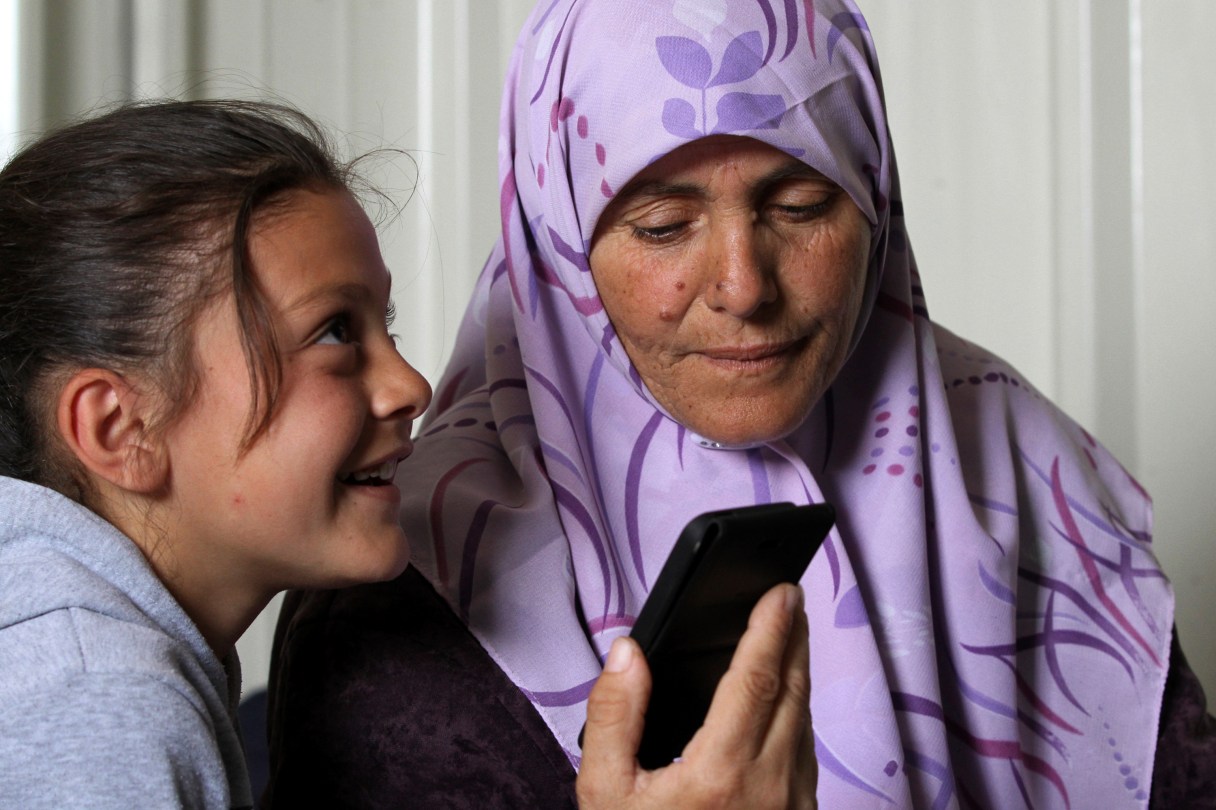
AL-RAMA, Lebanon (AP) – Mohammed Bakkar spends his days with his father and son in a small classroom in Lebanon near the Syrian border, where they cook, eat, wash and sleep, waiting for the day they can reunite with the rest of their family.
Bakkar’s mother, wife and four other children are hundreds of miles away in Jordan’s Azraq refugee camp, squeezed into a white prefab trailer of corrugated metal. When they fled to Jordan after government attacks in their village in Syria in 2013, they thought it would be just a few weeks until they were reunited. It has been more than two years.
The family’s story offers a snapshot of the enormous human tragedy caused by the Syrian civil war. Marking its fourth anniversary this month, the war has claimed the lives of more than 220,000 people and has driven more than 11 million of the prewar population of 23 million from their homes.
Of those, more than 3.8 million have fled to neighboring nations. They now make up what many fear will be a new semi-permanent diaspora, scattered around the region. Some languish in organized camps or shelters. Some scrounge on their own for housing in cities and towns. Others wash up in impromptu tent camps with little aid or support. They live hemmed in by lack of money or documents or by state restrictions.
“My suffering is strong. I haven’t seen my family for two years and sometimes I fear that I will never see them again,” said the 44-year-old Bakkar, tearing up as he sat on the floor of his room before a metal bench lined with cooking pots, a jar of olives and other food. The school where he is living in the border village of al-Rama houses 22 Syrian families, who share toilets and one room with running water where they can wash pots and dishes.