
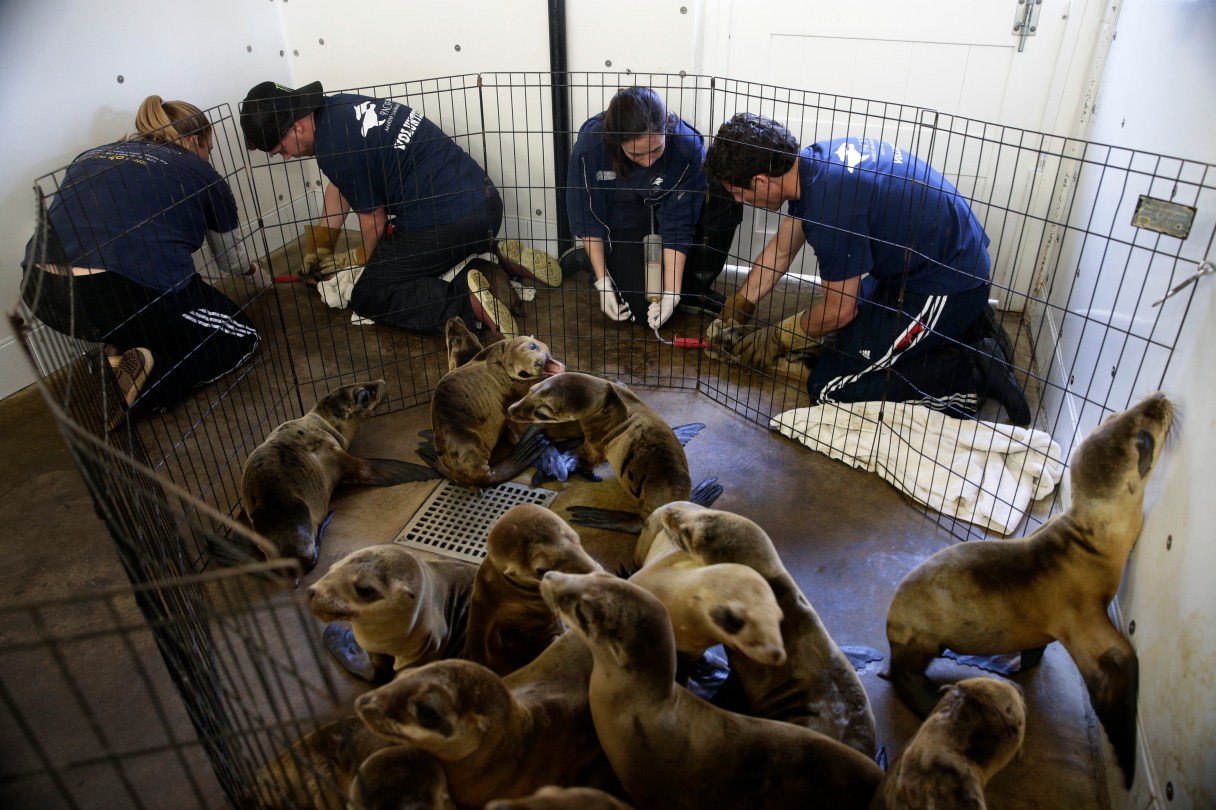
LONG BEACH, Calif. (AP) – More than 1,800 starving sea lion pups have washed up on California beaches since Jan. 1 and 750 are being treated in rescue centers across the state, according to updated numbers released Tuesday by the National Oceanic and Atmospheric Administration. Scientists with the federal agency believe the crisis hasn’t reached its peak and sea lions could continue to arrive on beaches sick and starving for at least two more months.
Here are a few things to know about the sea lion crisis unfolding in California:
WHY ARE THEY STARVING?
Waters off North America’s Pacific Coast are about 2 to 6 degrees Fahrenheit above the long-term average. That could be pushing the fish that sea lions eat – sardines, market squid and anchovies, for example – further north. The majority of sea lions give birth in rookeries on the Channel Islands off the Southern California coast and mothers are leaving their pups alone for up to eight days at a time as they are forced to travel further in search of food. The pups aren’t eating as much or as frequently and they are weaning themselves early out of desperation and striking out on their own even though they are underweight and can’t hunt properly.
WHY IS THE WATER SO WARM?