
SHARM EL-SHEIKH, Egypt (AP) – Hisham Khalil heads a medium-sized construction company, the sort of firm that past Egyptian governments generally ignored in their grand economic reform projects in favor of close friends and mega-businesses.
So when Egypt launched its latest roadmap to an economic future at an international conference this past weekend, Khalil accepted an invitation to attend, looking to see for himself if this crew will be any different.
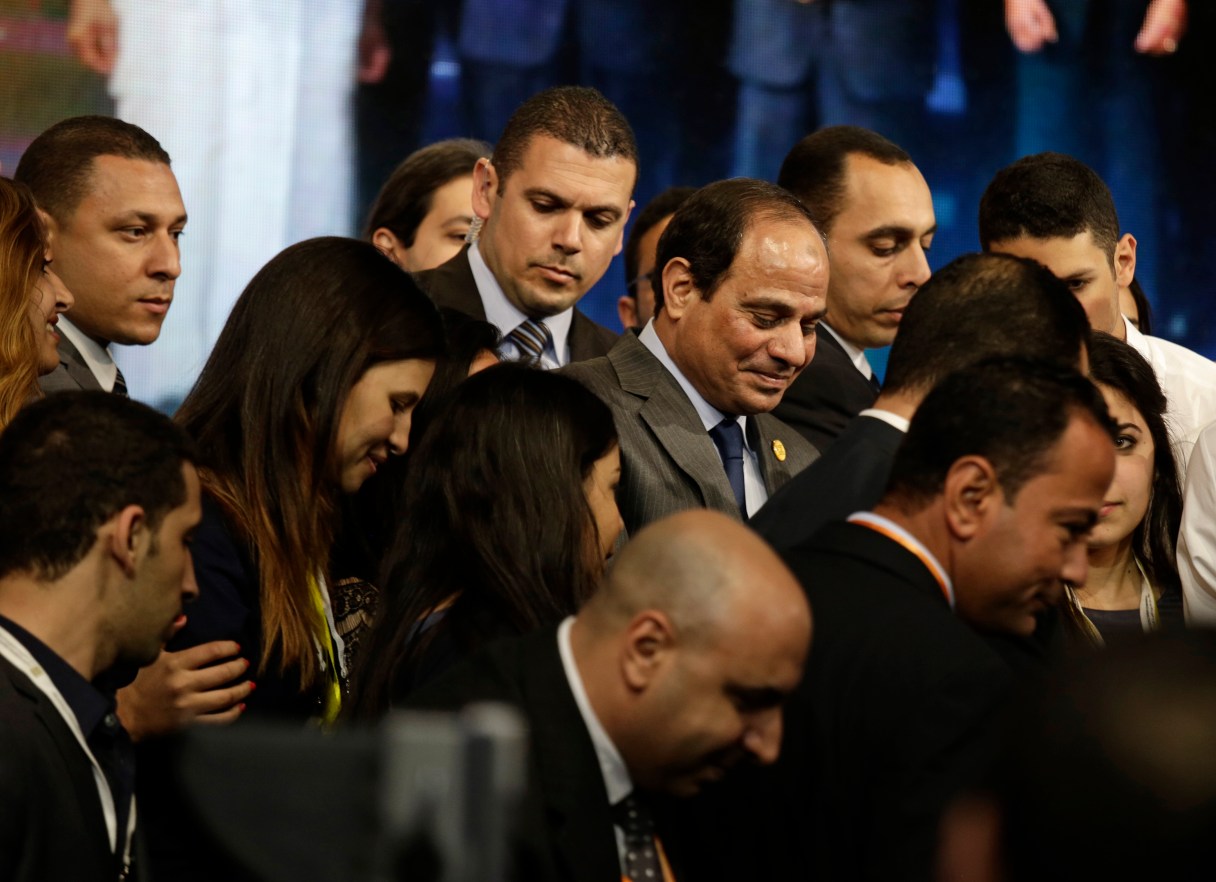
He wasn’t the only one. Many of the Egyptian investors at the Sharm el-Sheikh gathering – making up nearly a third of the over 3,000 attendees – were young and came from small and medium-sized businesses. In the new push for investment to rescue the economy, they wanted to know whether the government, led by the former military chief-turned-president Abdel-Fattah el-Sissi, is ready to widen the base of participation and move away from a centralized operation that long benefited a small pro-regime clique.
In the privatization and investment drive of the 2000s under longtime autocrat Hosni Mubarak, Egypt scored impressive economic growth, reaching an all-time high of 7 percent. But it failed to translate into wider prosperity. The number of Egyptians below the poverty line swelled. A few skyscrapers went up along the Nile, gated communities flourished in the capital’s suburbs but infrastructure elsewhere languished. Mubarak’s sons and top businessmen in the ruling party became symbols of the inequalities.
The squeezed middle class as well as upper-class Egyptians who had no buy-in into the system were the first to trigger the popular uprising in 2011 that ousted Mubarak.