
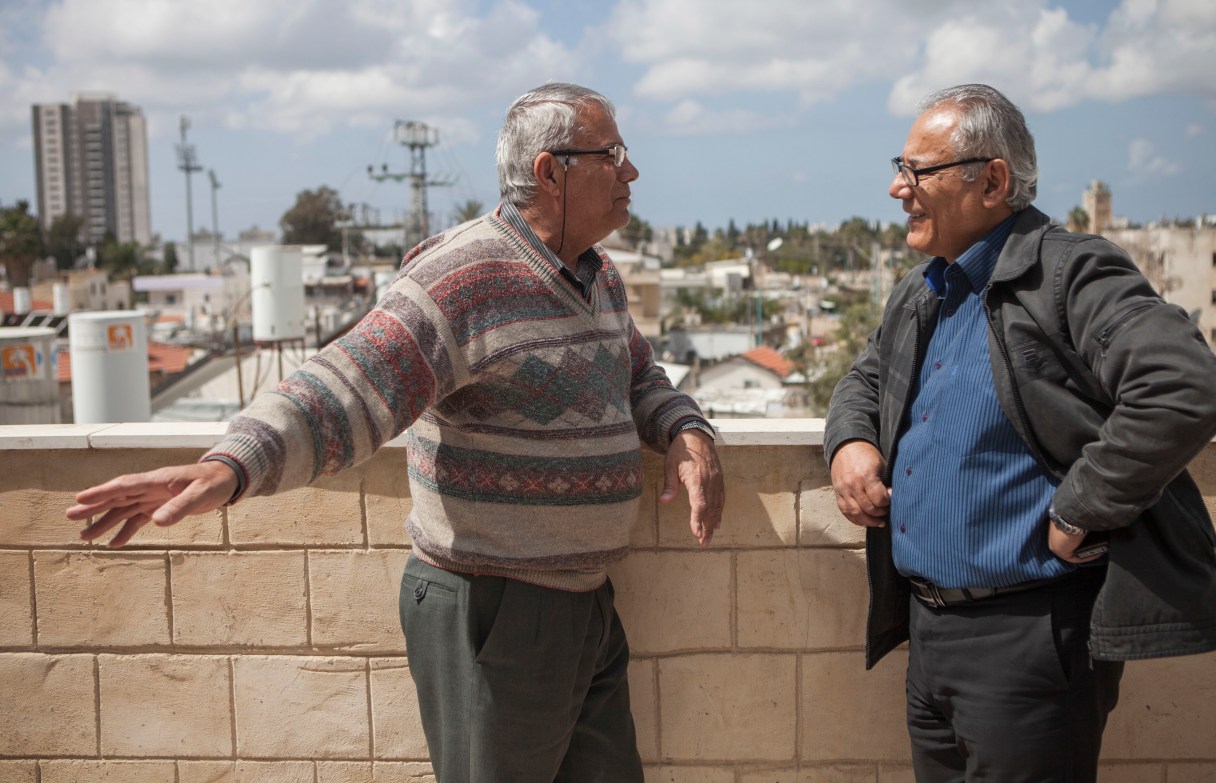
RAMLA, Israel (AP) – Israeli Arabs emerged from this week’s parliament election with more political clout but also a greater sense of exclusion, after Prime Minister Benjamin Netanyahu rallied his supporters by suggesting a high turnout of Arab voters would put his rule in danger.
The election, in which Netanyahu eventually secured his fourth term, highlighted the fraught relationship between Israel’s Arab citizens and the Jewish state.
Arabs voted in larger numbers than before and turned the main party representing them, the Joint List, into the third-largest in parliament, signaling they are more willing to work within the political system to seek equality. But some also said the campaign, which has polarized Israeli society, reflected an increasingly hostile atmosphere toward Arabs.
“I felt like someone stuck a knife in my heart because I am always pushing for equality between Arabs and Jews,” Zuhair Bahloul, a veteran Arab sportscaster known for his pitch-perfect game commentary in Hebrew, said of Netanyahu’s election day remarks.
“There is a bit of a feeling of despair because the prime minister is not the prime minister of all citizens, and the right is trying to push the Arabs aside,” said Baloul, 64, who will enter parliament for the center-left Zionist Union, which failed to unseat Netanyahu.