
Sunday, November 15, 2026Nov 15

Singapore’s Lee seen as an inspiration for modern China

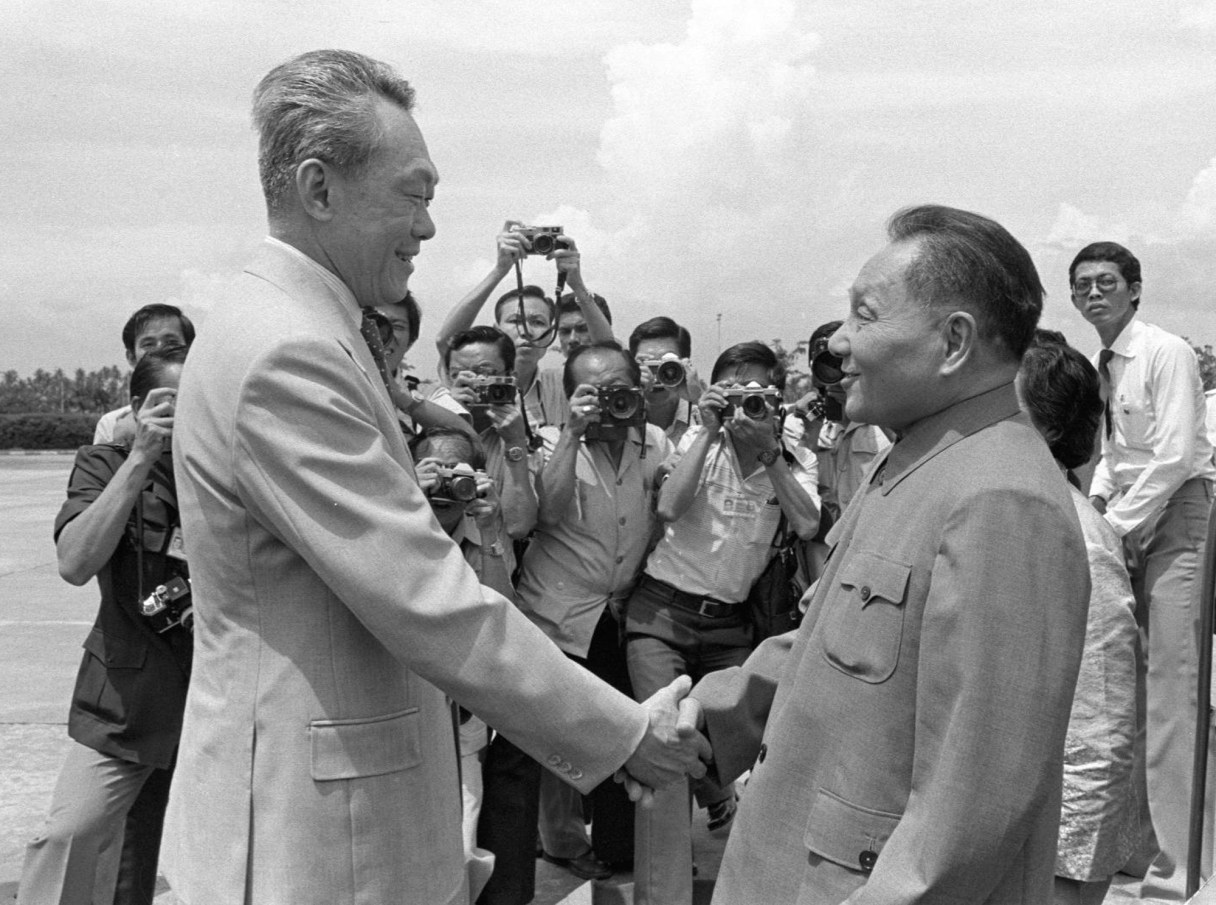
In this Nov. 12, 1978 photo released by China's Xinhua news agency, Lee Kuan Yew, left, welcomes then-Chinese Vice Premier Deng Xiaoping in Singapore. Chinese leaders admired modern Singapore’s founder Lee for his toughness, economic pragmatism and insistence on respect for authority. In many ways, Lee’s model of “Asian values,” combining authoritarianism and economic planning, became China’s own blueprint for modernity. Most significantly, late Chinese leader Deng looked to Singapore, with its ethnic Chinese majority, as he embarked on his country’s economic reforms in the late 1970s. Those changes would spur three decades of rapid growth and lift China from the grinding poverty and political dysfunction that were legacies of Mao Zedong’s centrally planned economy. Lee, who died Monday, March 23, 2105 at age 91, and Deng established a close relationship during their several meetings, sharing a starkly practical approach, hard-headed manner and similarly ruthless bent when their wills were defied. (AP Photo/Xinhua, Zhang Guiyu) NO SALES

BEIJING (AP) – Chinese leaders admired modern Singapore’s founder Lee Kuan Yew for his toughness, economic pragmatism and insistence on respect for authority. In many ways, Lee’s model of “Asian values,” combining authoritarianism and economic planning, became China’s own blueprint for modernity.

Most significantly, late Chinese leader Deng Xiaoping looked to Singapore, with its ethnic Chinese majority, as he embarked on his country’s economic reforms in the late 1970s. Those changes would spur three decades of rapid growth and lift China from the grinding poverty and political dysfunction that were legacies of Mao Zedong’s centrally planned economy.

“Deng was greatly influenced by what he saw on his trip to Singapore” in 1978, said Su Hao, professor at China Foreign Affairs University. “It’s fair to say China’s reform and opening policy has a direct relationship with Singapore, where ethnic Chinese demonstrated their ability to create an economic miracle.”

Lee, who died Monday at age 91, and Deng established a close relationship during their several meetings, sharing a starkly practical approach, hard-headed manner and similarly ruthless bent when their wills were defied.

“Society in Singapore is quite orderly. They manage things very strictly,” Deng told his subordinates in 1992, describing how China’s special economic zones should copy the city-state. “We ought to use their experience as a model. And we ought to manage things even better than they do.”