
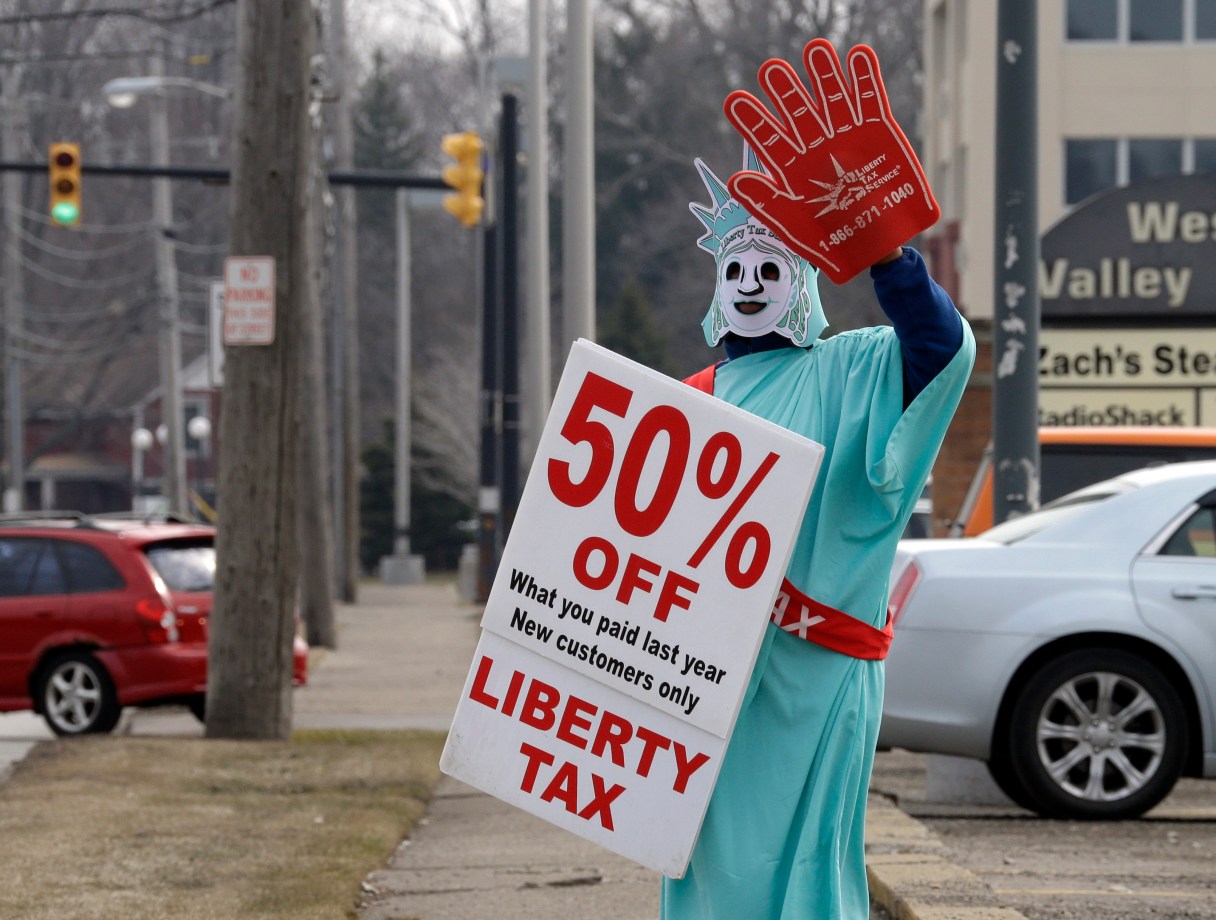
WASHINGTON (AP) – Cash-strapped Americans anxious for tax refunds are increasingly turning to payment advances, prepaid cards or other costly services when getting tax preparation help, according to new federal data raising concerns among regulators about whether consumers are fully informed about the fees.
Regulators are looking to increase oversight of preparers amid the rise in “refund anticipation checks,” a type of cash advance especially popular among low-income families who receive the Earned Income Tax Credit, the government’s $65 billion cash benefit program. The advances are being marketed as a way to get fast refunds or defer payment of tax preparation costs.
The Consumer Financial Protection Bureau says some consumers have complaints about refund anticipation checks centered on advertising, quality of service or fees.
The bureau is finalizing the first rules on prepaid debit cards, including those for tax refunds, that would require “easy to understand” disclosures upfront about costs and risks.
Refund anticipation checks rose to roughly 21.6 million in 2014, up 17 percent from 2011, according to IRS data provided to The Associated Press. About half the purchasers are EITC recipients; roughly 84 percent are low-income, according to the data. Industry analysts project the payment advances and their fees will become more widespread as tax preparers seek to boost revenue.