
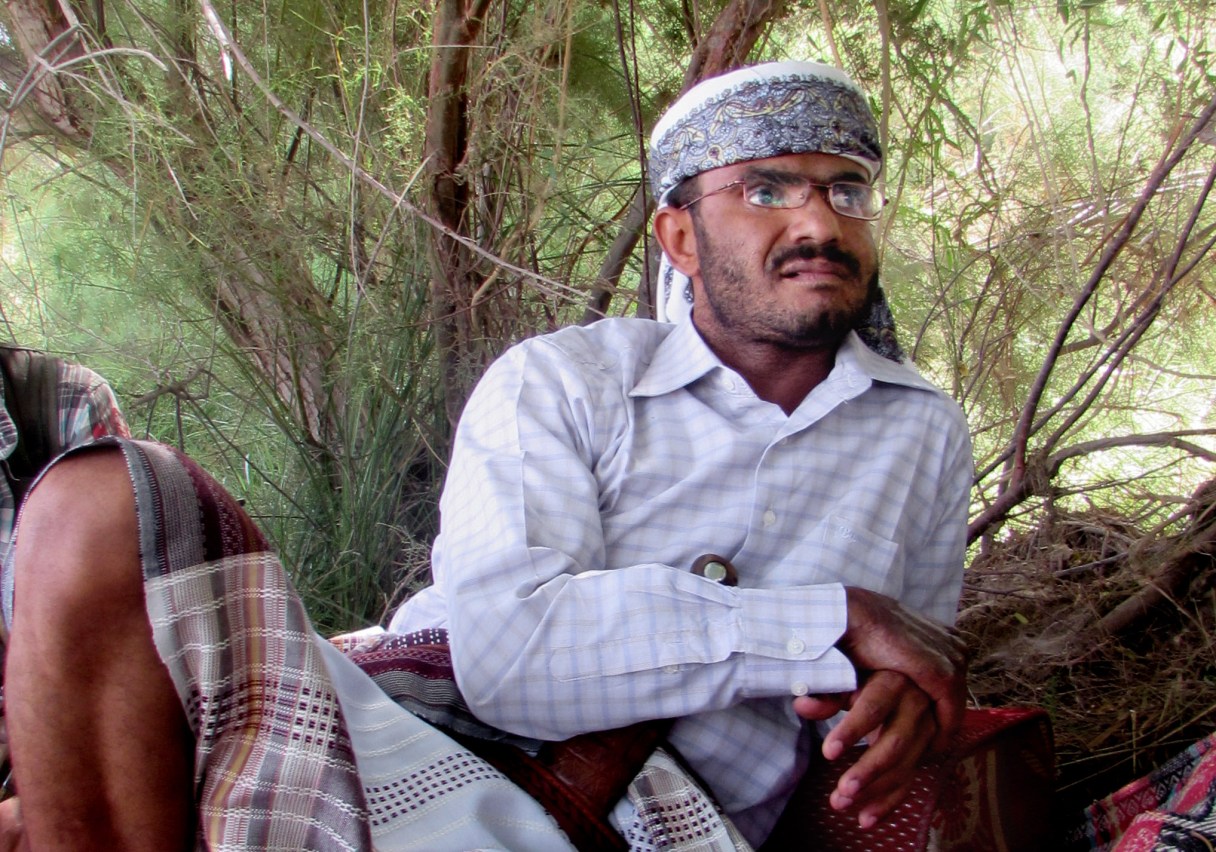
BATAYS, Yemen (AP) – In the Yemeni president’s battle with Shiite rebels, one of his chief allies is a powerful southern militia leader, a one-time anti-government fighter who later led his men in a bloody campaign against al-Qaida.
At 34, Abdul-Lateef al-Sayed al-Bafqeeh is already a battle-hardened figure and a local hero in southern Abyan province. He has survived multiple attempts by al-Qaida to assassinate him, including a suicide bombing that cost him an eye and nearly one of his hands.
But the reliance of U.S.-allied President Abed Rabbo Mansour Hadi on al-Bafqeeh’s 6,700-man militia for survival is just another illustration of how Yemen is falling apart. Hadi was forced to flee to the southern city of Aden after Shiite rebels known as Houthis took over the capital, Sanaa, and much of northern Yemen. The rebels are backed by Yemen’s former president, Ali Abdullah Saleh, who still controls the best trained and equipped units of the military. Those units and the rebels are now moving toward Aden, aiming to crush what remains of Hadi’s government and his loyalists in the military.
The conflict has crippled a key American ally, Hadi, who was working closely with Washington against al-Qaida’s branch in his country. It also could spark intervention in the country by Hadi’s allies, Saudi Arabia and Egypt, who believe the Houthis are a proxy for Shiite powerhouse Iran to gain power in Yemen. Meanwhile, al-Qaida has taken advantage of the chaos to expand, building alliances with Sunni tribes against the Shiite Houthis and seizing at least one city in the south.
“The government is weak and maskeenah,” al-Bafqeeh told The Associated Press, using the Arabic word for “pathetic.”