
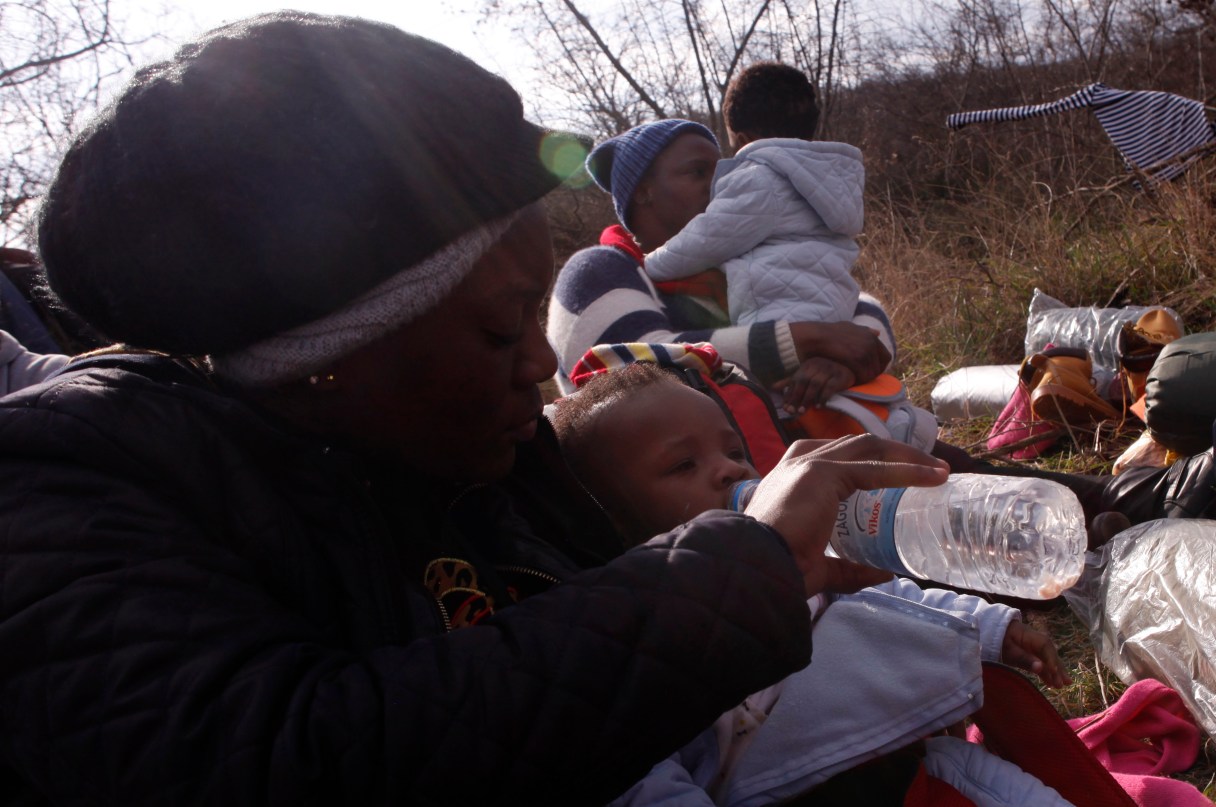
VELES, Macedonia (AP) – This is the moment when Sandrine Koffi’s dream of a new life in Europe ended – and her nightmare of an infant lost in the Macedonian night began.
As club-wielding police closed in, the 31-year-old from Ivory Coast couldn’t keep up with her fellow migrants. Not after more than a week of treacherous hikes through mud and bone-chilling rain; of leaky tents, stolen food and fitful sleep; of loads too heavy to bear.
Koffi had given her 10-month-old daughter, Kendra, to a stronger person to carry as the 40-member group of West Africans walked with trepidation into Veles, Macedonia. They hoped, because it was pitch dark and miserably cold, that no one would see them and raise the alarm. But after a 10-day trek over 150 kilometers (90 miles), their luck ran out.
Officers captured Koffi and deported her with most of the group back to Greece. Others who escaped carried Kendra all the way to the Serbian border. That was more than two weeks ago. Now, the mother cannot stop crying for her distant daughter – or wondering why they can’t travel like “normal” people.
“I feel like I’m not a human being,” Koffi told The Associated Press from the migrants’ safe house in Greece, where she and her daughter had arrived last month in hopes of being escorted through the Balkans to Hungary and, eventually, to family in Paris. “Why is it necessary to separate a mother from her child? Why is all of this necessary?”