
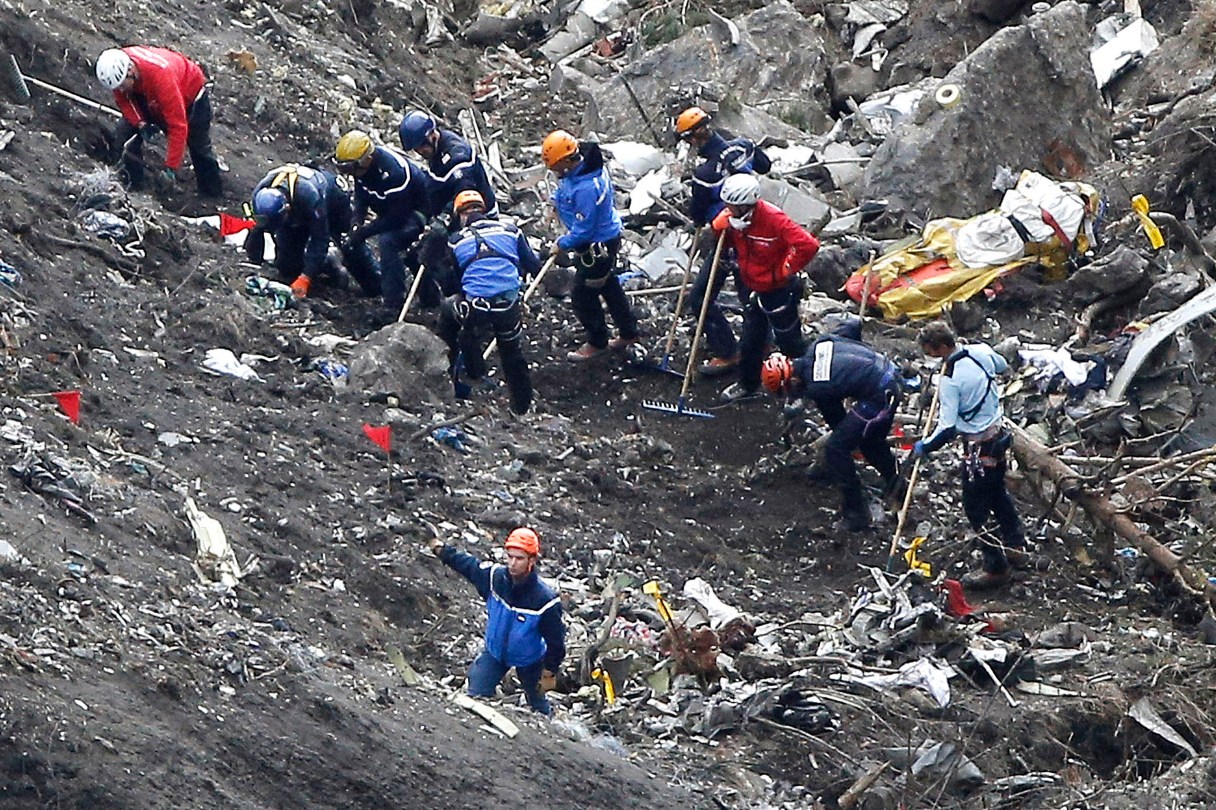
SEYNE-LES-ALPES, France (AP) – The ravine echoes with helicopter rotors, the scrape of metal on stone, the rumble of sliding scree as the remnants of Germanwings Flight 9525 dislodge from the mountainside.
The somber mission to recover the remains of 150 people killed when their plane slammed full speed into the Col de Mariaud is not a quiet one, and evidence can be gathered only when the mountains cooperate.
From 8:30 a.m. until 6 p.m., while the light is good, the helicopters ferry the crews into the ravine. It is too steep to land, so the 40 crewmembers are winched down singly or in pairs with packs bulging with clear plastic bags, red and yellow evidence tags, and the ropes they will use to keep each other from slipping when the black Alpine stone crumbles beneath their feet. Each investigator is linked to a local mountaineer, familiar with the terrain and with the skills to keep them safe.
Few pieces are larger than a car door. Most are smaller. And with each step the recovery workers make, crucial pieces of evidence slide inexorably downward. Some slip into a mountain brook fed by the snow that has only just begun melting in the French Alps.
“We have not found a single body intact,” Col. Patrick Touron, one of France’s leading forensic investigators, said Friday from Seyne-les-Alpes. “DNA will be the determining element that will lead to identification.”