
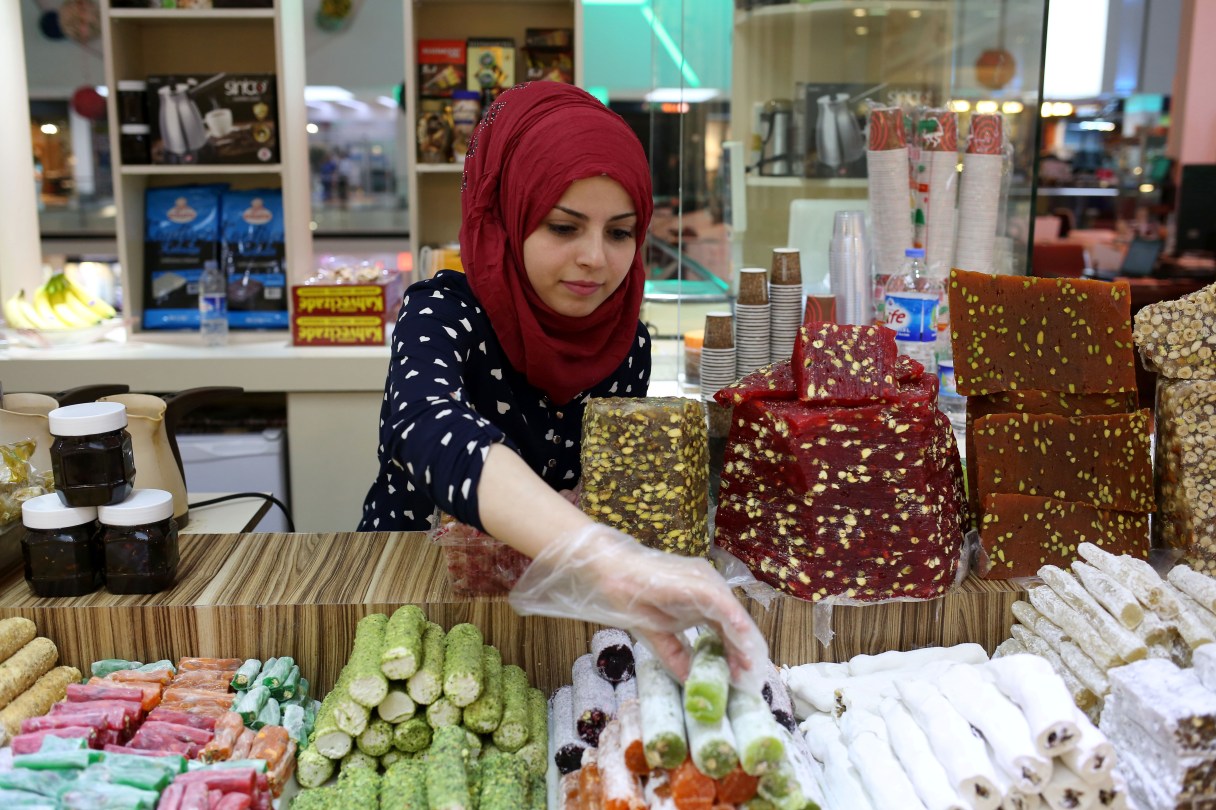
IRBIL, Iraq (AP) – Two years after fleeing from her home in Damascus, 22-year-old Rahaf Abdullah is working at a gleaming mall in Iraq’s Kurdish region, selling sweets to local women who largely refuse to take such jobs.
While the mall job is a rite of passage for teenagers in America, in Iraq’s conservative and relatively well-off Kurdish region the idea of women working – particularly in menial or retail jobs – is frowned upon. That has created opportunities for some of the tens of thousands of Syrian refugees and displaced Iraqis who have sought refuge here.
“The Kurdish girls are a bit conservative – no, a lot conservative,” Abdullah said as she organized boxes of Middle Eastern sweets made of spun sugar, fruit, pistachio nuts and honey. “Their logic is that the women never have to work, they only have to go to school and then return home.”
Syria’s civil war, now in its fifth year, has killed more than 220,000 people and created nearly 4 million refugees, according to the United Nations. Hundreds of thousands of refugees are languishing in camps, relying on international aid or struggling to support themselves in host countries where jobs are scarce.
But in Iraq’s semi-autonomous Kurdish region, where a quarter of a million Syrians are living among 5 million Iraqis, refugee women like Abdullah have found decent work.