
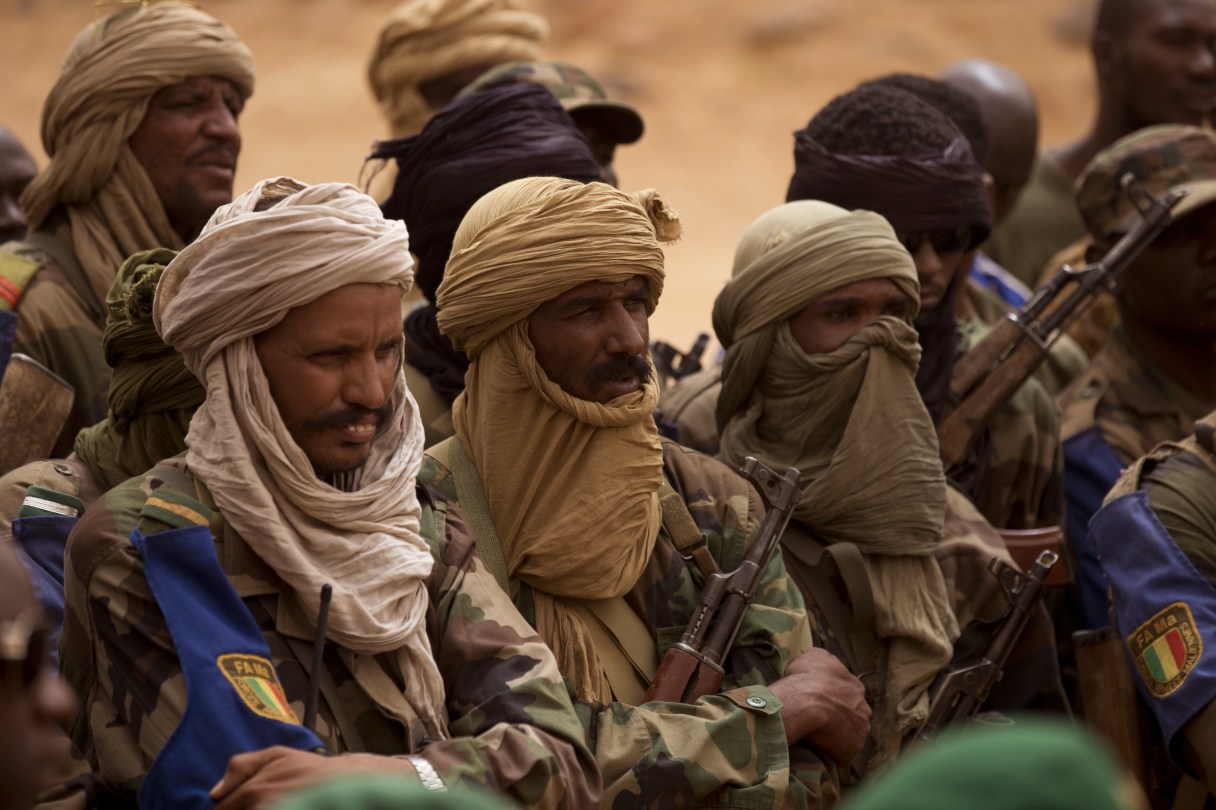
DAKAR, Senegal (AP) – Tuareg separatist rebels agreed to sign a peace deal with the government in just over a week’s time but that hasn’t stopped them from attacking towns and encroaching further south toward Mali’s capital. The toll has risen to 30 dead in recent days.
The most recent violence may be an attempt by Tuareg separatists to gain ground before the May 15 signing ceremony. The peace deal came after months of negotiations in Algeria between Mali’s government, Tuareg separatist groups and government-allied armed groups.
The traditionally nomadic Tuaregs, wanting greater autonomy for the country’s northern region, have risen up against the central government in Mali several times since the country’s independence from France in 1960. The most recent uprising opened the door for jihadists to seize half of Mali after government forces scattered in 2012. That prompted a French military intervention in 2013.
These new attacks are likely trying to spread government forces and keep them off balance, said Bruce Whitehouse, associate professor of anthropology at Lehigh University who has lived in Mali and often writes about it.
“The groups are jockeying for position. They think if an agreement is signed they at least want a position of strength when that happens,” Whitehouse said.