
Friday, November 6, 2026Nov 6

This story is free to read.

Colombia suspending use of anti-coca herbicide

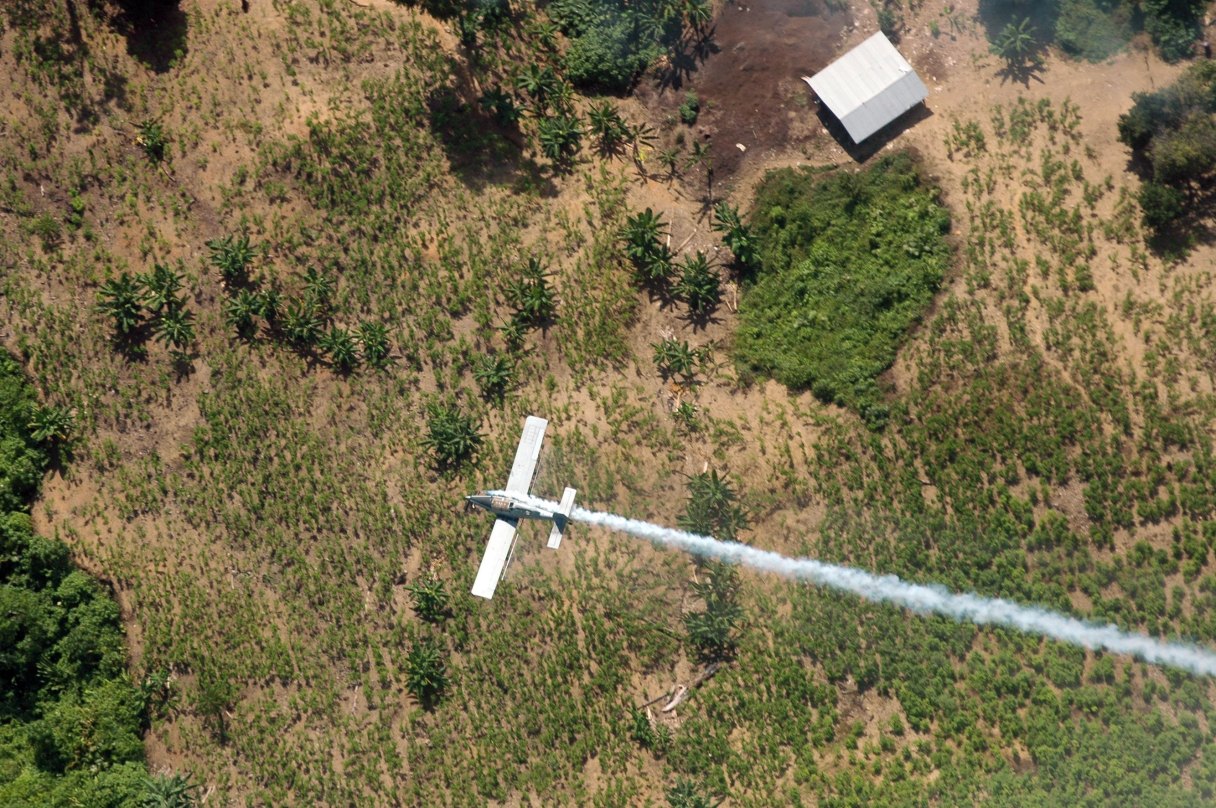
FILE - In this June 4, 2008 file photo, a police plane sprays herbicides over coca fields in El Tarra, in the Catatumbo river area, near Colombia's northeastern border with Venezuela. Colombia’s President Juan Manuel Santos said Saturday, May 9, 2015 that he’s halting use of a herbicide that’s a key part of U.S.-financed efforts to wipe out cocaine crops, saying he’s taking the move following a Health Ministry recommendation based on a World Health Organization decision to classify glyphosate as a carcinogen. (AP Photo/Luis Robayo, File)
FILE - In this June 4, 2008 file photo, a police plane sprays herbicides over coca fields in El Tarra, in the Catatumbo river area, near Colombia's northeastern border with Venezuela. Colombia’s President Juan Manuel Santos said Saturday, May 9, 2015 that he’s halting use of a herbicide that’s a key part of U.S.-financed efforts to wipe out cocaine crops, saying he’s taking the move following a Health Ministry recommendation based on a World Health Organization decision to classify glyphosate as a carcinogen. (AP Photo/Luis Robayo, File) FILE - In this June 4, 2008 file photo, a police plane sprays herbicides over coca fields in El Tarra, in the Catatumbo river area, near Colombia's northeastern border with Venezuela. Colombia’s President Juan Manuel Santos said Saturday, May 9, 2015 that he’s halting use of a herbicide that’s a key part of U.S.-financed efforts to wipe out cocaine crops, saying he’s taking the move following a Health Ministry recommendation based on a World Health Organization decision to classify glyphosate as a carcinogen. (AP Photo/Luis Robayo, File)

BOGOTA, Colombia (AP) – Colombia’s President Juan Manuel Santos said Saturday he is halting use of a herbicide that is a key part of U.S.-financed efforts to wipe out cocaine crops.

Santos said he was taking the move following a Health Ministry recommendation based on a World Health Organization decision to classify glyphosate as a carcinogen.

Speaking at an event in the capital, Bogota, Santos said that defense and health officials should agree on a transition period, during which “spraying of glyphosate has to be replaced with other mechanisms, for example, intensifying manual eradication” of coca plants.

The U.S. ambassador to Colombia, Kevin Whitaker, said a decision on whether to use the chemical is a decision for Colombia and the U.S. government respects it.

More than 4 million acres of land in Colombia have been sprayed with the popular weed killer over the past two decades to kill coca plants, whose leaves produce cocaine. The spraying program is partly carried out by U.S. contractors.