
Friday, November 13, 2026Nov 13

Some gay and transgender residents critical of Utah antidiscrimination law

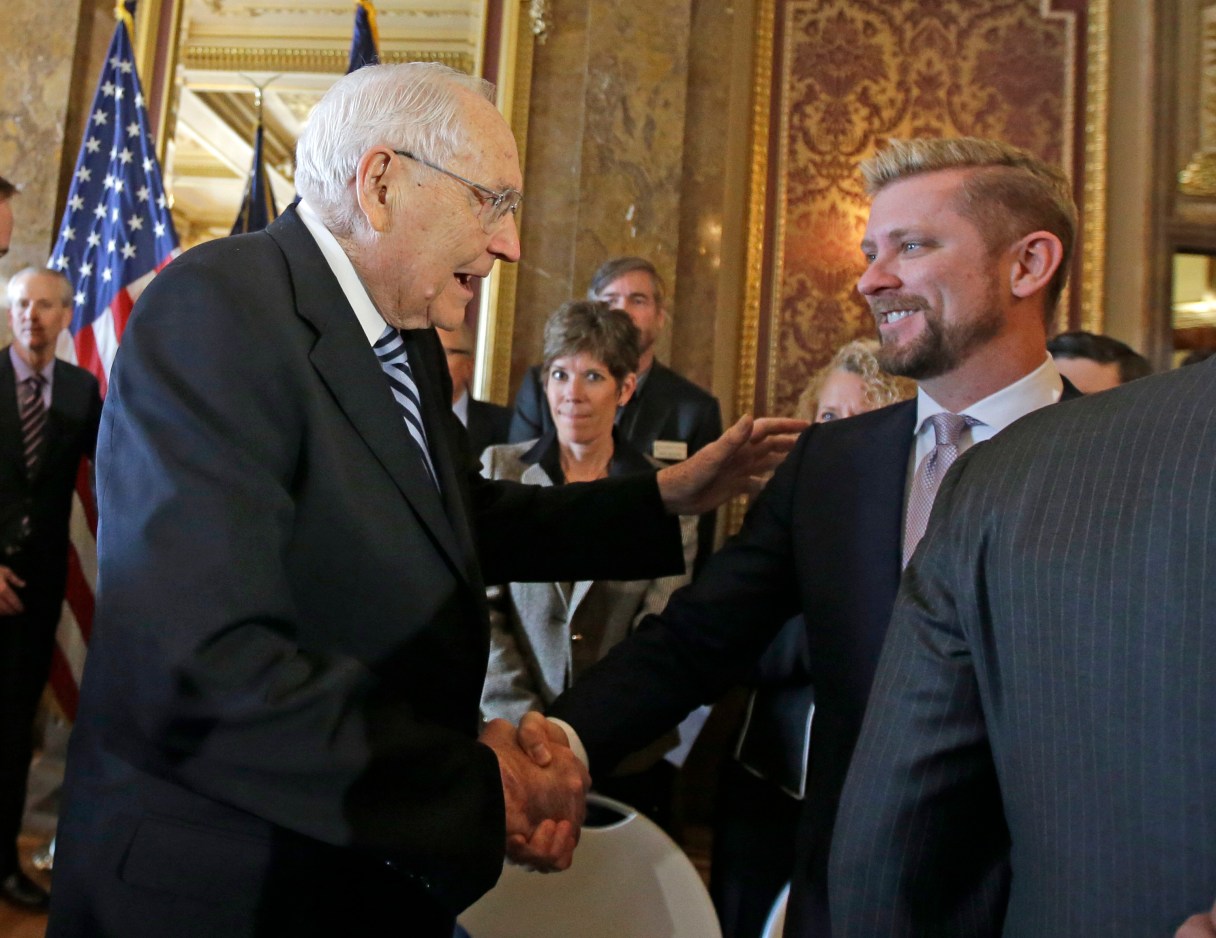
FILE - In this March 4, 2015, file photo, Elder L. Tom Perry, left, of the Church of Jesus Christ of Latter-day Saints Quorum of the Twelve Apostles shakes hands with Equality Utah executive director Troy Williams after Utah lawmakers introduced a landmark anti-discrimination bill during a news conference at the Utah State Capitol, in Salt Lake City. A Mormon church-backed antidiscrimination law that protects gay and transgender people and religious rights has taken effect amid skepticism from some LGBT residents. (AP Photo/Rick Bowmer, File)

SALT LAKE CITY (AP) – A Mormon church-backed antidiscrimination law that protects gay and transgender people and religious rights took effect Tuesday amid skepticism from some LGBT residents over whether it lives up to its reputation.

Gay rights groups pushed for an antidiscrimination law for years and finally succeeded during the 2015 legislative session with a deal that won the crucial backing of the Utah-based Church of Jesus Christ of Latter-day Saints.

The law makes it illegal to base employment and housing decisions on sexual orientation or gender identity. It was hailed as landmark legislation when it passed in March by an overwhelming margin.

LGBT resident say it’s a positive step, but they worry it still allows discrimination because religious organizations and their affiliates – such as schools and hospitals – are exempt.

One example they cite is Brigham Young University, which is owned by the Mormon church. The private school in Provo can still evict people from student housing for being gay – as can the 1,400 landlords it contracts with for off-campus housing.