
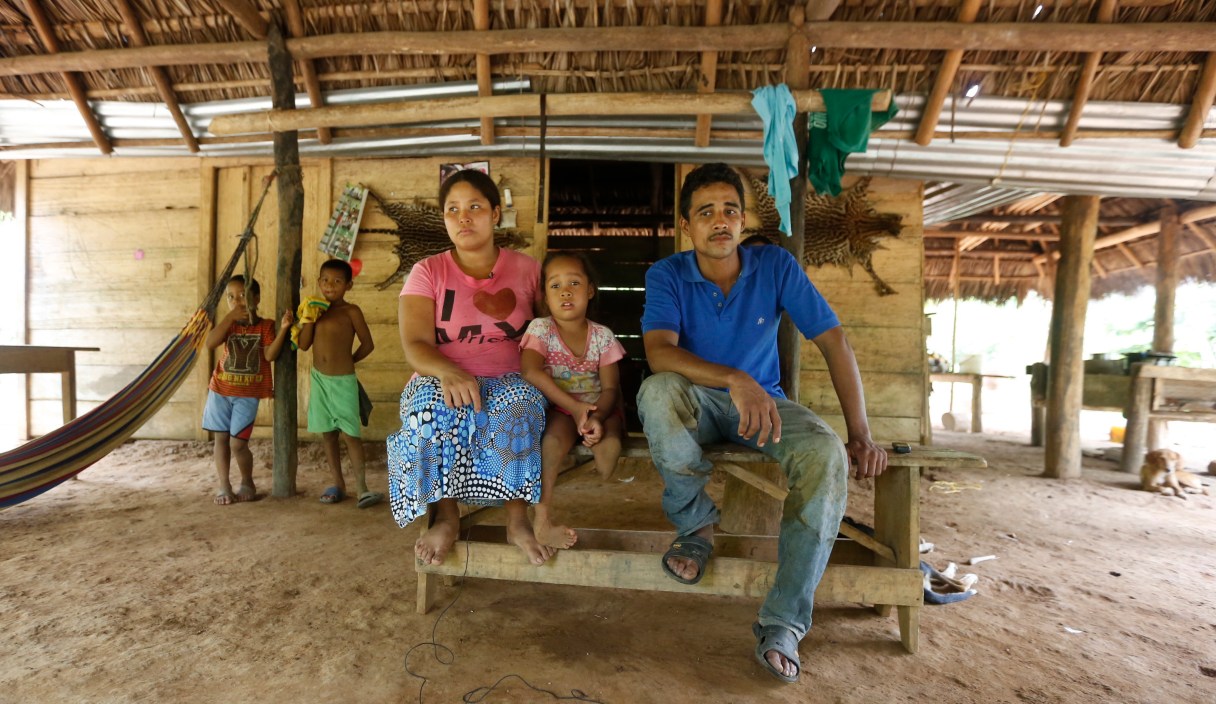
CRUCITO, Colombia — Manuel de Jesus Sanchez holds up a green poncho to protect his skin from the midday sun. The farmer says he was working in a rice paddy four years ago when a crop duster buzzed by, dumping large quantities of what everyone here refers to as “the poison.”
From that moment Sanchez was exposed to the glyphosate-based herbicide used by Colombia to wipe out cocaine-producing crops, he says his skin broke out in a yellow rash. Now white blotches have spread across his body and his eyesight is dimming.
“I never went to a doctor because I know he’ll prescribe creams and pills that I can’t afford,” said Sanchez. Unable to till his farm, he now squeaks by selling candy along the dirt streets where a handful of families live in wood and zinc-roofed shacks.
Tales of harmful health effects, everything from skin problems to miscarriages, abound in this hamlet on the edge of the remote Paramillo national park in northern Colombia. Tracing the health problems to glyphosate is impossible — too many years have passed with possible exposure to other pesticides, and most of the town’s residents, many of them coca growers, are either too poor or afraid to travel the three hours by boat and car to the nearest hospital and prosecutor’s office to investigate the causes.
President Juan Manuel Santos last week decided to halt fumigation in the wake of a report by a research arm of the World Health Organization classifying glyphosate as a probable carcinogen. The move is lending strength to injury claims by dozens of farmers here who consider themselves victims of the U.S.-led drug war in South America. But it’s also raising concerns that cocaine production in Colombia could come roaring back after a bloody, decades-old war against the nation’s cartels.