
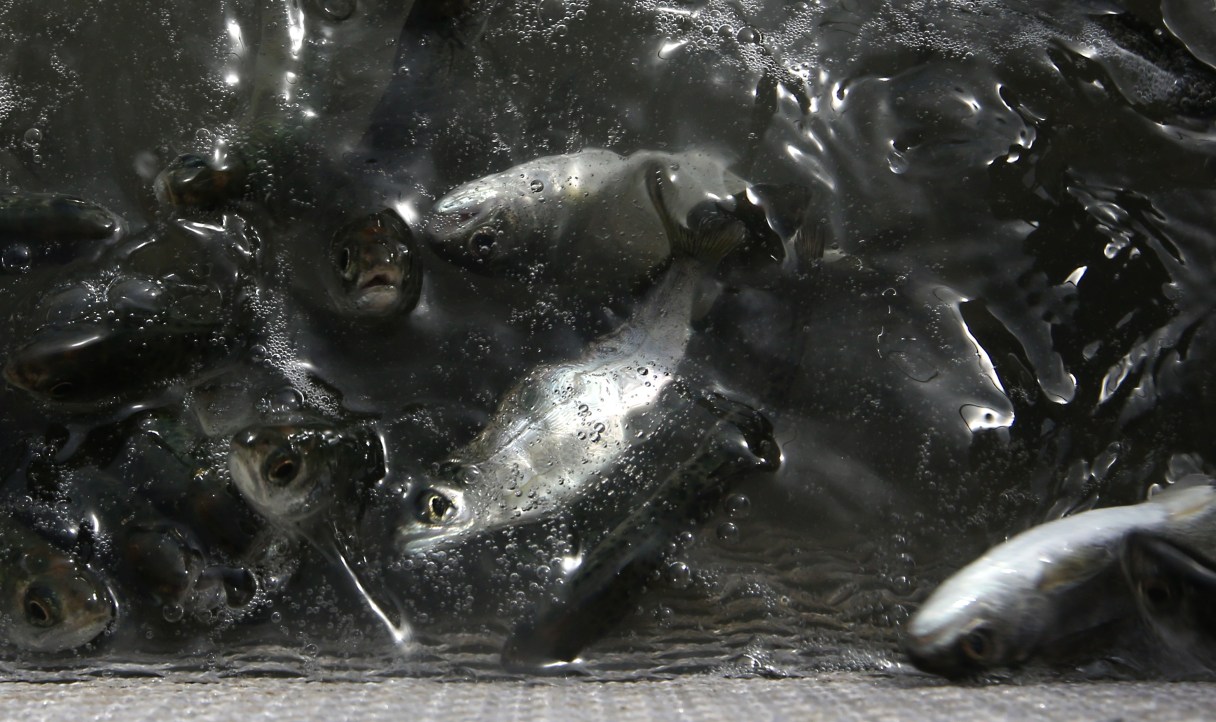
LAGUNITAS, Calif. (AP) – What do you do when you have 30 million young salmon ready for their big journeys downstream, but drought and development have dried your riverbeds to sauna rocks? In California this year, you give the fish a ride.
State and federal wildlife agencies in California are deploying what they say is the biggest fish-lift in the state’s history through this month, rolling out convoys of tanker trucks to transport a generation of hatchery salmon downstream to the San Francisco Bay. California is locked in its driest four-year stretch on record, making the river routes that the salmon normally take to the Pacific Ocean too warm and too shallow for them to survive.
“It’s huge. This is a massive effort statewide on multiple systems,” said Stafford Lehr, chief of fisheries for the California Department of Fish and Wildlife, which since February has been rolling out four to eight 35,000-gallon tanker trucks filled with baby salmon on their freeway-drive to freedom.
“We’re going to unprecedented drought,” Lehr said. “We’re forced to extreme measures.”
Drought and heavy use of water by farms and cities have devastated key native fish in California. Last year, for example, 95 percent of the state’s winter-run of Chinook salmon died. The fish is vital for California’s fishing industries and for the food chain of wildlife.