
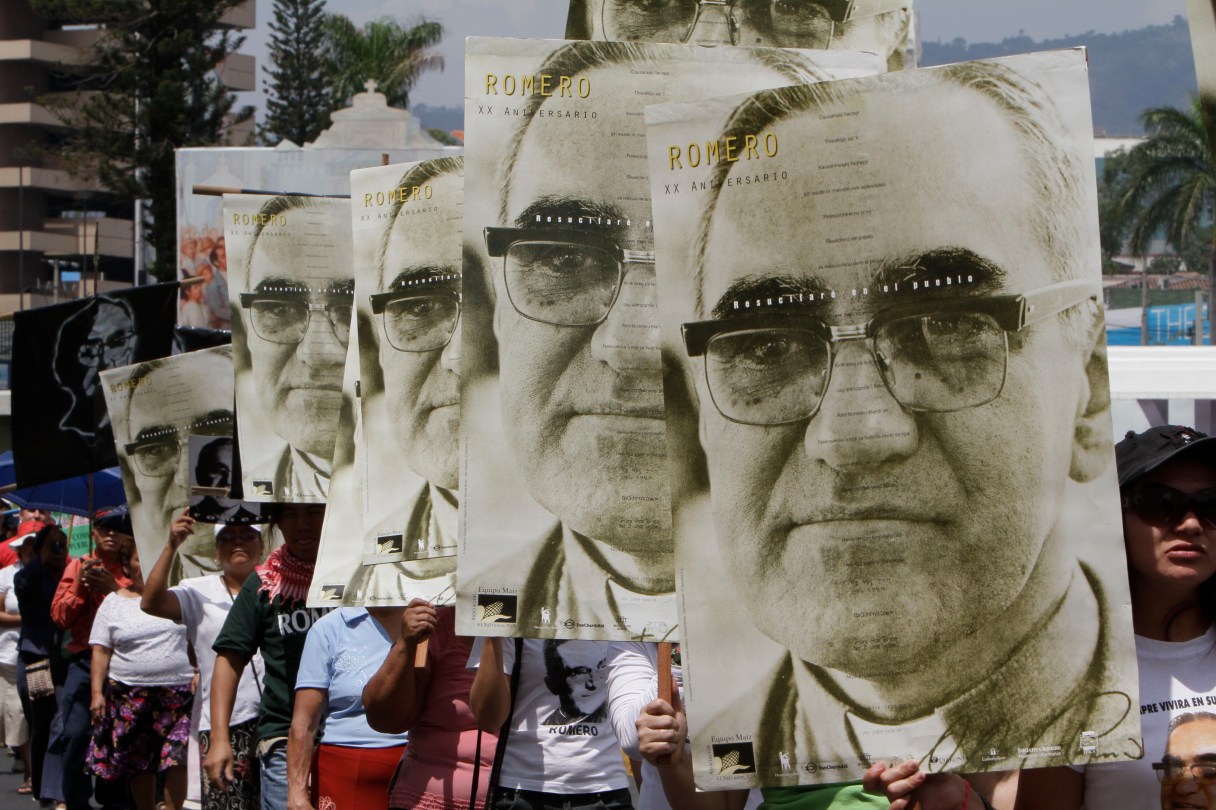
VATICAN CITY (AP) – The upcoming beatification of El Salvador Archbishop Oscar Romero is doing more than just giving Latin America its long-awaited saint-in-waiting. It has helped redefine the Catholic Church’s concept of martyrdom and paved the way for others killed for doing God’s work to follow in Romero’s saint-making footsteps.
Traditionally, the Catholic Church recognizes martyrs as people who were killed for refusing to renounce their faith, often during bouts of anti-Christian persecution. It assumes that the killer intended to kill out of hatred for the person’s belief in Christ, such as the many Christian martyrs being killed today in the Mideast at the hands of Islamic extremists.
A martyrdom declaration exempts the saintly candidate from the beatification requirement that the Vatican confirm a miracle attributed to his or her intercession. A second miracle is usually needed to be canonized.
Romero was killed by right-wing death squads – presumably baptized Catholics from the overwhelmingly Roman Catholic El Salvador – who vehemently opposed his preaching against the repression of the poor by the army at the start of the country’s 1980-1992 civil war. Romero was gunned down on March 24, 1980, as he celebrated Mass in a hospital chapel in San Salvador.
Romero’s sainthood case had been held up for years by the Vatican, primarily due to opposition from conservative Latin American churchmen who feared his perceived association with liberation theology would embolden the movement that holds that Jesus’ teachings require followers to fight for social and economic justice.