
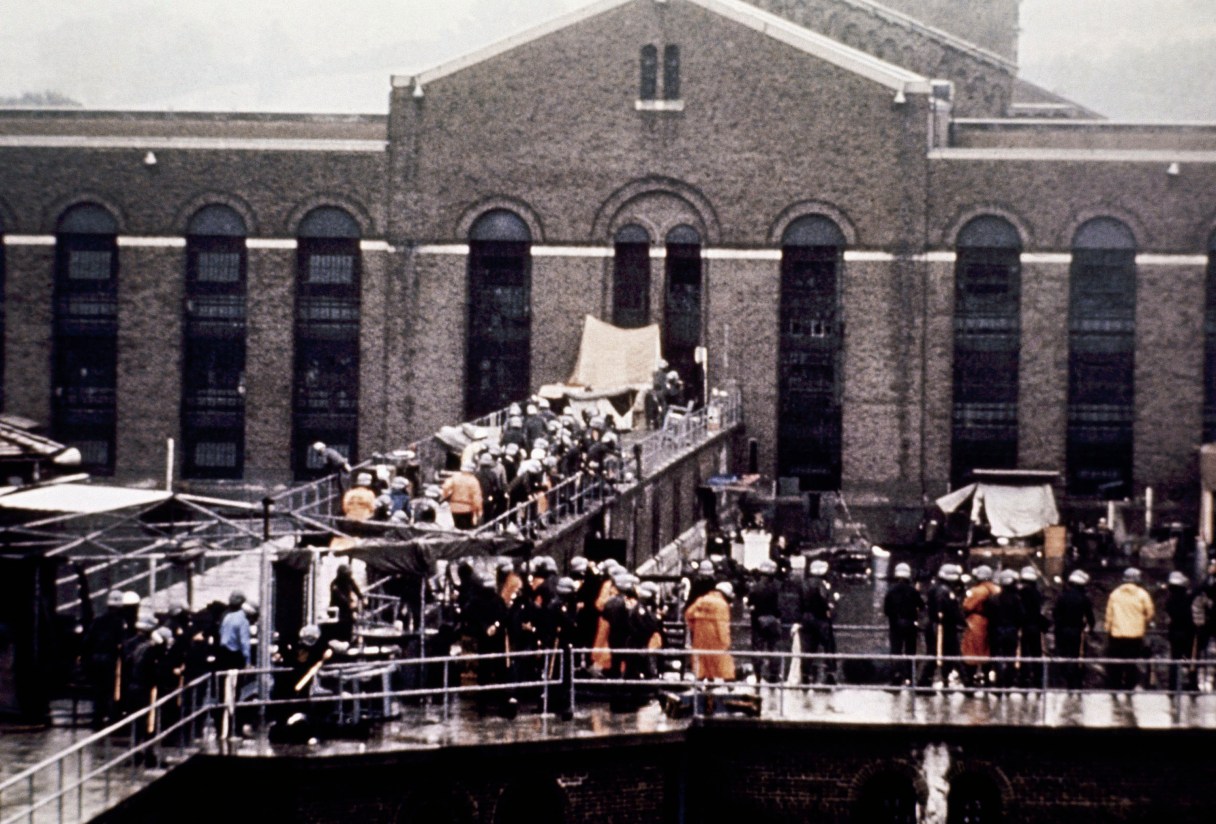
ALBANY, N.Y. (AP) – More than 40 years after the nation’s bloodiest prison rebellion, newly released documents contain accounts, some never before seen publicly, from National Guardsmen and a doctor who said they saw injured inmates beaten with clubs and others with wounds indicating they were tortured as state police and guards retook control of Attica.
The documents released Thursday, two years after state Attorney General Eric Schneiderman sought the disclosure, say several witnesses to brutal crimes against prisoners weren’t contacted or interviewed by criminal investigators. They show apparent violent crimes by authorities, described by neutral witnesses, after police and guards fatally shot 29 inmates and 10 hostages and 1,300 inmates surrendered after their riot and five-day standoff at the maximum-security prison in western New York.
Such abuses have long been alleged by prisoners and their families, and the newly released witness accounts lend credence to their arguments. A 1975 report by Judge Bernard Meyer concluded there was no intentional cover-up, only serious errors in judgment and omissions in evidence gathered by troopers. He also noted an imbalance in the ensuing prosecution: More than five dozen prisoners and just one state trooper were indicted.
That conclusion, contained in the 570-page report’s first volume, has been public for 40 years. The 46 pages detailing some of the factual basis for Meyer’s findings were released Thursday. Another 350 pages remain sealed because they contained grand jury testimony, which by law is generally kept secret to protect the privacy of witnesses and investigation targets. A judge refused last year to make an exception to release those pages for the public and historical Attica record.
“Today, we are shining a light on one of the darkest chapters of our history,” said Marty Mack, executive deputy state attorney general. This release might bring families of the victims nearer to closure and help Americans learn from what happened, he said.