
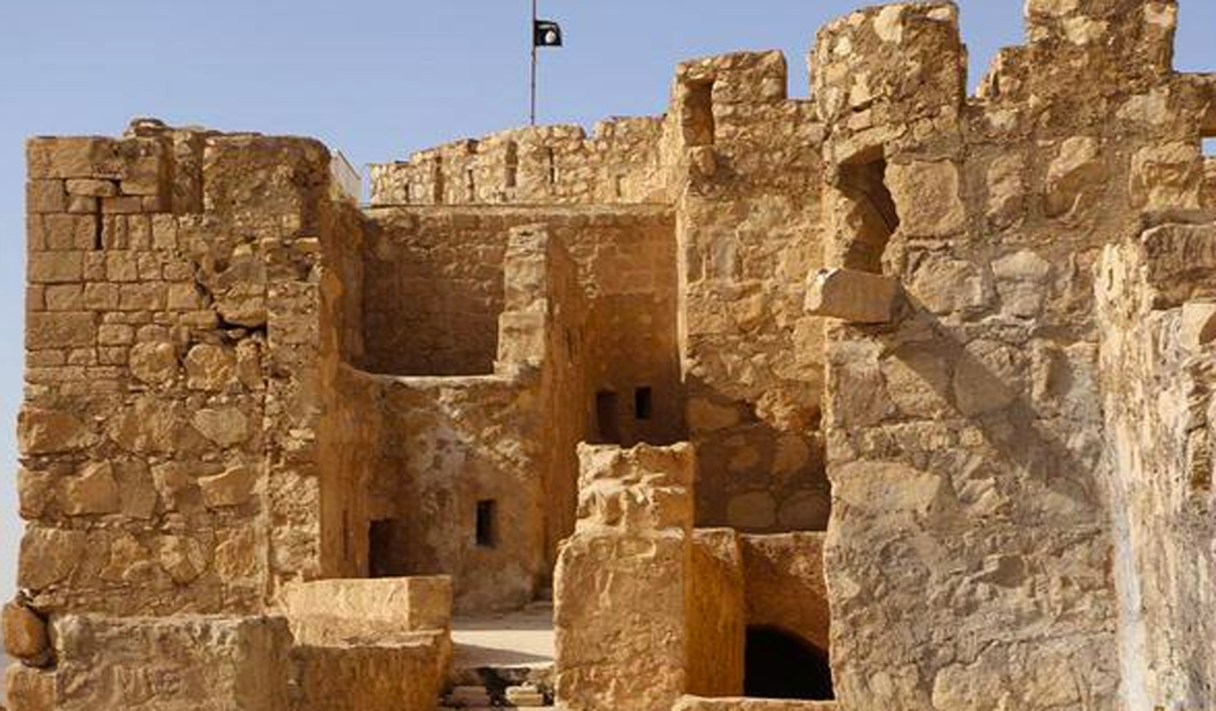
DAMASCUS, Syria – Islamic State fighters broke into the museum of Palmyra, though a Syrian official said its artifacts have been removed and are safe while the U.S.-led coalition conducted airstrikes on the group’s installations near the captured ancient town – the first such reported attack in the central province of Homs.
The Department of Defense said in a statement that U.S.-led coalition aircraft had attacked an IS position near Palmyra, which goes by the modern name Tadmur, destroying six anti-aircraft artillery systems and an artillery piece.
The Islamic State group captured Palmyra on Wednesday, raising concerns around the world they would destroy priceless, 2,000-year-old temples, tombs and colonnades located in the town’s south.
The strikes would appear to help the embattled forces of forces of President Bashar Assad, which have had a succession of recent defeats to IS group and other rebels. But experts and archeologists said the airstrike, coming days after the group overwhelmed the city, was too little too late.
“It is like closing the doors after the horses have bolted,” said Amr Al-Azm, a former Syrian antiquities official and currently a professor at Shawnee State University in Ohio.