
Friday, November 13, 2026Nov 13

Mystery of disappearing holes in Swiss cheese solved

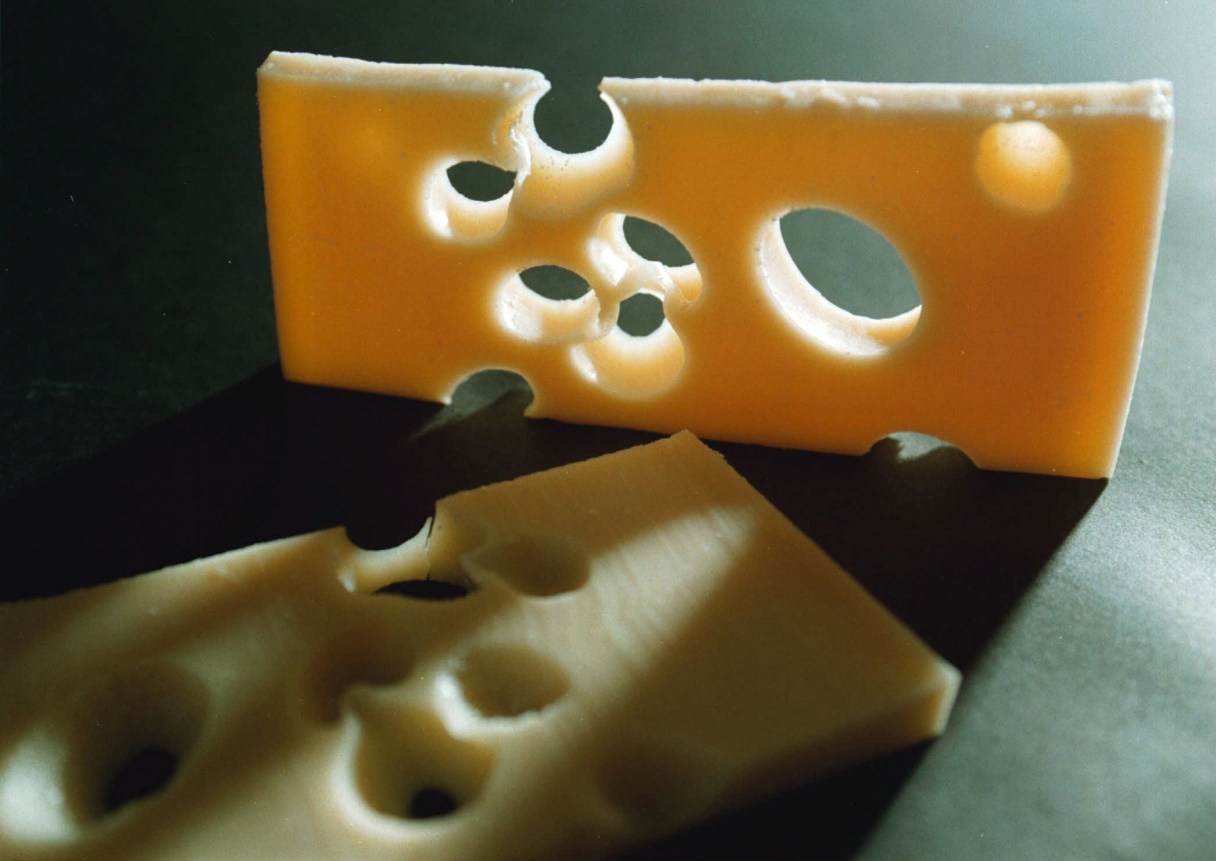
FILE - This undated file photo shows two slices of the famed Swiss Emmental cheese. The mystery of the disappearing holes in the famous Swiss cheese has been solved: the milk is too clean. A Swiss agricultural institute discovered that tiny pieces of hey dust are responsible for the famous holes in cheeses like Emmentaler or Appenzeller as they said in a statement Thursday, May 28, 2015. (Christoph Ruckstuhl/Keystone via AP, File)
FILE - This undated file photo shows two slices of the famed Swiss Emmental cheese. The mystery of the disappearing holes in the famous Swiss cheese has been solved: the milk is too clean. A Swiss agricultural institute discovered that tiny pieces of hey dust are responsible for the famous holes in cheeses like Emmentaler or Appenzeller as they said in a statement Thursday, May 28, 2015. (Christoph Ruckstuhl/Keystone via AP, File) FILE - This undated file photo shows two slices of the famed Swiss Emmental cheese. The mystery of the disappearing holes in the famous Swiss cheese has been solved: the milk is too clean. A Swiss agricultural institute discovered that tiny pieces of hey dust are responsible for the famous holes in cheeses like Emmentaler or Appenzeller as they said in a statement Thursday, May 28, 2015. (Christoph Ruckstuhl/Keystone via AP, File)

BERLIN (AP) – The mystery of Swiss cheese and its disappearing holes has been solved: The milk’s too clean.

A Swiss agricultural institute discovered that tiny pieces of hey dust are responsible for the famous holes in cheeses like Emmentaler or Appenzeller. As milk matures into cheese these “microscopically small hey particles” help create the holes in the traditional Swiss cheese varieties.

The government-funded Agroscope institute said in a statement Thursday that the transition from age-old milking methods in barns to fully-automated, industrial milking systems had caused holes to decline during the last 15 years.

In a series of tests, scientists added different amounts of hey dust to the milk and discovered it allowed them to regulate the number of holes.