
Friday, November 13, 2026Nov 13

Washington farmers, wildlife managers prepare for drought

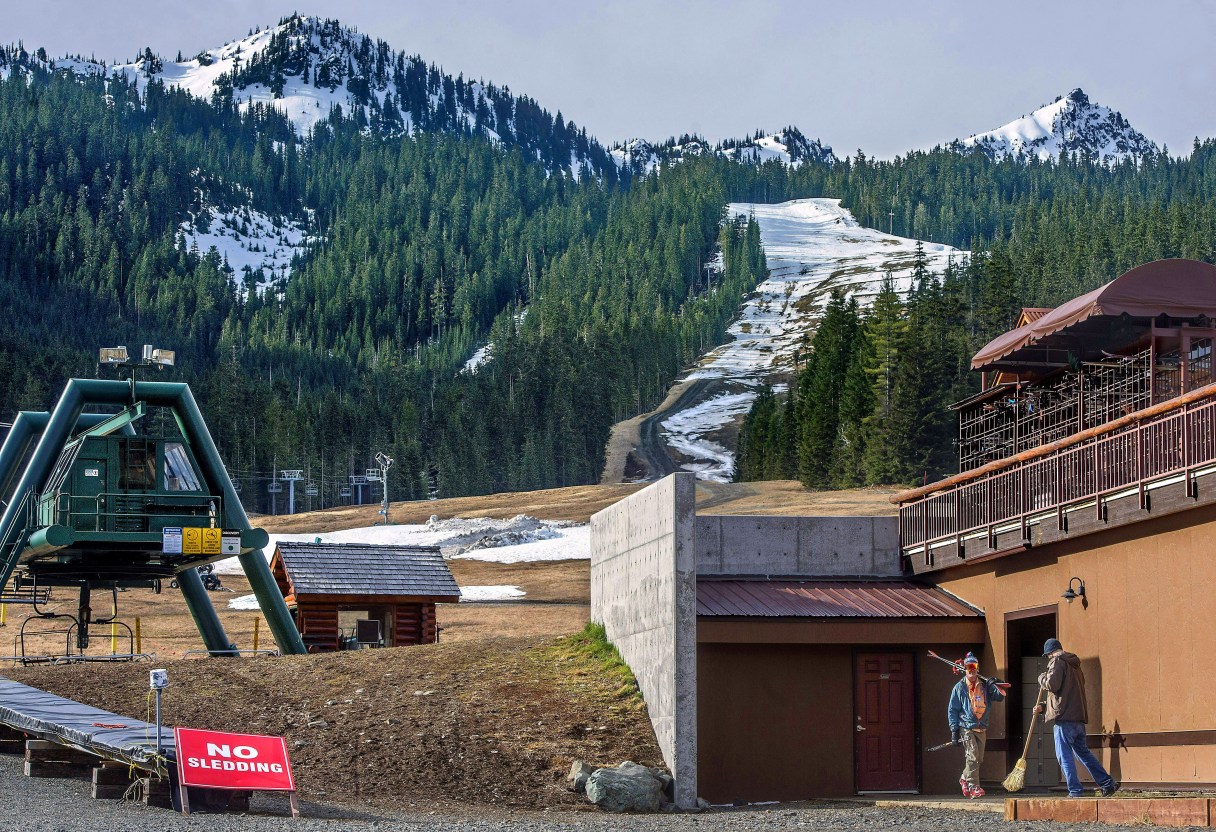
In this photo taken March 13, 2015, a solitary skier walks past maintenance worker Thomas Wieman, right, as he cleans up at Crystal Mountain ski resort near Greenwater, Wash. A lack of snow brought Crystal one of the worst ski seasons in Western Washington's history, and farmers, growers and wildlife managers in Washington state are preparing for the worst drought in a decade as the summer approaches. (Dean J. Koepfler/The News Tribune via AP)
In this photo taken March 13, 2015, a solitary skier walks past maintenance worker Thomas Wieman, right, as he cleans up at Crystal Mountain ski resort near Greenwater, Wash. A lack of snow brought Crystal one of the worst ski seasons in Western Washington's history, and farmers, growers and wildlife managers in Washington state are preparing for the worst drought in a decade as the summer approaches. (Dean J. Koepfler/The News Tribune via AP) In this photo taken March 13, 2015, a solitary skier walks past maintenance worker Thomas Wieman, right, as he cleans up at Crystal Mountain ski resort near Greenwater, Wash. A lack of snow brought Crystal one of the worst ski seasons in Western Washington's history, and farmers, growers and wildlife managers in Washington state are preparing for the worst drought in a decade as the summer approaches. (Dean J. Koepfler/The News Tribune via AP)

SEATTLE (AP) – With Washington state experiencing the worst mountain snowpack in decades and a drought emergency declared two weeks ago, farmers, growers and wildlife managers are preparing for a tough summer as conditions are expected to worsen.

Some farmers and irrigators are forgoing watering crops and pastures for all or part of the season in exchange for lease payments from the state. Others are seeking permission to tap emergency wells or drill new ones. A large irrigation district in the Yakima River basin shut off the water for a few weeks this month to save supply for later.

Fish managers are keeping close watch on rivers where salmon heading upstream may get stranded or could be harmed by shallow, warmer stream temperatures.

The statewide snowpack level is less than 10 percent of normal, and about one-fifth of the state’s rivers and streams are at record low levels, prompting Gov. Jay Inslee to declare a statewide drought emergency on May 15. He said agriculture, wildlife and communities with small water systems will be hit hardest.

The declaration allows the Department of Ecology to buy and lease water for farmers, protect salmon and help those facing hardships, but the agency is still waiting for the money. The state Senate approved $18 million over two years in emergency drought relief as the first special session closed Thursday, but the House hasn’t taken action yet.