
Monday, November 9, 2026Nov 9

Iran holds negative attitude toward US despite nuclear deal

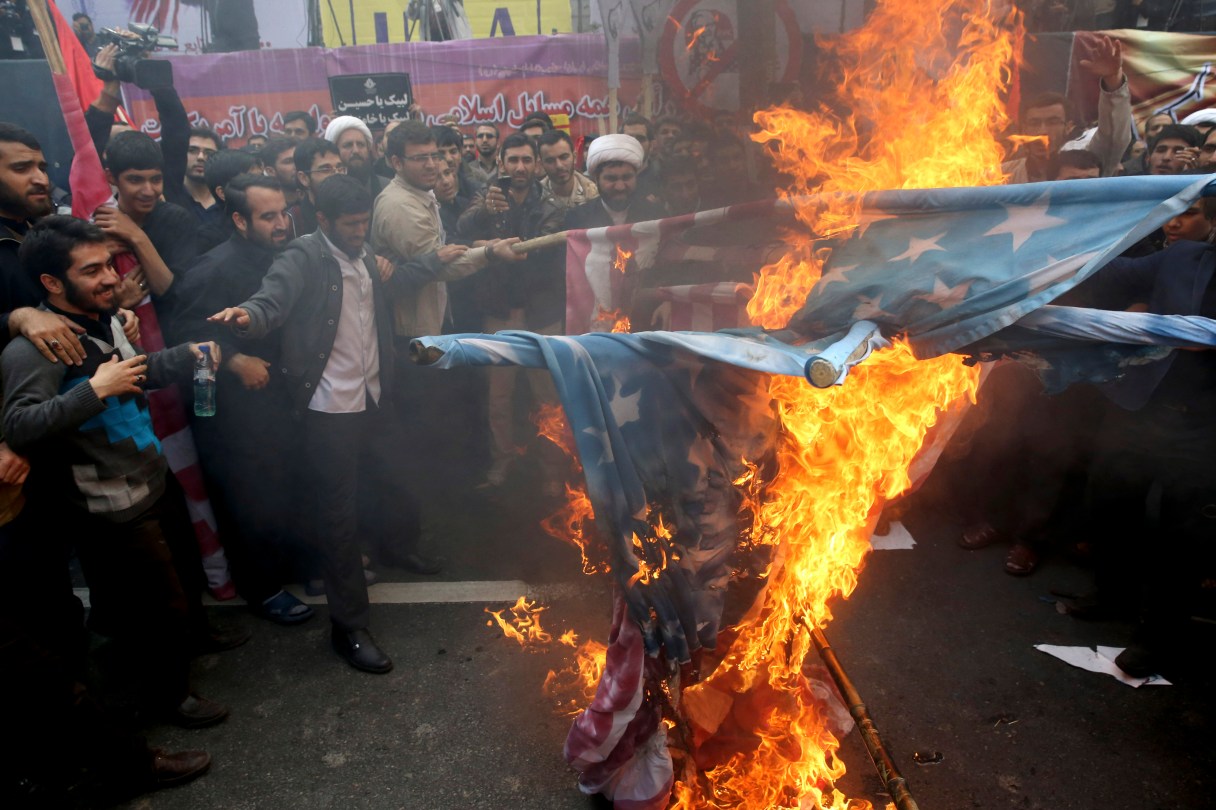
Iranian demonstrators burn representations of the U.S. flag during an annual rally in front of the former U.S. Embassy in Tehran, marking 36th anniversary of the seizure of the embassy by militant Iranian students, Iran, Wednesday, Oct. 4, 2015. The annual state-organized rally Wednesday drawing greater attention this year, as Iranian hardliners are intensifying a campaign to undermine President Hassan Rouhani's outreach to the West following a landmark nuclear deal reached with world powers in July.(AP Photo/Vahid Salemi)
Iranian demonstrators burn representations of the U.S. flag during an annual rally in front of the former U.S. Embassy in Tehran, marking 36th anniversary of the seizure of the embassy by militant Iranian students, Iran, Wednesday, Oct. 4, 2015. The annual state-organized rally Wednesday drawing greater attention this year, as Iranian hardliners are intensifying a campaign to undermine President Hassan Rouhani's outreach to the West following a landmark nuclear deal reached with world powers in July.(AP Photo/Vahid Salemi) Iranian demonstrators burn representations of the U.S. flag during an annual rally in front of the former U.S. Embassy in Tehran, marking 36th anniversary of the seizure of the embassy by militant Iranian students, Iran, Wednesday, Oct. 4, 2015. The annual state-organized rally Wednesday drawing greater attention this year, as Iranian hardliners are intensifying a campaign to undermine President Hassan Rouhani's outreach to the West following a landmark nuclear deal reached with world powers in July.(AP Photo/Vahid Salemi)

TEHRAN, Iran (AP) – As Iran marks the anniversary of the 1979 takeover of the U.S. Embassy in Tehran, there are signs that the Islamic Republic’s attitude toward the United States is as negative as ever.

The arrests of U.S. citizens, hints of a Cold War-style prisoner swap, fears of Western infiltration and even the shutdown of a lookalike KFC restaurant show the suspicion still held by hard-liners after the nuclear deal with world powers.

In the short term, things may even get worse, analysts say, as Iran’s Supreme Leader Ayatollah Ali Khamenei continues to warn about American influence, a crucial parliamentary election approaches and the country’s intelligence and military services try to hold onto their economic and political power.

“I think many Americans and many Iranians didn’t take the leader at his word that this does not mean detente, that this is a one-off transaction. I think the system was deadly serious about this,” said Cliff Kupchan, the chairman of the Eurasia Group. “I think the increased contact will lead to detente with the U.S., but we have a lot of harsh repression to go through before we get there.”

On Wednesday, thousands demonstrated in front of the old U.S. Embassy, marking the 36th anniversary of students seizing 52 Americans hostage there after Washington refused to hand over the toppled U.S.-backed shah, Mohammad Reza Pahlavi. The protest came despite the deal that will see Tehran limit its nuclear program in exchange for the lifting of economic sanctions.