
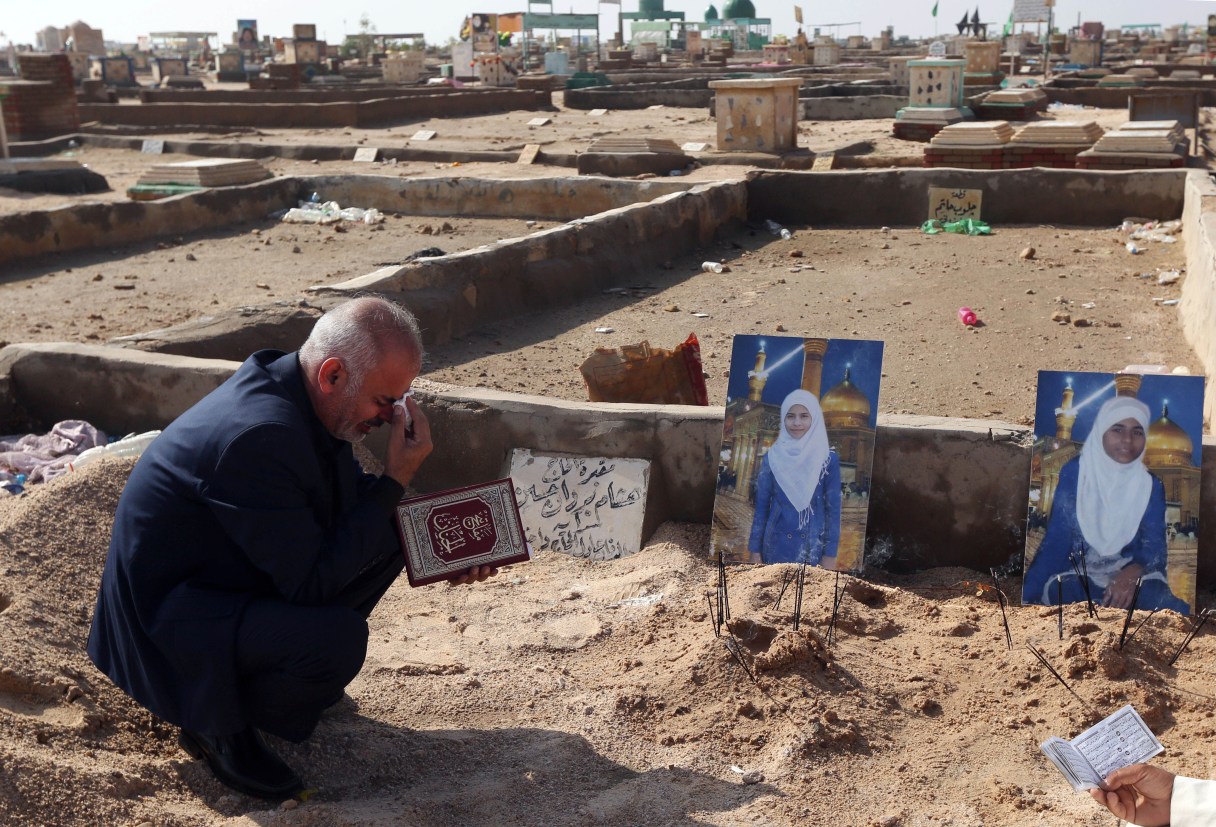
BAGHDAD (AP) – Mohammed al-Qurayshi’s only son, Hassan, searched back and forth through CCTV footage to find the 12:30 p.m. mark on Oct. 31.
The video showed grainy images of two of his older sisters carrying bags of garbage through the garden and across the street. Fatima, 14, was dressed in deep blue and Rosul, 15, wore turquoise. It was then, just around the corner from their home, as they waded through a flooded street, that they were both electrocuted and killed – Fatima first, then Rosul, as she reached out to help her sister.
“These are their death certificates,” the elder al-Qurayshi said, holding out a pair of thin pink slips, noting the written cause of death was electrocution but that “the true cause of death is the Ministry of Electricity and the municipality.”
The Iraqi Ministry of Health said 69 people have died across the country over the past two weeks, due to a combination of the country’s dilapidated electrical grid and heavy rains that overwhelmed sewer systems.
Many died in their homes as they waded through flooded first-floor rooms. Others, like the al-Qurayshi sisters, were electrocuted in the city streets where electrical lines are haphazard and jerry-rigged, connecting homes to the municipal grid and a network of generators. Most homes in Baghdad only receive nine to 14 hours of electricity a day from the government. While the rainy Iraqi winter has only just begun, this year’s death toll is already higher than last year’s, when fewer than 60 were killed by electrocution amid widespread floods.