
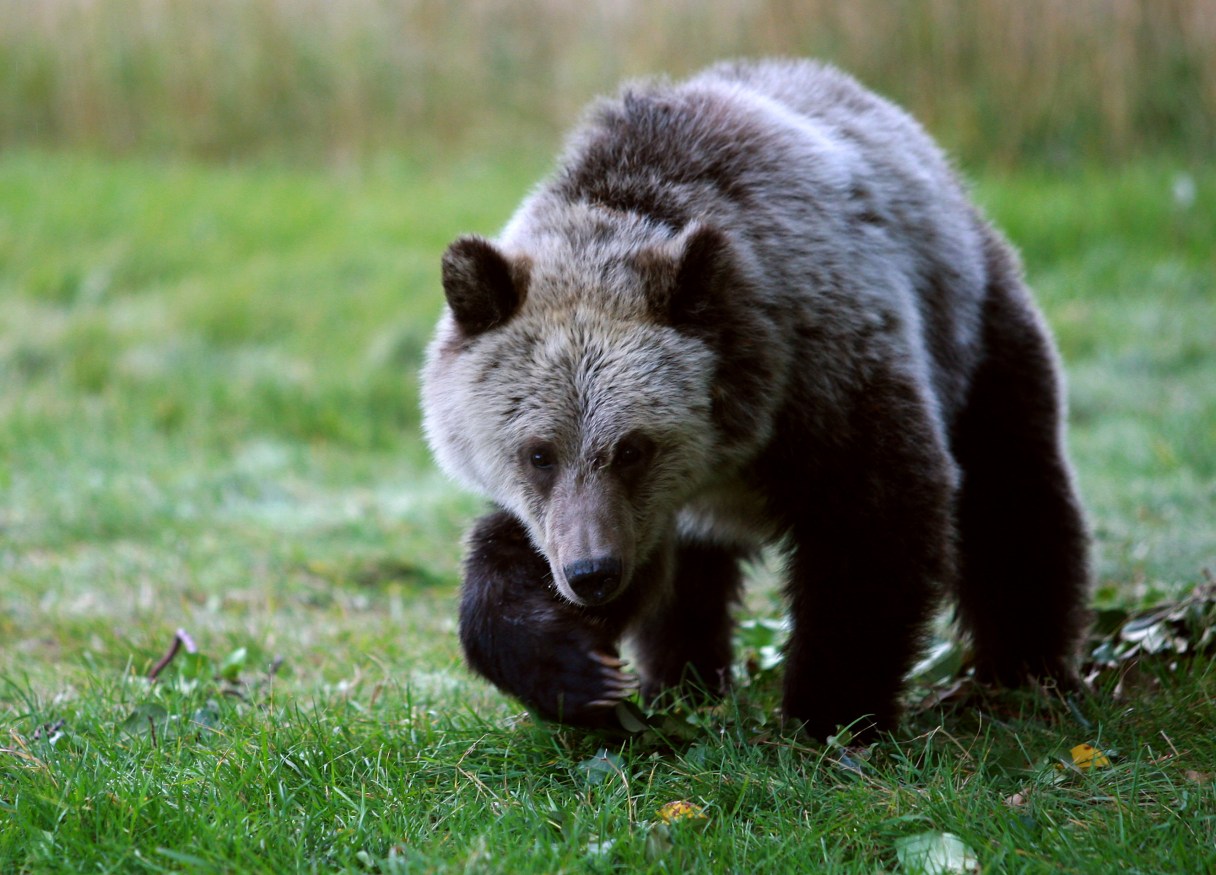
BILLINGS, Mont. (AP) – American Indians across the Western U.S. are challenging moves by federal wildlife officials to lift protections for grizzly bears that roam a vast wilderness centered on Yellowstone National Park, citing worries over potential trophy hunting of a species many tribes consider sacred.
The tribes’ opposition marks the latest turn in the saga of a massive, ferocious predator driven to widespread extermination by overhunting and trapping early last century. It also adds a new, cultural dimension to a wildlife controversy that previously centered on disagreements over science and how many bears are enough.
A former chairman of Arizona’s Hopi Tribe, Ben Nuvamsa, says his people regard the grizzly as an “uncle” who possesses strong healing powers and plays a central role in traditional ceremonies. He said tribes want to “keep it from being a trophy animal and prevent the industrialization of bear habitat.”
“We regard him as part of our family, and it’s really important to all of us natives to keep him around,” Nuvamsa added. “It doesn’t matter where the bears are. We pray to them when we see them.”
U.S. wildlife officials and their state counterparts in Montana, Idaho and Wyoming contend the region’s 700 to 1,000 bears are biologically recovered. They’ve been pushing for almost a decade to revoke the animal’s threatened status, a step that was taken in 2007 only to be reversed by a federal judge two years later.