
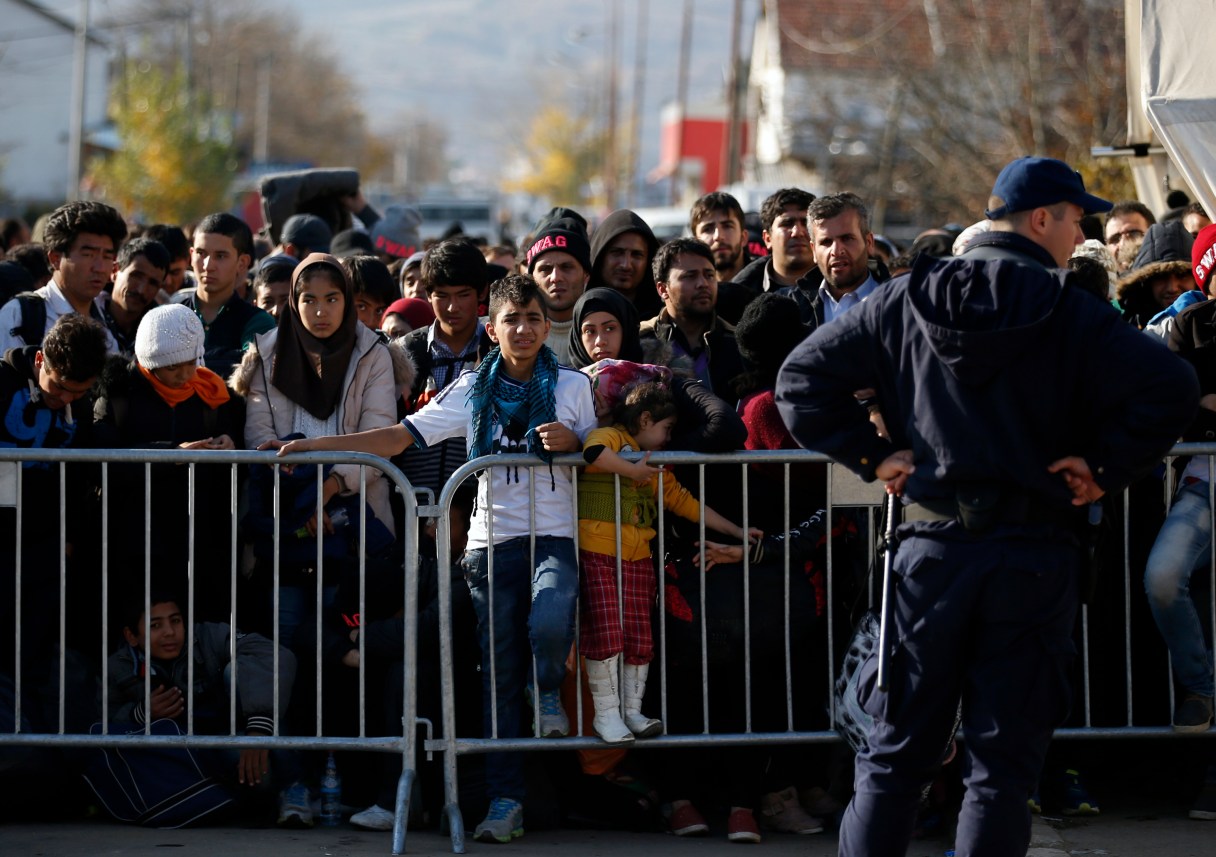
WARSAW, Poland (AP) – Even before the Paris attacks, the mood in Central Europe was decidedly anti-migrant, with fences going up on borders, a Syrian beaten on a Polish street last week and the rhetoric sharp across the region. Now the bloodshed unleashed by Islamic extremists is deepening fears of Muslims and threatening to create an atmosphere even less welcoming for those fleeing war in the Middle East.
On the Slovenian-Austrian border over the weekend, the armies of both nations strip-searched migrants on their westward march amid heightened security, causing large numbers to build up at a refugee camp.
The shifting mood could threaten European efforts to find unity on the migration crisis. A new anti-migrant government in Poland already is casting doubt on whether it will take all 7,000 refugees the previous government agreed to accept.
Poland, Hungary and other countries across the region – many of them multicultural lands in the past – have been largely mono-ethnic Christian societies since the mass killings and expulsions of World War II, and resistance there has been especially stiff toward Muslims, who are largely seen as threats to national identity. Many of these nations faced threats to their very nationhood in the past, with Poland wiped off the map in the 19th century, Hungary losing two-thirds of its territory after World War I, and nations across the region subjected to Soviet control during the Cold War – all factors seen as contributing to anxieties over nationhood.
That one of the suicide bombers appears to be a Syrian who passed through Greece in October is also deepening a belief among many that the refugees should be seen as potential terrorists.