
Friday, November 13, 2026Nov 13

Lab-grown vocal cords offer hope of treating voice disorders

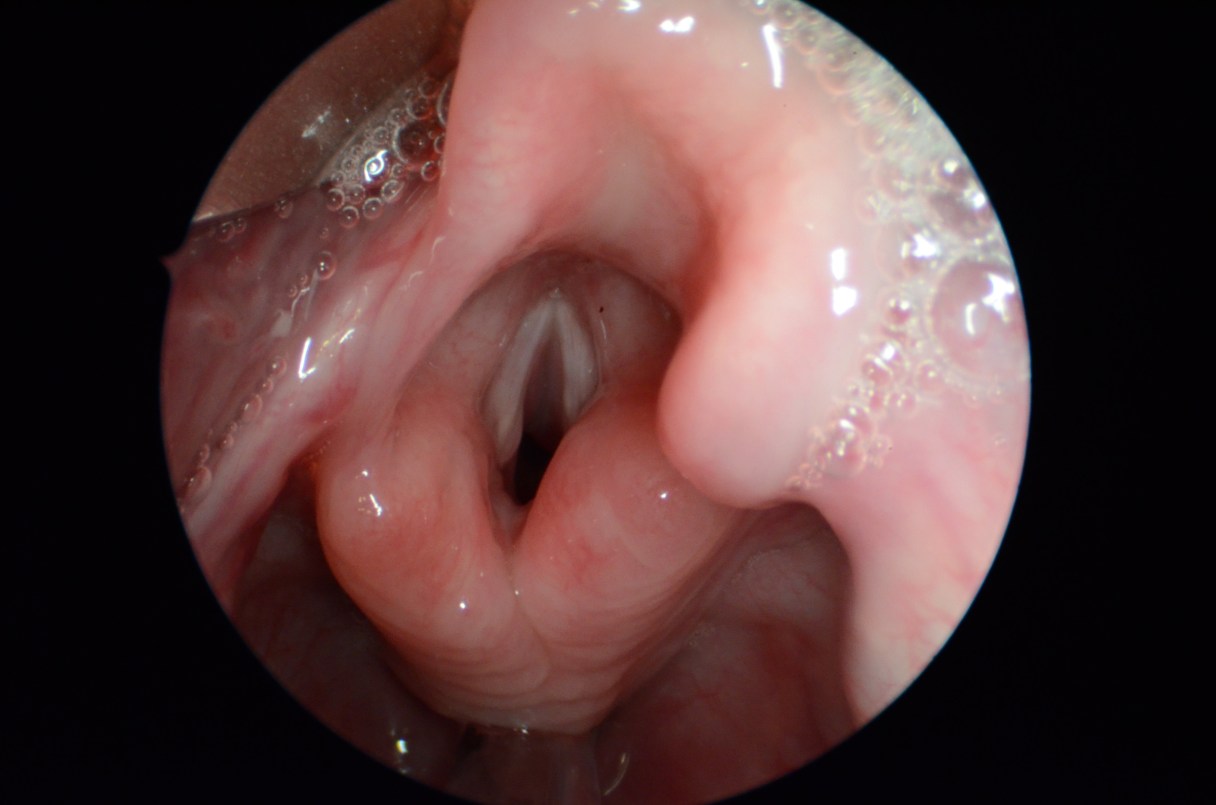
In this photo provided by J. Scott McMurray Md., Associated Professor, University of Wisconsin School of Medicine and Public Health, taken Oct. 14, 2011, shows a normal larynx and vocal folds, center, during surgery in Madison, Wis. Our voices are the main way we communicate, one we mostly take for granted until something goes wrong. Now researchers have grown human vocal cords in the laboratory, a step toward one day helping to restore a voice to people who have lost theirs to disease or injury.  (J. Scott McMurray, Md./University of Wisconsin School of Medicine and Public Health via AP)
In this photo provided by J. Scott McMurray Md., Associated Professor, University of Wisconsin School of Medicine and Public Health, taken Oct. 14, 2011, shows a normal larynx and vocal folds, center, during surgery in Madison, Wis. Our voices are the main way we communicate, one we mostly take for granted until something goes wrong. Now researchers have grown human vocal cords in the laboratory, a step toward one day helping to restore a voice to people who have lost theirs to disease or injury. (J. Scott McMurray, Md./University of Wisconsin School of Medicine and Public Health via AP) In this photo provided by J. Scott McMurray Md., Associated Professor, University of Wisconsin School of Medicine and Public Health, taken Oct. 14, 2011, shows a normal larynx and vocal folds, center, during surgery in Madison, Wis. Our voices are the main way we communicate, one we mostly take for granted until something goes wrong. Now researchers have grown human vocal cords in the laboratory, a step toward one day helping to restore a voice to people who have lost theirs to disease or injury. (J. Scott McMurray, Md./University of Wisconsin School of Medicine and Public Health via AP)

WASHINGTON (AP) – From mom’s comforting croon to a shout of warning, our voices are the main way we communicate and one we take for granted unless something goes wrong. Now researchers have grown human vocal cords in the laboratory that appear capable of producing sound – in hopes of one day helping people with voice-robbing diseases or injuries.

Millions of people suffer from voice impairments, usually the temporary kind such as laryngitis from a virus or a singer who overdoes the performing. But sometimes the vocal cords become too scarred and stiff to work properly, or even develop cancer and must be removed. There are few treatments for extensive damage.

Your voice depends on tiny but complex pieces of tissue that must be soft and flexible enough to vibrate as air moves over them – the way they make sound – but tough enough to survive banging together hundreds of times a second.

Wednesday, researchers at the University of Wisconsin-Madison reported the first lab-grown replacement tissue that appears pretty close to the real thing – and that produced some sound when tested in voice boxes taken from animals.

“There is no other tissue in the human body that is subject to these types of biomechanical demands,” said Dr. Nathan Welham of the University of Wisconsin-Madison, who led the work published in Science Translational Medicine. “This lends promise or hope to one day treating some of the most severe voice problems that we face.”