
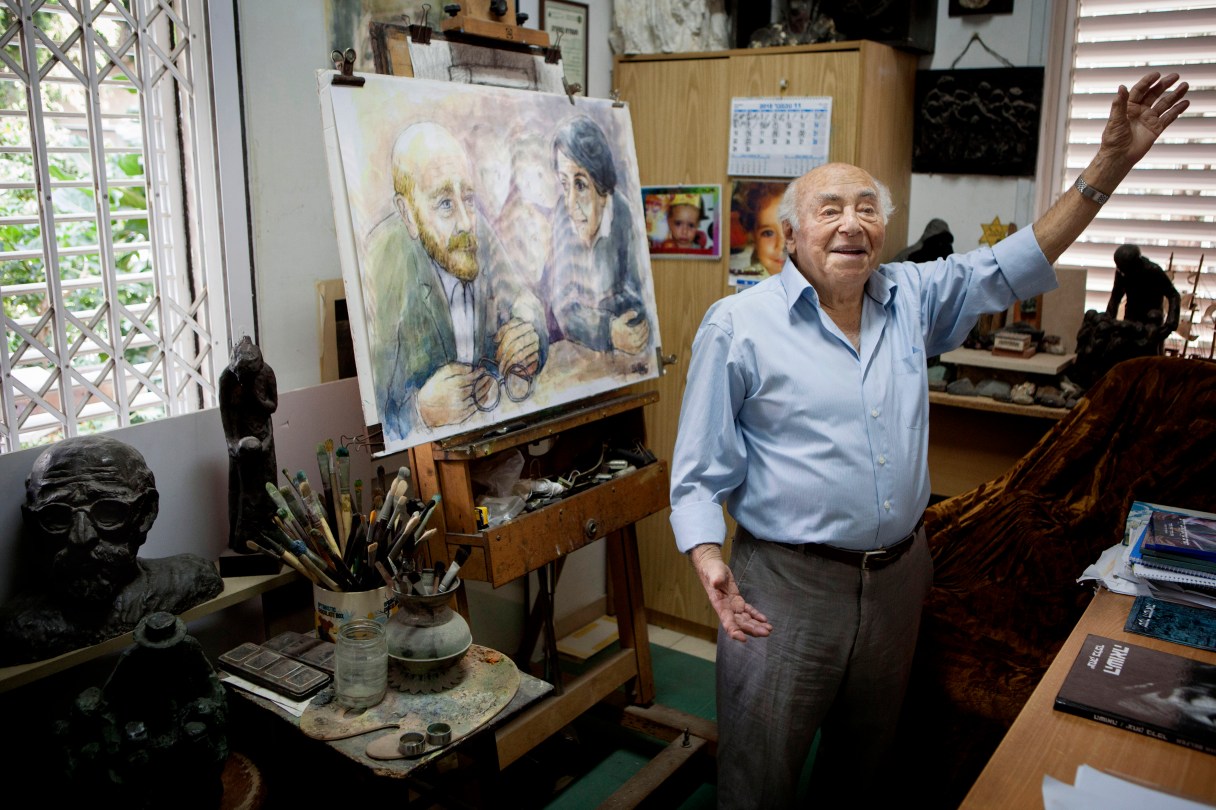
TEL AVIV, Israel (AP) – With World War II underway and the Nazis closing in, 16-year-old Itzchak Belfer decided to flee his native Poland and head east to Soviet Russia. The man who had raised the Jewish boy like a son tearfully gave him his blessing, slipped the teen some money and said, “the chicks are leaving the nest.”
It would be the last time Belfer saw Januscz Korczak, a trailblazing educator who spurned several offers of freedom, choosing instead to stay with nearly 200 orphans he cared for in the Warsaw Ghetto. From the ghetto, they were all marched to a transit station and shipped off to the Treblinka death camp in 1942.
It was a defining event of the Holocaust, one that made Korczak, with his act of sacrifice, one of its most famous victims.
Today, Belfer, a 92-year-old grandfather living in Israel, is the last of Korczak’s orphans able to recall interactions with the doctor, author and educator who revolutionized the cause of children’s welfare and became a national icon in Poland, with streets, schools and monuments honoring him.
A noted artist in Israel, Belfer has made it his life’s mission to commemorate the man who, along with partner Stefania Wilczynska, had raised him from the age of seven.