
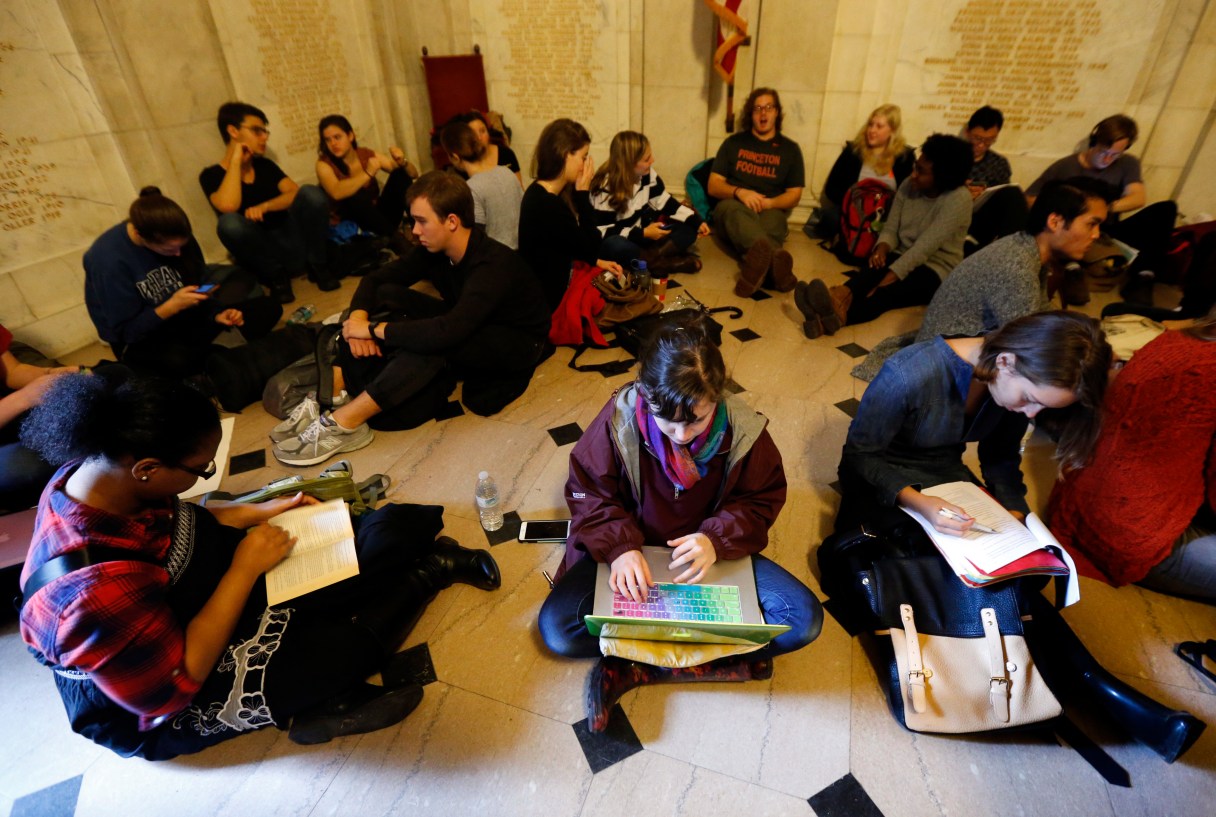
PRINCETON, N.J. (AP) – Princeton University has agreed to look into the legacy of alumnus and former U.S. President Woodrow Wilson after a group of students staged a sit-in to protest his views on race and segregation.
That resolution comes after university President Christopher Eisgruber and two other school officials signed an agreement late Thursday with the Black Justice League to end the 32-hour sit-in. The university said 17 students signed the agreement.
“We appreciate the willingness of the students to work with us to find a way forward for them, for us and for our community,” Eisgruber said. “We were able to assure them that their concerns would be raised and considered through appropriate processes.”
Wilson, who graduated from Princeton, was president of the school from 1902 to 1910 and served as New Jersey’s governor from 1911 to 1913, when he entered the White House. The Democrat was a leading progressive but supported segregation and appointed Cabinet members who segregated federal departments.
The protesters, both black and white, wanted the school to acknowledge what they say is the racist legacy of Wilson and to rename the buildings and programs named for him.