
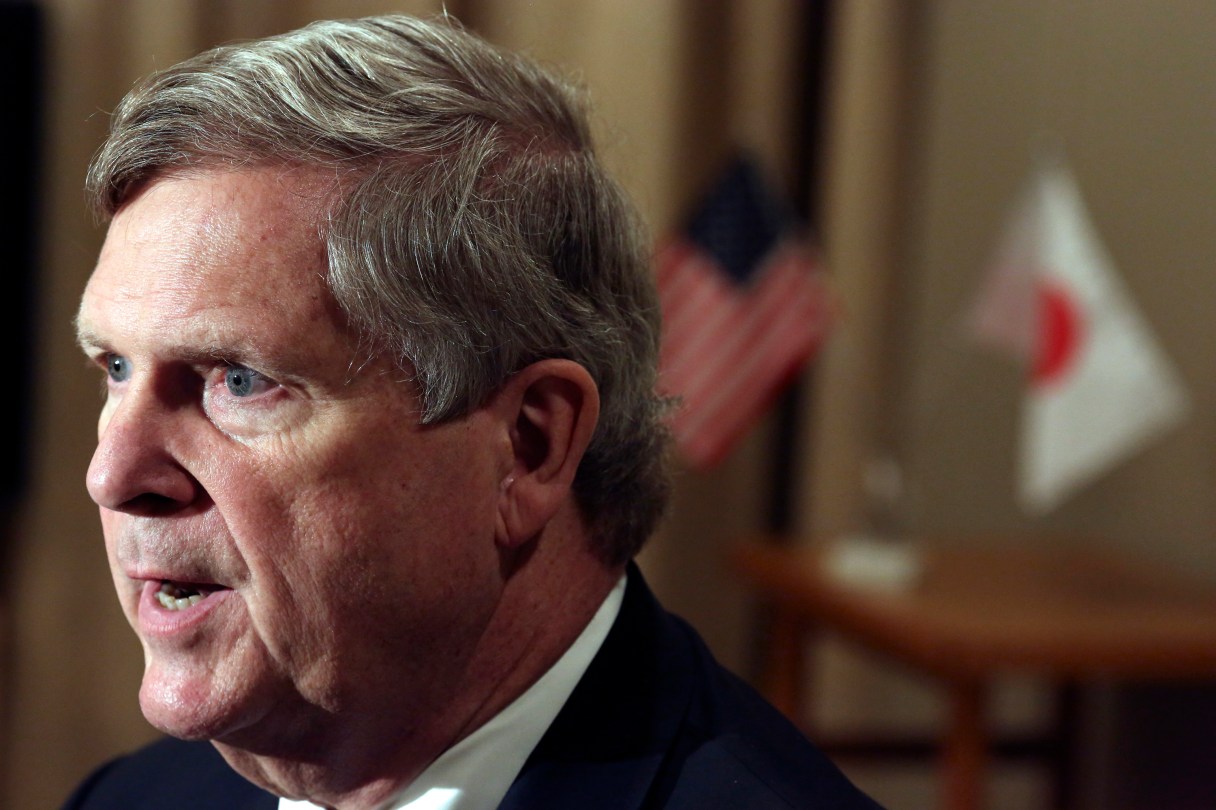
TOKYO (AP) – U.S. Agriculture Secretary Tom Vilsack defended a recently agreed-to 12-nation Pacific trade pact, saying the Trans-Pacific Partnership would provide a counterbalance to China’s growing influence in the region while also opening up promising Asian markets with their burgeoning middle class.
Vilsack told The Associated Press in an interview that many Asian countries are concerned about the rise of Chinese power, “and whether or not it’s disproportionate, and whether or not there needs to be a balance.”
He said that the trade agreement “creates the kind of coalition of nations, if you will, that provides that balance.”
Vilsack is en route to China, where he will take part in annual U.S.-China trade talks in Guangzhou from Saturday to Monday.
The wide-ranging trade agreement, known as TPP, faces a tough ratification battle in the U.S. Congress. Other signatories range from Japan to Vietnam, but don’t include China.