
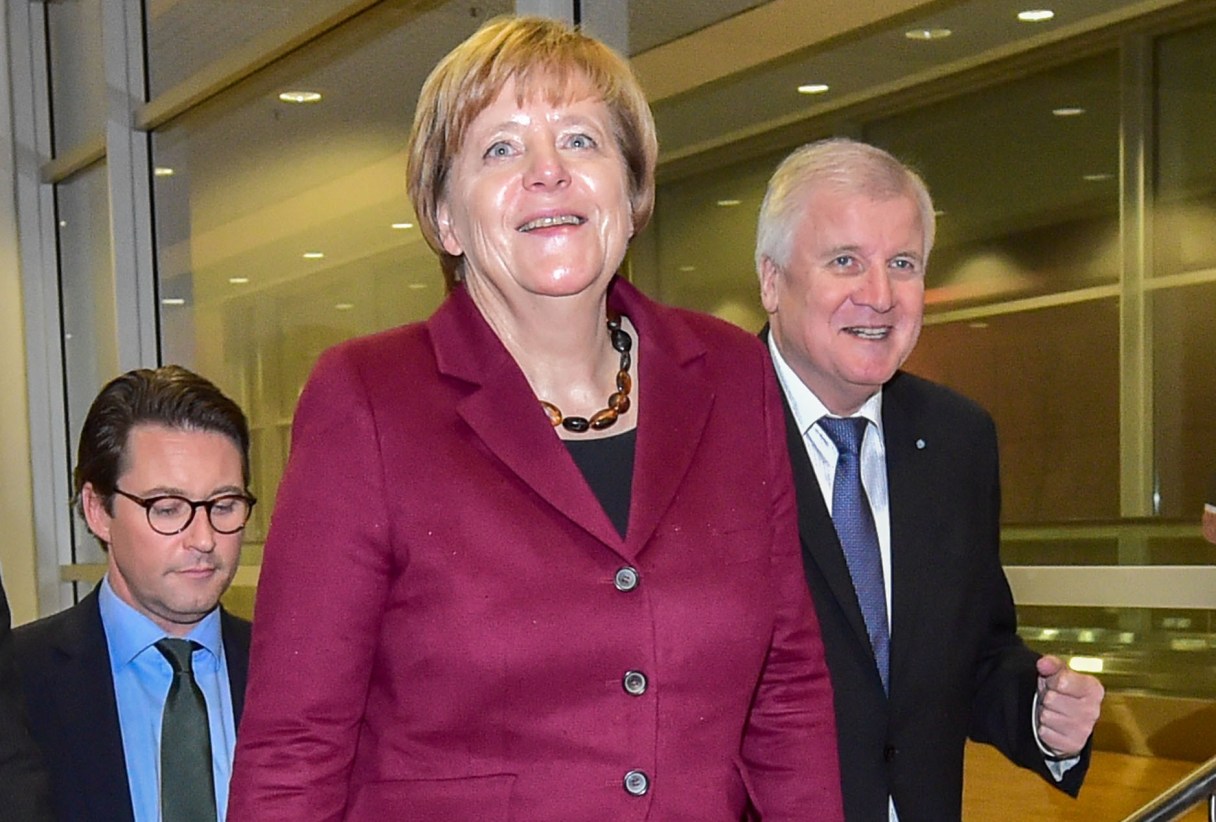
BERLIN (AP) – Angela Merkel marks her 10th anniversary at the helm of Germany on Sunday, becoming only the third post-World War II chancellor to hit that milestone. Over Merkel’s decade in charge, she has presided over Germany’s strong re-emergence on the world scene – showing leadership in the European financial crisis, pioneering the use of renewable energies and embracing a role as a key negotiator in the Ukraine conflict and a moral authority in Europe’s migrant crisis.
At home, the European Union’s most populous country has seen plenty of change, but Merkel has won over voters with an aura of reassuring stability that has earned her the nickname “Mutti” or “mom.” Even amid turbulence over her welcoming attitude toward refugees, there’s little sign of an alternative to Merkel.
___
NEW ASSERTIVENESS
Under Merkel, Germany has found a new assertiveness – at least in economic diplomacy – since the Eurozone debt crisis erupted in Greece. Berlin has been key to designing the response, a combination of aid in exchange for budget cuts and economic reforms, and has shown determination in applying it, despite widespread criticism abroad for what many view as a damaging focus on austerity. Since Merkel’s third-term government took office in 2013, Germany also has shown signs of playing a more active diplomatic role – in particular, anchoring the diplomacy-and-sanctions strategy over Russia’s aggression in Ukraine. Germany remains reluctant to expand its military role abroad, though it remains one of the biggest contributors to NATO’s mission in Afghanistan and has armed Kurdish fighters in Iraq – a contrast to Germany’s previous reluctance to send weapons into conflicts.