
Monday, November 16, 2026Nov 16

Water agency’s land purchase rattles California farmers

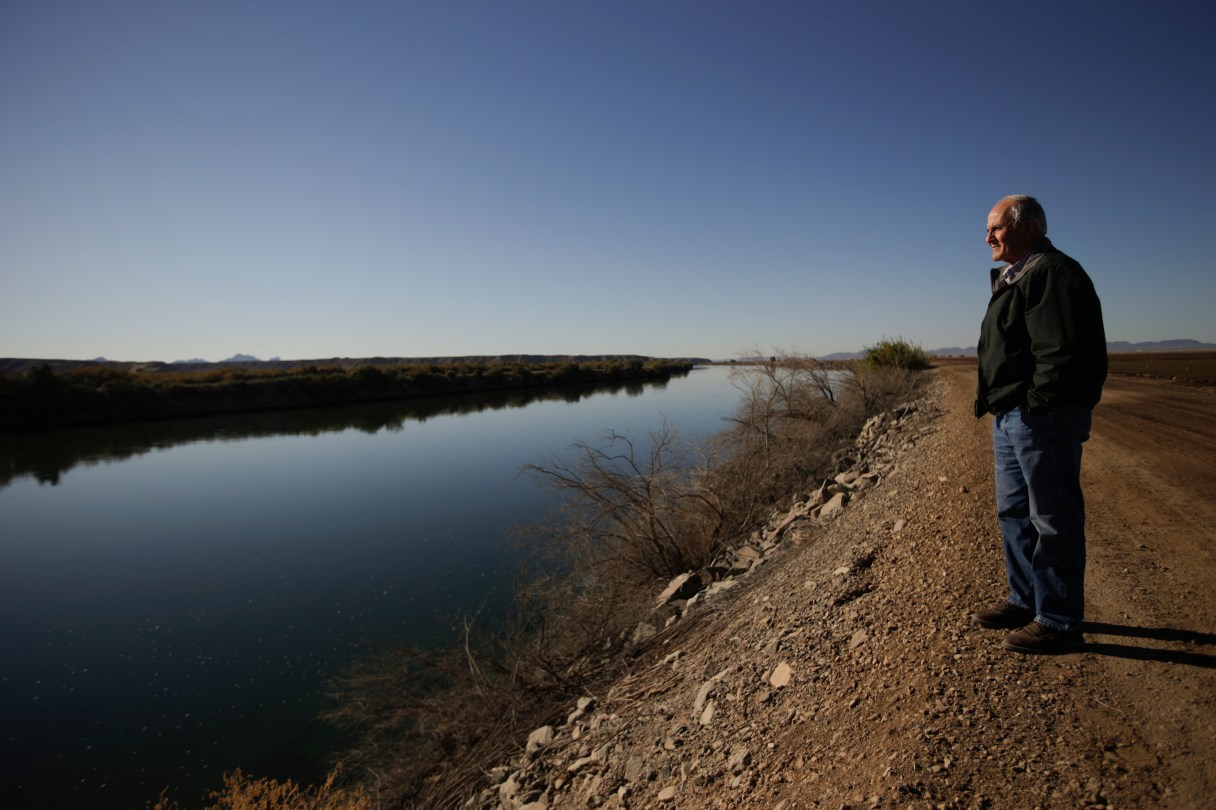
In this Friday, Nov. 13, 2015 photo, Bart Fisher, farmer and president of the Palo Verde Irrigation District, looks at the Colorado River while pausing for photos in Blythe, Calif. The third-generation farmer who was born in Blythe, left 29 percent of his farmland fallow this year. The Metropolitan Water District of Southern California, the nation’s largest distributor of treated drinking water, became the largest landowner in the region including Blythe for good reason: The alfalfa-growing area sits at the top of the legal pecking order to Colorado River water, a lifeline for seven Western states and northern Mexico.( AP Photo/Jae C. Hong)

BLYTHE, Calif. (AP) – The nation’s largest distributor of treated drinking water became the largest landowner in a remote California farming region for good reason: The alfalfa-growing area is first in line to get Colorado River water.

Metropolitan Water District of Southern California’s play in Palo Verde Valley, along the Arizona line, tapped a deep distrust between farm and city that pervades the West over a river that’s a lifeline for seven states and northern Mexico.

Farmers recall how Los Angeles’ modern founders built an aqueduct a century ago to bring water hundreds of miles from rural Owens Valley, a story that was fictionally portrayed in Roman Polanski’s 1974 film, “Chinatown.”

“Are we going to dry up our rural, agricultural communities just to keep Los Angeles, San Francisco and San Diego growing? I think it would be a sad state of affairs,” said Bart Fisher, a melon and broccoli farmer who is board president of the Palo Verde Irrigation District.

Metropolitan tried to calm nerves by sending its chairman in September to a public forum in Blythe, 225 miles east of its Los Angeles headquarters. It pledged to honor a 2004 agreement that caps the amount of land it pays farmers to idle at 28 percent of the valley.