
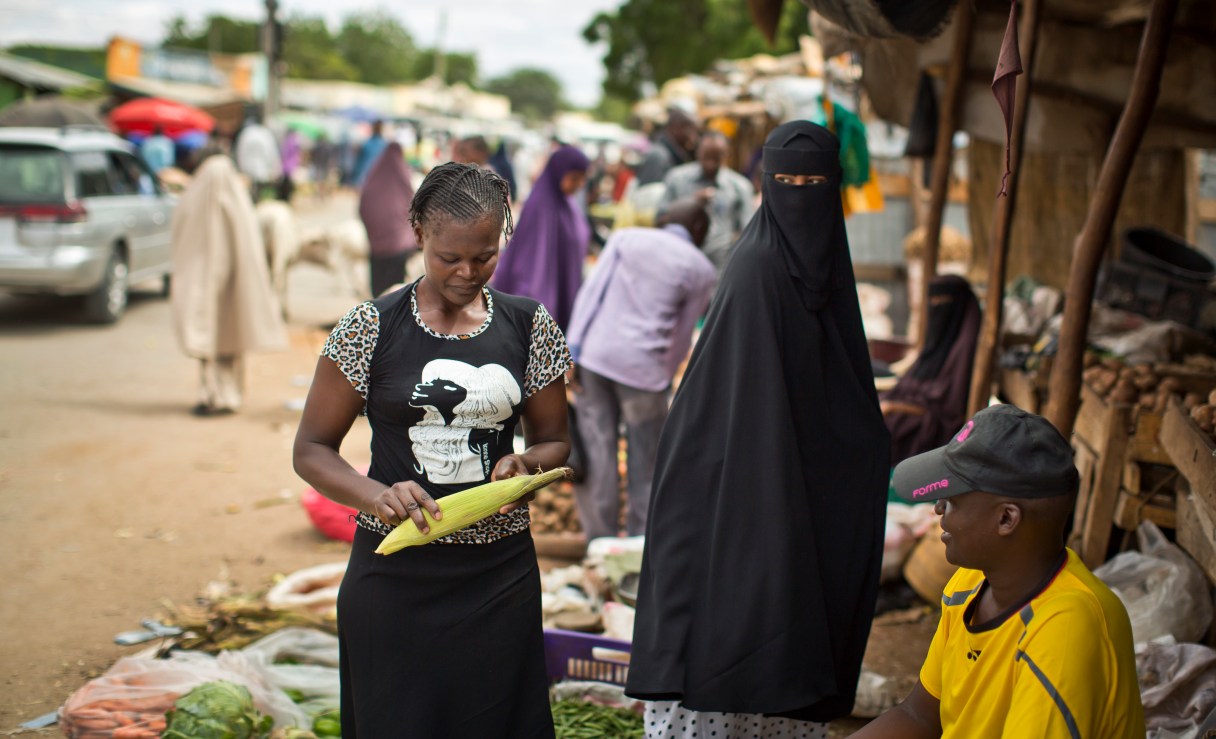
GARISSA, Kenya (AP) – As song and prayer drifted from the open, ivy-lined doorways of a Catholic church in Garissa, several security officials, including Muslims, stood watch on the grounds nearby.
Their presence was a reminder of the violence that hit this Kenyan town in April, when Islamic extremists killed nearly 150 people at a college of mostly Christian students. Yet it was also a sign, they said, that interfaith relations had improved – the men were relaxed and smiling, and all but one were in plain clothes. After the service ended, they chatted jovially with the priest.
“”Welcome, welcome! Feel free!” one official, Omar Tawane, said to an Associated Press reporter, as though eager to get the word out that Garissa was no longer a place of fear and suspicion. Tawane, the regional prison commander and a Muslim, was doing the rounds on foot near St. Peter’s Catholic Church, which is next to the high walls of a prison.
Tawane said townspeople are quick these days to inform authorities of any suspicious activity and are united against their common enemy: al-Shabab, the Somali group that carried out the attack. But he acknowledged the threat of militant infiltration remains.
“We cannot say they are not around. We don’t know,” he said.